

이 페이지는 원문으로 표시됩니다. 번역본은 아직 제공되지 않았습니다.
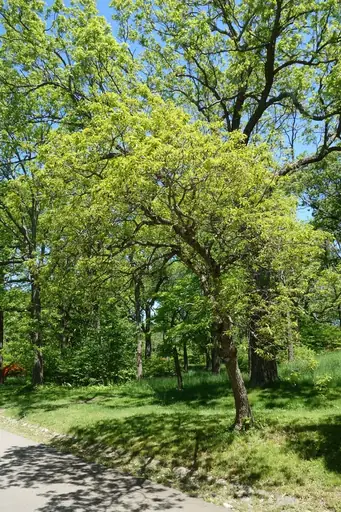
시드선 셀렉션
Quercus prinoides
SKU: QUER-PRIN-01G
Dwarf chinquapin oak is the oak for gardeners in a hurry, a small, shrubby white oak that starts bearing sweet acorns while still only a few feet tall. Where most oaks make you wait a generation, this one fruits at three to five years old and crops nearly every year after, a rare and useful trick..
맞춤 견적을 요청하세요
가격, 포장 크기 및 재고 여부는 개별 견적서에서 확인하실 수 있습니다. 문의를 보내는 것만으로는 유료 주문이 접수되지 않습니다.
재배 적합성, 파종 및 재배 요건에 대해 문의하십시오.
견적서에서 배송 옵션과 필요 서류를 확인하세요.
이 품종에 대하여
Dwarf chinquapin oak is the oak for gardeners in a hurry, a small, shrubby white oak that starts bearing sweet acorns while still only a few feet tall. Where most oaks make you wait a generation, this one fruits at three to five years old and crops nearly every year after, a rare and useful trick. The plant grows as a rhizomatous, colony-forming shrub or small tree of ten to twenty feet, clothed in glossy, chestnut-like leaves with wavy, blunt teeth.
The acorns are the point, and they are the good kind. As a member of the white oak group, dwarf chinquapin oak bears sweet, low-tannin acorns that ripen in a single season, palatable to people with little or no leaching and relished by nearly everything with fur or feathers: deer, turkey, quail, grouse, squirrels, and jays. The epithet prinoides means resembling Prinus, the old name for the chestnut oak, for the chestnut-like toothing of the leaves. Few native plants pack so much wildlife value into so small a package.
This is a tough, undemanding native of dry, sterile, sunny ground, glades and barrens and rocky slopes from the Midwest to the eastern Piedmont, asking for the same in the garden: full sun and lean, well-drained, even rocky or slightly limy soil. Drought and heat are no trouble, and the rhizomatous habit slowly builds a low thicket that can be left to spread or kept in bounds. Hardy through USDA zones 5 to 8, the leaves color bronze, gold, and copper-red in fall.
For a smaller property, an edible landscape, or a wildlife planting, dwarf chinquapin oak is one of the most rewarding oaks going, offering an oak's ecology and a sweet, early acorn crop at shrub scale. Naturalize the plant on a dry sunny bank, plant a small grove for the wildlife, or grow one as a low specimen, and enjoy an oak that gives back within a few short years rather than a few long decades.
더 많은 것을 발견해 보세요



질문 및 토론