

이 페이지는 원문으로 표시됩니다. 번역본은 아직 제공되지 않았습니다.
시드선 셀렉션
Stauntonia hexaphylla
SKU: STAU-HEXA-01G
Stauntonia hexaphylla is a handsome, vigorous evergreen climber from the woodlands of Japan, Korea, and China, grown as much for glossy year-round foliage as for the famous fruit. The palmate leaves are cut into five to seven leathery, dark-green leaflets, held on a strong, twining vine that.
맞춤 견적을 요청하세요
가격, 포장 크기 및 재고 여부는 개별 견적서에서 확인하실 수 있습니다. 문의를 보내는 것만으로는 유료 주문이 접수되지 않습니다.
재배 적합성, 파종 및 재배 요건에 대해 문의하십시오.
견적서에서 배송 옵션과 필요 서류를 확인하세요.
이 품종에 대하여
Stauntonia hexaphylla is a handsome, vigorous evergreen climber from the woodlands of Japan, Korea, and China, grown as much for glossy year-round foliage as for the famous fruit. The palmate leaves are cut into five to seven leathery, dark-green leaflets, held on a strong, twining vine that clothes a support densely from top to bottom. A member of the Lardizabalaceae, Stauntonia counts Akebia, the chocolate vine, and Decaisnea, the blue-sausage tree, as relatives.
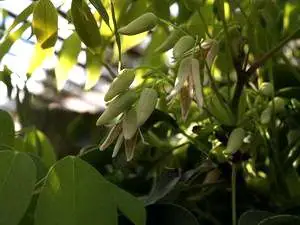
The name carries a little history. The genus honors Sir George Leonard Staunton, an eighteenth-century Irish botanist and diplomat, and the epithet hexaphylla means six-leaved, for the usual count of leaflets. In Japan the plant is mube, a fruit long esteemed enough to be offered to the imperial court, and in spring fragrant, waxy, purple-flushed white flowers hang in small clusters and ripen into plump, sausage-shaped purple fruits, sweet and honeyed, eaten fresh across East Asia.
Mube has a second life in traditional East Asian medicine. The fruit was long taken as a diuretic and used against rheumatic complaints, and the fruits, leaves, stems, and roots were all turned to for their analgesic, sedative, and anti-inflammatory reputation, a folk pharmacy that modern laboratories have begun to examine for the triterpene saponins the plant contains. That double character, imperial dessert and country remedy, is common among the useful vines of the region.
In the garden, give Stauntonia hexaphylla a pergola, arbor, fence, or strong trellis in sun or part shade and a moist, well-drained soil, and the vine will climb fast into a dense, evergreen screen. The spring flowers draw bees, and where two plants grow together the fruit sets more heavily. Evergreen, self-clinging by twining stems, and untroubled by heat, mube makes a lush, productive, and unusual alternative to the more familiar evergreen climbers.
더 많은 것을 발견해 보세요



질문 및 토론