
15 of the Best Flowering Ground Covers for Your Landscape
Ground cover plants are extremely useful in landscaping. They’re low-maintenance landscaping solutions to common problems and questions like: What should I plant on a slope that’s too steep for my lawnmower? What will grow under a shady tree with prominent roots? How can I create a uniform border.
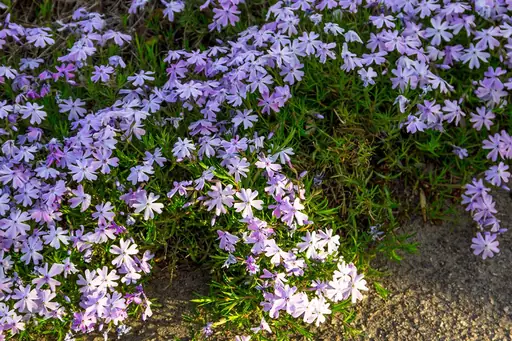
Ground cover plants are extremely useful in landscaping.
They’re low-maintenance landscaping solutions to common problems and questions like:
- What should I plant on a slope that’s too steep for my lawnmower?
- What will grow under a shady tree with prominent roots?
- How can I create a uniform border along my driveway?
- What can I plant that I can walk on, without having to mow?
And ground covers that bloom are not just functional – some are stunning!
Here’s an idea:
Look at your front lawn. If it’s like mine was, it’s a sea of green waiting to be thatched, seeded, fertilized, watered, and mowed, on a rotating basis, year in, year out.
Why not remove one section of grass and replace it with a low-maintenance focal point that is especially lovely when it’s in bloom?
Read on to discover 15 flowering ground covers that are sure to make your outdoor space more attractive, and your yardwork easier.
Here is the lineup:
15 Favorite Flowering Ground Covers
1. Bugleweed
2. Canadian Anemone
3. Candytuft
4. Creeping Phlox
5. Creeping Thyme
6. Deadnettle
7. Hosta
8. Horned Violet
9. Japanese Pachysandra
10. Liriope
11. Lithodora
12. Pigsqueak
13. Spike Speedwell
14. Sweet Woodruff
15. Wishbone Flower
Some ground covers are only a few inches tall, and others top out at two feet or more.
What qualifies them for this category is not their height, but their function:
To form interconnected mats via creeping or clumping that crowd out weeds and form a continuous expanse of foliage.
If you’re thinking of converting a lawn area to a network of creeping or clumping plants, be sure to consider the need for pathways to facilitate movement through your landscape.
Also, before planting any creeping or clumping plant, particularly those that claim to be fast growing, refer to the USDA list of Introduced, Invasive, and Noxious Plants.
What is desirable in one state may be considered a nuisance in another.
1. Bugleweed
Perennial bugleweed (Ajuga reptans) is a member of the mint family that readily naturalizes in Zones 3 to 10, growing best in average to moist soil, with full sun to partial shade.
In warmer climates, this plant is evergreen.
Topping out at six inches, it derives its name from spikes of tiny bugle-shaped blossoms that range in color from blue to white.
The leaves of this plant are glossy, toothed or smooth, and often tinged with shades of purple. Bloom time is May through June.
‘Black Scallop’ Bugleweed
2. Canadian anemone
Perennial Canadian anemone (Anemone canadensis) is a US native wildflower that spreads well in Zones 3 to 8, prefers moist soil, and thrives in full sun to part shade.
Its height varies from one to two feet. Blossoms are individual and white in color, and leaves are bright green with toothed edges.
3. Candytuft
Candytuft (Iberis sempervirens) is a woody, mounding perennial that likes full sun and well-drained soil, and tolerates drought.
It’s suitable for Zones 3 to 8, and reaches a height of about 12 inches. In warmer climates, this plant is evergreen.
The blossoms of candytuft consist of sweetly scented clusters of white petals, which are often so profuse that you can’t see the elongated green leaves below.
‘Whiteout’ Candytuft
Bloom time is April through May.
Learn more about growing candytuft here.
4. Creeping Phlox
Creeping phlox or moss phlox (Phlox subulata), makes a bold statement as a carpet of color in shades of pink, blue, or white. Leaves are small and evergreen.
It stands up to light foot traffic and is lovely cascading over slopes and garden walls. This is a native variety suitable for Zones 3 to 9 that is perennial in most regions.
Plants are about two inches tall, and may exceed six inches when in bloom, during March through May. Provide sun to part shade, with average soil and moisture.
‘Drummond’s Pink’
Read more about growing and caring for creeping phlox here.
5. Creeping Thyme
Creeping thyme (Thymus praecox) is a wild variety of the herb that is wonderful between stepping stones. Light foot traffic releases a delightful minty aroma.
Hardy in Zones 4 to 8, this woody perennial likes well-drained dry to average soil and full sun. It’s drought tolerant, and evergreen in mild climates.
Reaching approximately three inches in height, this plant has tiny, round, glossy green leaves and spikes of tiny pink-purple blossoms from June through July.
‘Coccineus’ Creeping Thyme
Learn more about how to grow creeping thyme here.
And learn more about using culinary herbs as ground cover.
6. Deadnettle
Lamium maculatum aka deadnettle thrives in Zones 3 to 8 in part to full shade.
It is evergreen in temperate zones. Leaves are variegated green and silvery-white, and pink blossoms appear from May through July.
This drought-tolerant plant prefers cool, low-humidity regions with well-drained soil.
Varieties vary in height from several inches to about two feet, grow in a clumping or creeping fashion, and form an interconnected network that crowds out weeds and inhibits soil erosion.
The shorter varieties are great for those narrow spaces in between paving stones, as well as in rockeries and border gardens, where you want to inhibit weed growth.
‘Purple Dragon’
L. maculatum ‘Purple Dragon’ features variegated foliage and purple flowers, reaching a mature height of eight to 12 inches, with a two-foot spread.
7. Hosta
Reliable perennials, hosta leaves vary from forest to lime green, to variegated green and white, to all white.
Blooming is inflorescent in nature, with tall spikes of small white or purple blossoms appearing from May through July. Some varieties are sweetly scented.
These were divided for propagation at my parents’ home and later my own, in a rite of passage that continues today.
Perfect for Zones 3 to 8, most prefer shade and rich, damp soil. Heights vary, with some reaching over two feet.
Hosta ‘Elegans’
Learn more about how to grow hostas here.
8. Horned Violet
Horned violets (Viola cornuta) are annuals with green, rounded leaves, and scented two-toned blossoms in shades of purple and blue that bloom from April through June.
They are perennials in temperate climates.
Reaching from six to eight inches in height, creeping horned violets are suitable for Zones 6 to 11.
They require average soil and moisture, and do best in full sun to part shade.
9. Japanese Pachysandra
Japanese pachysandra (Pachysandra terminalis) or spurge, is an evergreen perennial that’s perfect under shrubs where grass doesn’t want to grow.
As a kid, I helped one neighbor gather a bucketful of cuttings from another neighbor to plant under a large tree with distressed, sprawling roots, and bare soil.
Those cuttings took root almost immediately.
Before long, there was a pretty bed of glossy green whorled leaves that not only hid the tree roots, but protected them from further lawnmower damage.
In April, spiky white blossoms made for an added attraction.
Pachysandra Japanese Spurge
If you’re in Zones 5 to 9 and looking for a fast-growing option, this could be the one. It’s drought tolerant, does best in part to full shade, and reaches a height of about 12 inches.
10. Liriope
Liriope (Liriope spp.) is also known as lily turf.
I have this hardy perennial beneath my front garden rosebush. It’s a grass-like plant with clumping and creeping varieties that may reach one to two feet in height.
Spikes of tiny blossoms in shades of blue, white, or purple appear in August and September. Some have green foliage, while others are variegated.
Liriope thrives in sun as well as shade, and likes moist, rich soil. It’s suitable for Zones 5 to 10. I’m in Zone 6, and mine turn brown in the winter and freshen up in spring.
Variegated Liriope
Liriope makes pretty garden borders and is good at inhibiting erosion on slopes. It’s great under trees where you just can’t seem to get the grass to grow.
11. Lithodora
I recently planted my first lithodora (Lithodora diffusa). It was the tiny, bright blue blossoms that caught my eye at the nursery.
It likes part shade, particularly in hot regions, and must have well-drained soil.
Great for Zones 6 to 8, and able to withstand light foot traffic, this plant may reach 12 inches in height. It has small, hairy “sessile” green leaves that are attached without stalks, making for a low profile.
Lithodora blooms vigorously in May, then occasionally through August. In temperate zones, it is a perennial.
I’m on the annual/perennial cusp, so if I layer my plant well with mulch and we have a mild winter, it should return next spring.
One thing I learned quickly with this plant is that it won’t spread out and naturalize if it has competition from native weeds and wildflowers.
Lithodora ‘Grace Ward’
Be sure to give your new ground covers room to grow. Once established, their matted root networks should squeeze out the competition.
You can find Lithodora ‘Grace Ward’ plants available at .
12. Pigsqueak
Pigsqueak (Bergenia cordifolia) is a perennial whose name comes from the squeaky sound the leaves make when you rub them between your fingers.
It’s suitable for Zones 3 to 8, and grows best in part to full shade.
Pig squeak is a clumping plant with shiny, dark green leaves and stalks of pink blossoms that bloom in April and May.
It’s a slow-grower that may exceed 12 inches in height. This plant is drought tolerant.
‘Winter Glow’ Bergenia
Read more about growing bergenia here.
13. Spike Speedwell
Spike speedwell (Veronica spicata), often called royal candles, is a clumping perennial suitable for Zones 3 to 8.
Its narrow green leaves form a base for tall spikes comprised of tiny blossoms in shades of purple, blue, pink, or white. Bloom time is June through August.
Veronica ‘Marietta’
Spike speedwell prefers full sun and moist, well-drained soil. It grows to a foot or more in height. Multiple plantings merge into a vibrant swath of color.
You can find V. spicata ‘Marietta’ plants available at .
14. Sweet Woodruff
Sweet woodruff (Galium odoratum) is a fragrant perennial with star-like white blossoms atop whorled (spiraled) green leaves. It blooms during the months of May and June.
Perfect for Zones 4 to 8, sweet woodruff prefers part to full shade and moist, well-drained soil.
It tops out at approximately eight inches, and naturalizes rapidly. This variety is great as an underplanting beneath shrubs.
Sweet Woodruff
Sweet woodruff is one of my favorites, as I’m a fan of woodland gardening with shade perennials.
15. Wishbone Flower
Wishbone flower (Torenia fournieri), also called bluewings or clown flower, is an annual that grows best in part to full shade.
Suitable for Zones 2 to 11, it likes moist, well-drained soil.
The blossoms of wishbone are trumpet-shaped in shades of purple, pink, white, and yellow, often with contrasting “throats.” Leaves are light green and oval.
Torenia Kauai Mix
Wishbone is desirable for its ability to produce vibrant color all summer, in the shadiest portions of a garden.
Learn more about growing torenia here.
Carpets of Color
Ground covers are a versatile garden choice. They’re perfect for irregular terrain, and make an attractive alternative to a sea of green grass.
In addition, when planted beneath ornamental shrubs, they make a useful weed barrier.
Do you love spring bulbs, but hate the unsightly withering greens that follow blooming?
Try growing bulbs right through a patch of speedwell or pachysandra, and their fading post-bloom foliage won’t be as noticeable.
When selecting plants, keep in mind that native types are the most vigorous and require the least maintenance.
Consider mixing varieties to achieve an appealing palette of color, texture, and height.
And remember that evergreens provide winter interest, while deciduous varieties disappear completely during the cold months.
Pay close attention to descriptions of plant heights as you make your selections.
You don’t want to shop for a ground-hugger to plant between paving stones and come home with a two-foot-tall spike variety!
Do you grow flowering ground cover in your landscape? Let us know in the comments section below and feel free to share a picture!
Are you looking for more perennial flower suggestions? Try these guides next:
- 17 Temperate Flowering Perennials That Will Grow Almost Anywhere
- Perennials for Butterfly Gardens
- Choosing the Perfect Flowering Perennials: 5 for Your Shade Garden
- 9 Best Full-Sun Flowering Perennials for Southern Gardens
- Facebook880
- X




Vragen en discussie