

Deze pagina wordt in de oorspronkelijke taal weergegeven. Een vertaling is nog niet beschikbaar.
De Seedsun-selectie
Camellia x 'Cinnamon Cindy'
SKU: CAME-CINN-CIND-01G
Two species of camellia are commonly grown in American gardens, Camellia japonica and Camellia sasanqua, and there are countless varieties of each. This plant is neither. 'Cinnamon Cindy' is a hybrid between Camellia japonica 'Kenyo-tai' and a Chinese species, Camellia lutchuensis, and the reason.
Vraag een offerte op maat aan.
Prijzen, verpakkingsgroottes en beschikbaarheid worden bevestigd in uw persoonlijke offerte. Het versturen van een aanvraag is geen betaalde bestelling.
Informeer naar de geschiktheid, zaai- en kweekvereisten.
Bevestig de leveringsopties en benodigde documenten in uw offerte.
Over deze variëteit
Two species of camellia are commonly grown in American gardens, Camellia japonica and Camellia sasanqua, and there are countless varieties of each. This plant is neither. 'Cinnamon Cindy' is a hybrid between Camellia japonica 'Kenyo-tai' and a Chinese species, Camellia lutchuensis, and the reason anyone made that cross is fragrance. C. lutchuensis is a small-flowered species from the Ryukyu Islands and Taiwan carrying a scent that almost no garden camellia possesses, and breeders have spent decades trying to move that quality into plants with flowers worth looking at.
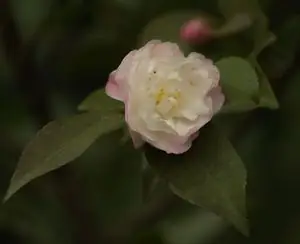
The result here is upright and relatively narrow, eight to ten feet in time on a three to six foot frame, with small light green leaves that emerge distinctly reddish and darken as they mature. Flowers are two to three inches across, rose-form and full-petaled, white with pink washing through the outer petals, and they come in the depths of winter. The scent is the point: warm and sweet, strongest on a mild afternoon, and genuinely rare in this genus. Anyone who has stood in a camellia garden in January wondering why such extravagant flowers smell of nothing at all will understand immediately what this plant is for.
was one of the first to offer this hybrid, which we received some years ago from the U.S. National Arboretum. The Arboretum's camellia program has been among the most productive in the country, and the fragrant hybrids that came out of crossing C. lutchuensis with garden japonicas are one of its quieter successes. Camellias themselves belong to Theaceae, the tea family, and the same genus gives us Camellia sinensis and every cup of tea ever drunk, a piece of botanical geography most people never connect.
Plant in semi-shade in sandy, slightly acid soil, kept mulched and watered; morning sun with afternoon shade suits best. Because the flowers are small and the fragrance close-range, siting matters more than it does for a big showy japonica. Put this one beside a door, along a path you walk in winter, or under a window that gets opened on a mild day. Water consistently through late summer while next season's buds are forming, and prune, if at all, right after flowering. The narrow upright habit means very little pruning is needed. Good with Osmanthus fragrans, Chimonanthus praecox, Daphne odora, and Edgeworthia chrysantha for a planting where something is scented in every winter month.
Er valt nog veel meer te ontdekken



Vragen en discussie