

Deze pagina wordt in de oorspronkelijke taal weergegeven. Een vertaling is nog niet beschikbaar.
De Seedsun-selectie
Fothergilla major
SKU: FOTH-MAJO-01G
The native fothergillas were choice but scarcely available garden shrubs when first began to offer them in 1980, and mountain witch alder is the largest and, to our eye, the best of them. Fothergilla major makes a rounded deciduous shrub of six to eight feet, slow and dense, and gives two distinct.
Vraag een offerte op maat aan.
Prijzen, verpakkingsgroottes en beschikbaarheid worden bevestigd in uw persoonlijke offerte. Het versturen van een aanvraag is geen betaalde bestelling.
Informeer naar de geschiktheid, zaai- en kweekvereisten.
Bevestig de leveringsopties en benodigde documenten in uw offerte.
Over deze variëteit
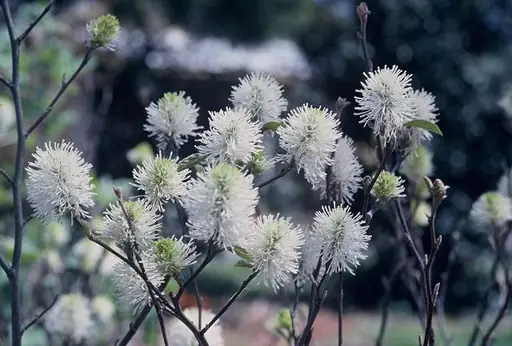
The native fothergillas were choice but scarcely available garden shrubs when first began to offer them in 1980, and mountain witch alder is the largest and, to our eye, the best of them. Fothergilla major makes a rounded deciduous shrub of six to eight feet, slow and dense, and gives two distinct performances a year. In April the bare or barely-leafing branches carry upright white bottlebrushes, an inch or two long, made not of petals but of crowded stamens with pale yellow anthers, and they carry a honeyed scent that reaches further than the flowers look able to manage. In October the blue-green leaves turn all at once to orange, scarlet and yellow, often several colors on a single leaf.
The genus honors John Fothergill, the eighteenth-century English physician and Quaker who kept one of the great gardens of American plants at Upton in Essex and paid collectors to keep it supplied. Witch alder is the country name: alder for the leaves, which look convincingly like an alder's, and witch from the family, Hamamelidaceae, shared with witch hazel, sweetgum and loropetalum. A note on the name for anyone who follows taxonomy, since the labels have shifted: Kew now treats Fothergilla latifolia as the accepted name and files F. major as a synonym, along with the older F. monticola. We keep the name gardeners actually search for.
This is a plant with a real conservation stake. Mountain witch alder is uncommon and local in the wild, scattered through the southern Appalachians and the Alleghenies across five southeastern states with a disjunct outpost in Arkansas, and NatureServe ranks the species G3, vulnerable. There is no ethnobotany to report, no old medicine or dye or food use; the shrub simply never grew commonly enough to become useful to anybody. Growing a nursery-propagated plant is a quiet way of keeping a scarce native in cultivation, and the spring flowers are worked over by bees from the moment they open.
Site mountain witch alder in sun or semi-shade in good, moist, acid, well-drained soil with plenty of organic matter, and give the shrub room to round out rather than shearing the natural shape away. Full sun buys the strongest fall color; too much shade thins the flowering and dulls October. The plant suckers gently at the base, which builds a handsome multi-stemmed clump over years rather than a running colony. Pair with rhododendron, leucothoe, native azaleas and ferns at a woodland edge, or use as a specimen where both the April scent and the autumn blaze will be walked past. Hardy through USDA zones 4 to 8. One honest caution: the roots dislike drying out, so mulch well and water through the first summers.
Er valt nog veel meer te ontdekken



Vragen en discussie