

Deze pagina wordt in de oorspronkelijke taal weergegeven. Een vertaling is nog niet beschikbaar.
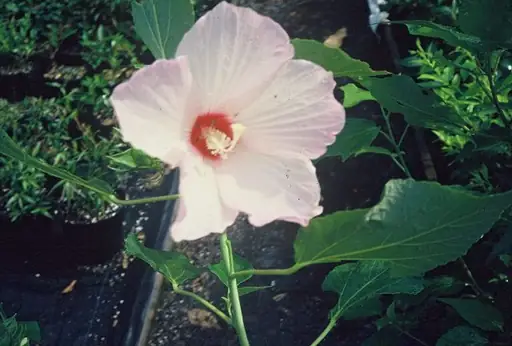
De Seedsun-selectie
Hibiscus palustris
SKU: HIBI-PALU-01G
Hibiscus palustris is the northern, cold-hardy face of the American rose-mallows, a marsh dweller whose species name comes straight from the Latin palus, a swamp or marsh. Botanists today often fold the plant into Hibiscus moscheutos as a subspecies, but the old name still travels with the.
Vraag een offerte op maat aan.
Prijzen, verpakkingsgroottes en beschikbaarheid worden bevestigd in uw persoonlijke offerte. Het versturen van een aanvraag is geen betaalde bestelling.
Informeer naar de geschiktheid, zaai- en kweekvereisten.
Bevestig de leveringsopties en benodigde documenten in uw offerte.
Over deze variëteit
Hibiscus palustris is the northern, cold-hardy face of the American rose-mallows, a marsh dweller whose species name comes straight from the Latin palus, a swamp or marsh. Botanists today often fold the plant into Hibiscus moscheutos as a subspecies, but the old name still travels with the pink-flowered marsh plants of the Northeast, and gardeners know exactly which plant the name marks. Where many tropical hibiscus sulk at the first frost, this perennial dies cleanly to the ground each winter and returns from a woody crown, unfazed by zone 5 cold.
Through late summer the stout, upright stems open a run of broad pink flowers, each a satiny five-petaled saucer four to seven inches across, often with a deeper rose or crimson flush at the base of the petals. Every bloom lasts only a day or two, but the plants open in generous succession over many weeks. Breeders leaned hard on this native and the closely related rose-mallows to build the modern hardy hibiscus, the dinner-plate perennials now sold everywhere, so the wild parent stands quietly behind a whole nursery aisle of showier offspring.
The rose-mallows belong to Malvaceae, the mallow family, and share the family's mucilaginous, softening sap with true marshmallow, Althaea officinalis, whose roots once thickened the original confection. Across the plant's native range the mallows were among the soothing, demulcent herbs that early gardeners and Indigenous peoples valued for their slippery, cooling tissue, a folk association that runs through the whole clan rather than resting on this one species. Even the broad leaves and seed capsules carry that soft, faintly downy mallow texture.
For design, Hibiscus palustris solves the hardest corner in many gardens: the low, wet spot that stays soggy. Plant the rose-mallow at a pond edge, in a rain garden, along a ditch, or at the moist back of a border, where the tall stems and huge flowers can rise over Joe-Pye weed, swamp milkweed, and native sedges. Bees and hummingbirds work the flowers, and specialist bees depend on rose-mallows in particular. Because the plant emerges late in spring, set the crown among earlier perennials that cover the bare ground until the stems shoot up and take over the show.
Er valt nog veel meer te ontdekken



Vragen en discussie