

Deze pagina wordt in de oorspronkelijke taal weergegeven. Een vertaling is nog niet beschikbaar.
De Seedsun-selectie
Hydrangea quercifolia 'Alice'
SKU: HYDR-QUER-ALIC-01G
The oakleaf hydrangea is the great four-season native shrub of the American Southeast, and 'Alice' is one of the grandest selections of the species. Hydrangea quercifolia grows wild in the rich woods and ravines of a small range centered on Alabama and Mississippi, where the naturalist William.
Vraag een offerte op maat aan.
Prijzen, verpakkingsgroottes en beschikbaarheid worden bevestigd in uw persoonlijke offerte. Het versturen van een aanvraag is geen betaalde bestelling.
Informeer naar de geschiktheid, zaai- en kweekvereisten.
Bevestig de leveringsopties en benodigde documenten in uw offerte.
Over deze variëteit
The oakleaf hydrangea is the great four-season native shrub of the American Southeast, and 'Alice' is one of the grandest selections of the species. Hydrangea quercifolia grows wild in the rich woods and ravines of a small range centered on Alabama and Mississippi, where the naturalist William Bartram found the shrub in the 1770s and called it singular and beautiful. Alabama later made the oakleaf hydrangea the official state wildflower, a rare honor for a plant that earns attention in every season.
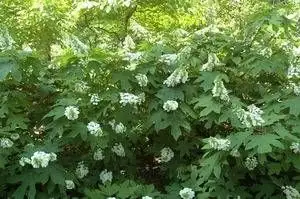
'Alice' came from the University of Georgia campus, selected by Michael Dirr, the most influential woody-plant horticulturist of his generation. The result is a very large shrub, ten to twelve feet high and as wide, that carries some of the longest flower panicles of any oakleaf, white cones ten to fourteen inches long that open in early summer, age to soft rose, and dry to warm tan on the branch. Few native shrubs give so much scale and presence.
The name quercifolia means oak-leaved, and the big, deeply lobed leaves are the plant's other signature, dark green through summer and turning deep burgundy-red, purple, and bronze in fall, holding that color for weeks. When the leaves finally drop, 'Alice' reveals cinnamon bark that peels in papery sheets, so the shrub stays handsome straight through winter. Flowers, foliage, and bark give four distinct seasons of interest from a single plant.
Give 'Alice' room to become the large, rounded specimen the shrub wants to be, at the corner of a house, along a woodland edge, or as the anchor of a shaded shrub border. Fertile, moist, well-drained soil suits the plant best, in shade or half shade, or even full sun where mulch and water keep the roots cool. The fertile flowers within the panicles draw bees and butterflies, and the whole shrub reads beautifully against evergreens or a wall that shows off the white summer cones and the burgundy of fall.
Er valt nog veel meer te ontdekken



Vragen en discussie