

Deze pagina wordt in de oorspronkelijke taal weergegeven. Een vertaling is nog niet beschikbaar.
De Seedsun-selectie
Leucothoe racemosa
SKU: LEUC-RACE-01G
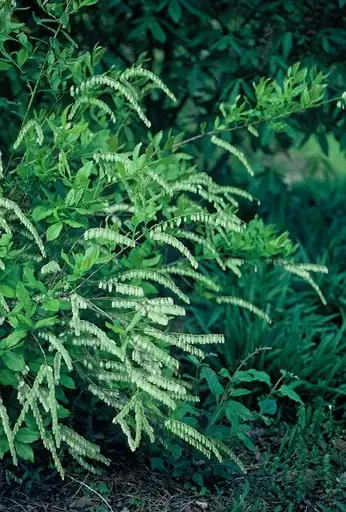
Leucothoe racemosa, the sweetbells of Eastern wetland edges, is a fine native shrub too seldom planted. Found wild across the eastern United States in acidic woodland soils that stay damp but never flood, the plant grows upright and loosely branched to six or eight feet, deciduous to semi-evergreen.
Vraag een offerte op maat aan.
Prijzen, verpakkingsgroottes en beschikbaarheid worden bevestigd in uw persoonlijke offerte. Het versturen van een aanvraag is geen betaalde bestelling.
Informeer naar de geschiktheid, zaai- en kweekvereisten.
Bevestig de leveringsopties en benodigde documenten in uw offerte.
Over deze variëteit
Leucothoe racemosa, the sweetbells of Eastern wetland edges, is a fine native shrub too seldom planted. Found wild across the eastern United States in acidic woodland soils that stay damp but never flood, the plant grows upright and loosely branched to six or eight feet, deciduous to semi-evergreen depending on the winter. Botanists now file the species under the name Eubotrys racemosa, though the older Leucothoe is the name most gardeners still use.
In spring the arching stems line themselves with one-sided racemes of small, white, bell-shaped flowers, faintly fragrant and much like the blossoms of the blueberries and azaleas that share the heath family, Ericaceae. The epithet racemosa points straight to those flower clusters, the racemes, while Leucothoe recalls the Greek princess of myth, loved by the sun god and changed, in the story, into a fragrant shrub. Bees and early pollinators work the bells at a lean time of year.
The oval leaves, roughly an inch by two and finely toothed, turn a good clear red in fall, giving the shrub a second season of interest. Dr. Michael Dirr, in his Manual of Woody Landscape Plants, admitted to having seen only a few plants but judged this native shrub to hold 'great landscape possibilities', a quiet endorsement from the dean of American woody-plant horticulture.
Sweetbells belongs in the moist, shaded, acid-soil situations where so many choice plants refuse to grow: the low, damp corner, the margin of a pond or rain garden, the humus-rich edge of native woodland. Pair the shrub with fothergilla, itea, and native azaleas for a procession of bloom and fall color, or use a loose planting to hold a damp bank. As with the rest of the heath family the foliage carries grayanotoxins and is not for eating, a trait that also spares the plant from browsing deer.
Er valt nog veel meer te ontdekken



Vragen en discussie