

Deze pagina wordt in de oorspronkelijke taal weergegeven. Een vertaling is nog niet beschikbaar.
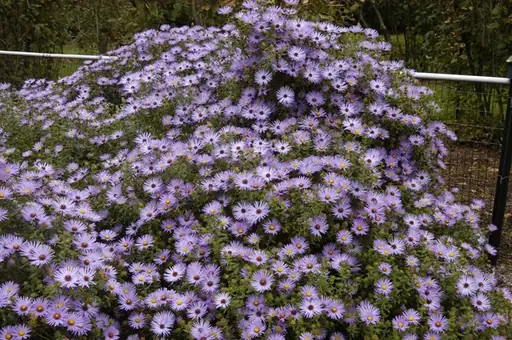
De Seedsun-selectie
Symphyotrichum oblongifolium
SKU: SYMP-OBLO-01Q
Symphyotrichum oblongifolium, the aromatic aster, saves the best of the season for last. Long after most perennials have folded, this tough native throws up a low, spreading mound of stiff, well-branched stems and buries the whole clump under small violet-blue daisies, each lit with a bright gold.
Vraag een offerte op maat aan.
Prijzen, verpakkingsgroottes en beschikbaarheid worden bevestigd in uw persoonlijke offerte. Het versturen van een aanvraag is geen betaalde bestelling.
Informeer naar de geschiktheid, zaai- en kweekvereisten.
Bevestig de leveringsopties en benodigde documenten in uw offerte.
Over deze variëteit
Symphyotrichum oblongifolium, the aromatic aster, saves the best of the season for last. Long after most perennials have folded, this tough native throws up a low, spreading mound of stiff, well-branched stems and buries the whole clump under small violet-blue daisies, each lit with a bright gold eye, from early fall well into November. The show arrives just as the garden goes quiet, and the flowers hum with the last bees and butterflies of the year.
A plant of dry prairies, glades, bluffs, and rocky roadside banks, the aromatic aster ranges across the central plains and eastward through the Southeast, thriving on the lean, sun-baked ground where softer plants give up. The common name comes from the foliage, not the flower, for the small, oblong, grey-green leaves give off a clean balsam scent when crushed or brushed in passing. Botanists once filed the plant under Aster, though the New World asters now carry the tongue-twisting name Symphyotrichum, from the Greek for a coming-together of hairs.
In the garden, Symphyotrichum oblongifolium earns a place at the front or middle of a sunny border, along a dry bank, through a meadow, or spilling over the edge of a wall or path, where the mounding habit softens hard lines. The late bloom makes the aromatic aster one of the most valuable of all fall nectar plants, feeding migrating monarchs and native bees when little else remains. Pair the aster with little bluestem, goldenrod, and the seed heads of coneflower and rudbeckia for a rich, late-season, prairie-style picture.
Give the plant full sun and a lean, dry to average, well-drained soil, and the aromatic aster asks for nothing more, shrugging off drought, heat, and poor ground once the roots take hold. A pinch or shear in early summer keeps the mound tight and heavy with bloom, and the plant needs no staking in an open, sunny spot. Cut the old stems to the ground in late winter, and leave the fall seed heads for the birds. A tough, fragrant, gloriously late native aster for the hardest, driest corners of the garden.
Er valt nog veel meer te ontdekken



Vragen en discussie