
How to Plant, Grow, and Care for Purple Fountain Grass
Pennisetum x advena ‘Rubrum’ With its deep purple leaves and long, colorful flower spikes, purple fountain grass is among the loveliest of the ornamental grasses. Alas, its beauty is fleeting. Hardy in Zones 9 to 11, P. x advena ‘Rubrum’ is grown as an annual in most of the United States. They were.
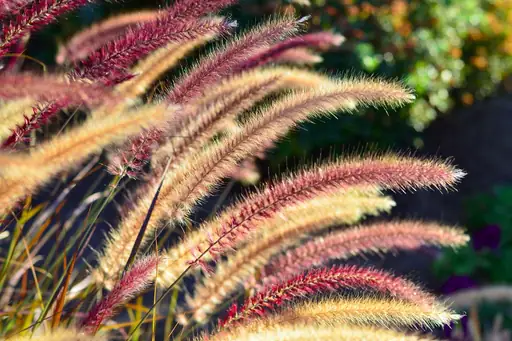
Pennisetum x advena ‘Rubrum’
With its deep purple leaves and long, colorful flower spikes, purple fountain grass is among the loveliest of the ornamental grasses.
Alas, its beauty is fleeting. Hardy in Zones 9 to 11, P. x advena ‘Rubrum’ is grown as an annual in most of the United States.
They were actually quite popular here in Austin, Zone 8b, for a few years, but I don’t see them much anymore – presumably because they couldn’t take our occasional chilly weather, and no one was particularly motivated to replace them.
We’re not too fond of annuals in these parts. Too much trouble.
But for those who are in the right zones or who appreciate spectacular, glorious annuals, you couldn’t ask for a more statement-making addition to the landscape.
Put one in full sun, in a place that will accommodate its five feet of width and height, and you’ll be delighted by the colorful leaves and the showy plume heads that emerge in late summer or early fall in purple, pink, or copper and gently fade to tan.
Let’s learn more about this beauty!
What You’ll Learn
- Cultivation and History
- Propagation
- How to Grow
- Growing Tips
- Pruning and Maintenance
- Where to Buy
- Managing Pests and Diseases
- Best Uses
- Quick Reference Growing Guide
You know how we like to sometimes get into the weeds (haha) about nomenclature. We’ll just let you know that you may also see this type of ornamental grass referred to as Pennisetum setaceum ‘Rubrum’.
However, very smart botanist-taxonomy people have decided that this plant is most likely a cross between P. setaceum and P. macrostachys, and as a hybrid, the name should be Pennisetum x advena ‘Rubrum.’
Do you feel smarter?
Cultivation and History
Open-pollinated fountain grass is native to open, scrubby habitats in South and East Africa, southwestern Asia, and the Arabian Peninsula. The native version has been introduced to many parts of the world, coming to Hawaii around 1914 and to Arizona in the 1940s.
Some Pennisetum species are considered invasive but cultivars such as ‘Rubrum’ are sterile.
Propagation
Since it’s sterile, you won’t get any useful seeds.
The best way to get more purple fountain grass is to buy a plant from a nursery or online source or divide an existing plant in your garden (or your neighbor’s garden… shhhhh!).
Learn more about dividing perennials here.
How to Grow Purple Fountain Grass
Place your ‘Rubrum’ in a sunny spot. Water young plants generously for the first three months or so. After that, this plant is quite drought tolerant.
You can apply a general-purpose fertilizer once a month throughout the growing season. Or not. I never fertilized mine and they were quite spectacular. Until a freeze got them…
Growing Tips
- Plant in full sun.
- Water frequently and generously when young.
- Fertilize if you like.
Pruning and Maintenance
If, in your neck of the woods, this plant is ever-purple, cut it back in late winter or early spring to encourage lots of fresh, attractive growth.
Wear gloves and long sleeves, as the leaves can be quite sharp.
Learn more about pruning ornamental grasses.
Where to Buy
Managing Pests and Diseases
P. x advena ‘Rubrum’ is virtually disease- and pest-free.
Though uncommon for this species, rust can be a problem for ornamental grasses, especially if they are grown in warm and wet conditions. This condition first appears as small yellow spots that develop into rusty reddish-brown raised portions on the leaves.
If you notice rust, a fungicidal spray may be used. To prevent this disease, be sure to keep the air free of weeds with proper airflow, do not overwater, and water only at the base of plants.
Best Uses for Purple Fountain Grass
Purple fountain grass is quite versatile, with many uses in the landscape. It can be a specimen plant or can be massed for a spectacular display. It is sometimes used in borders as well.
You can also put ‘Rubrum’ in containers and overwinter it indoors. Be sure to use a large container as it can get quite big.
Some gardeners like to use the dramatic plumes in cut flower arrangements, though they can be a bit messy. Use a commercial floral sealer or hair spray to keep them intact.
Quick Reference Growing Guide
| Plant Type: | Ornamental grass, herbaceous annual, tender perennial | Foliage Color: | Black, purple, red, pink |
| Native to: | South and east Africa, southwestern Asia, and the Arabian Peninsula | Maintenance: | Minimal |
| Hardiness (USDA Zone): | 9-11 | Soil Type: | Prefers loam, but will do well in just about anything |
| Season: | Summer through fall | Soil pH: | Slightly acidic to acidic, 5.5-7.2 |
| Exposure: | Full to part sun | Soil Drainage: | Well-draining |
| Spacing: | 5 feet | Companion Planting: | Dusty miller, black-eyed susan, aster, potentilla, echinacea, salvia, shasta daisy |
| Planting Depth: | Same depth as the container from which you are transplanting | Uses: | Specimen, mass planting, borders, containers, cutting |
| Height: | 2-4 feet | Attracts: | Birds |
| Spread: | 2-3 feet | Order: | Poales |
| Water Needs: | Low to moderate | Family: | Poaceae |
| Tolerance: | Deer, drought, heat | Genus: | Pennisetum |
| Pests & Diseases: | Rust, grasshoppers | Species and Cultivar: | P. x advena ‘Rubrum’ |
Easy Come, Easy Go
If you’re looking for a truly stunning landscape plant with dramatic foliage and long, attractive flower stalks, purple fountain grass is a spectacular choice.
If you’re not in Zones 9 to 11, plan to replant each spring unless you put it in a container and overwinter it indoors. And if you’re not in a warmer climate, there are other species and cultivars of fountain grass that can be grown as perennials up into Zone 5.
This consistently pest- and disease-free, easy-care ornamental grass makes a statement whether it’s used as a specimen plant or grown en masse.
Tell us about your experience with this colorful grass. Do you grow it as a perennial or annual? In a pot or in the yard? Share in the comments section below!
If you found this guide valuable, check out more landscaping info here:
- Easy Landscaping with Ornamental Grasses
- The 19 Best Perennials for Late Summer Color
- The 15 Best Annuals for Late Summer Color
- Facebook84
- X




Pytania i dyskusja