
How to Regrow Pineapple from Kitchen Scraps
I can’t tell you how much fun it is to create beauty from kitchen waste. I also really love free plants. With pineapple (Ananas comosus), you can have both. From the leafy top of a pineapple — the part you would normally discard or compost — you can grow a beautiful plant that may bloom and produce.
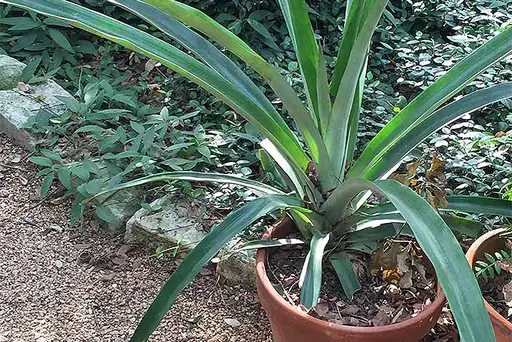
I can’t tell you how much fun it is to create beauty from kitchen waste. I also really love free plants.
With pineapple (Ananas comosus), you can have both.
From the leafy top of a pineapple — the part you would normally discard or compost — you can grow a beautiful plant that may bloom and produce fruit.
Let’s get started!
First, We Eat
Select a healthy pineapple at the grocery store that has attractive, healthy-looking foliage. Slice the top part off about 1/2 inch below the base of the cluster of leaves.
Photo by Gretchen HeberCut up the rest of the pineapple as you normally would, and chow down as you prepare the top for planting.
Trim away the tough outer “skin” of the pineapple top, and remove a few of the lowest leaves. Place the crown in a sunny spot to dry for three to five days. This allows the moist core tissue to dry and discourages rotting, according to Richard Jauron at the University of Iowa Department of Horticulture Extension and Outreach.
Photo by Gretchen HeberNext, you can then either place the crown into water or soil.
Water Method
To root the crown in water, insert toothpicks around the perimeter of the crown and suspend it in the water as you would an avocado pit. Alternatively, find a glass container the crown will just “sit” in.
Photo by Gretchen HeberPlace the container in a bright spot with indirect light, and change the water once a week.
Roots should form after 2-3 weeks in the water bath. When the roots are 2-3 inches long, you can transfer the crown into a container of light soil mix.
This method is particularly fun for gardening with children in the wintertime, since they can check on the progress of the roots as they grow.
Soil Method
Use a light soil mix made with perlite or vermiculite and sand. Insert the crown in the soil up to the base of the leaves and place in bright, indirect light.
Keep the soil moist, but not wet. Rooting should occur in 6 to 8 weeks.
If you live anywhere other than zones 10 or 11, you’ll want to keep your tropical plant in a container and bring it indoors before the first frost. Super-southerners may be able to plant directly in the landscape.
Photo by Gretchen HeberI recommend using a soluble houseplant fertilizer to feed the plant once or twice a month during spring and summer, and just once monthly in fall and winter.
I have to make a confession: I didn’t know any of the above when I started my first pineapple plant from a kitchen scrap. I just cut off the top as I usually do, and stuck it in a pot of who-knows-what soil out in the backyard. And it did just fine on my property in Texas, rooting and growing a beautiful leafset.
To Fruit, or Not to Fruit?
Some folks enjoy these plants as houseplants year ‘round. Others, like me, bring them indoors when it’s chilly but return them to the yard come springtime.
Wherever your plant resides, make sure it gets at least six hours of bright light per day. Allow it to dry out between waterings.
Pineapples are fairly slow-growing, and you might not see blooms for two or three years, if at all. My oldest plant is about three years old and it has yet to bloom. But honestly, I’m just happy with the foliage. If it blooms, that would be a bonus, but I really just like the long, shiny, sword-like leaves.
Some experts say to put your pineapple plant in a plastic bag with an apple, which releases blossom-inducing ethylene gas. This may encourage flowering in two to three months.
If you do get a fruit, saw it off when the outside skin starts changing from brown to yellow. But be careful to beat the greedy squirrels to your bounty!
Mother Nature’s Marvel
I am happy every time I walk by my pineapple plants — I love getting something for nothing. And I love when visitors ask about the unusual plant that’s placed prominently on a walkway in the backyard.
Photo by Gretchen HeberI get to tell them it was from a fruit our family ate a few years ago, and they’re amazed. And then I tell them to just cut the top off, clean it up a little bit and stick it in dirt, and they’re even more amazed.
Have you ever grown a pineapple plant from a kitchen scrap? Did it bear fruit? Tell us about it in the comments section below, and if you’d like to try your hand at growing another tropical plant, consider ginger. or check out our article on growing tropical flavor intensives and herbs at home.
- Facebook758
- X




Pytania i dyskusja