

Ta strona jest wyświetlana w oryginalnym języku. Tłumaczenie nie jest jeszcze dostępne.
Selekcja Seedsun
Abeliophyllum distichum
SKU: ABEL-DIST-01G
Abeliophyllum is a genus of a single species, first described from Korea in 1919 and grown in Western gardens since the 1930s, when it earned an Award of Merit from the Royal Horticultural Society. It belongs to the olive family beside lilac and forsythia, and in the wild it clings on at only a.
Poproś o indywidualną wycenę
Ceny, rozmiary opakowań i dostępność zostaną potwierdzone w Państwa indywidualnej wycenie. Wysłanie zapytania nie oznacza złożenia opłaconego zamówienia.
Zapytaj o przydatność, wymagania dotyczące siewu i uprawy.
Potwierdź opcje dostawy i wymagane dokumenty w swojej ofercie.
O tej odmianie
Abeliophyllum is a genus of a single species, first described from Korea in 1919 and grown in Western gardens since the 1930s, when it earned an Award of Merit from the Royal Horticultural Society. It belongs to the olive family beside lilac and forsythia, and in the wild it clings on at only a handful of Korean sites, where it is now protected by law as an endangered plant. This is the white-flowered species itself, the parent of the better-known pink form.
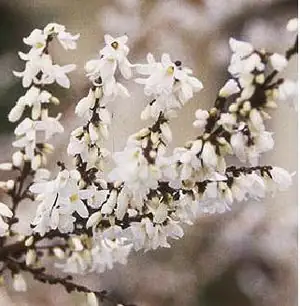
It is among the earliest shrubs to bloom, opening before forsythia and most everything else. In late winter, fragrant white flowers tinged faintly with pink break from purplish buds along the bare grey wood, weeks ahead of any leaf, carrying a clean almond sweetness on cold air. A multi-stemmed deciduous shrub of four to six feet, it is hardy through hard winters and altogether tougher than its delicate flowering suggests.
Give it full sun to part shade and ordinary well-drained soil with good moisture; it flowers most freely in sun. It can run a little leggy if neglected, so prune right after bloom to keep it shapely, since the flowers form on the previous year's wood. Dark green foliage follows and carries the plant quietly through the season.
In the garden, treat it as a herald of spring. Plant it where you pass close in the cold months, by a door or along a path, so the fragrance finds you, and cut branches to force indoors. It is lovely among hellebores, snowdrops, and early bulbs, and rare enough to be a quiet conversation piece.
Więcej do odkrycia



Pytania i dyskusja