

Ta strona jest wyświetlana w oryginalnym języku. Tłumaczenie nie jest jeszcze dostępne.
Selekcja Seedsun
Acer rubrum 'Candy Ice'
SKU: ACER-RUBR-CAND-ICE-01G
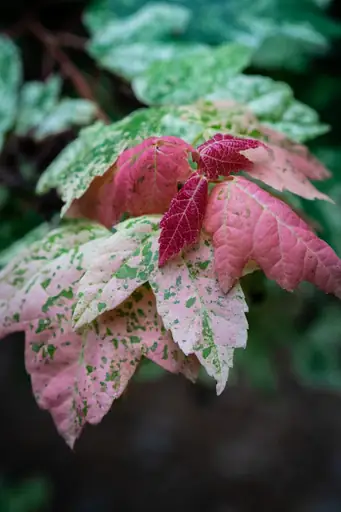
Acer rubrum 'Candy Ice' is a introduction, found in southwest Virginia by the late Norman Beal. We use Norman's original name, though the same tree has been circulated elsewhere as 'Snowfire'. This is an unusual variegated red maple, the leaves marbled in pink, white, and green, and the foliage.
Poproś o indywidualną wycenę
Ceny, rozmiary opakowań i dostępność zostaną potwierdzone w Państwa indywidualnej wycenie. Wysłanie zapytania nie oznacza złożenia opłaconego zamówienia.
Zapytaj o przydatność, wymagania dotyczące siewu i uprawy.
Potwierdź opcje dostawy i wymagane dokumenty w swojej ofercie.
O tej odmianie
Acer rubrum 'Candy Ice' is a introduction, found in southwest Virginia by the late Norman Beal. We use Norman's original name, though the same tree has been circulated elsewhere as 'Snowfire'. This is an unusual variegated red maple, the leaves marbled in pink, white, and green, and the foliage burns early, among the first to color when fall arrives.
Pyramidal in youth, 'Candy Ice' broadens with age into an irregular, rounded crown on the vigorous frame of a native red maple, reaching forty to sixty feet in time. The variegation is the draw and also the caution: those pale leaves scorch in full sun, so this maple wants the relief of part shade, where the pink and cream stay clean and bright. Small red flowers open before the leaves in earliest spring, the familiar red-maple signal that winter is loosening, and ripen into reddish samaras, the keys of a tree long called soft maple.
The red maple, Acer rubrum, is one of the most widespread trees of eastern North America, and Native peoples knew the species well. The Cherokee, Iroquois, Ojibwe, and Potawatomi prepared a bark decoction as a wash for sore and inflamed eyes, while inner-bark teas were taken for coughs and stomach complaints, and the tannin-rich bark also yielded ink and, with iron added, a dark blue dye for cloth. 'Candy Ice' is grown for beauty rather than use, yet the variegated leaves carry that deep American lineage.
Site 'Candy Ice' in part shade as a specimen where the marbled foliage and early fall color can be enjoyed, keeping the leaves clear of harsh afternoon sun and drying wind. The tree thrives in moist to average, well-drained soil and tolerates the damp ground red maples often colonize. A conversation piece for the collector's garden, and a piece of southern plant history besides.
Więcej do odkrycia



Pytania i dyskusja