

Ta strona jest wyświetlana w oryginalnym języku. Tłumaczenie nie jest jeszcze dostępne.
Selekcja Seedsun
Camellia granthamiana
SKU: CAME-GRAN-01G
High in the shaded ravines of Hong Kong's Tai Mo Shan, a single camellia tree stood unrecognized until 1955, when the Agricultural, Fisheries and Conservation Department documented an unexpected beauty among the undergrowth. The botanist J. R. Sealy soon described a new species and named the tree.
Poproś o indywidualną wycenę
Ceny, rozmiary opakowań i dostępność zostaną potwierdzone w Państwa indywidualnej wycenie. Wysłanie zapytania nie oznacza złożenia opłaconego zamówienia.
Zapytaj o przydatność, wymagania dotyczące siewu i uprawy.
Potwierdź opcje dostawy i wymagane dokumenty w swojej ofercie.
O tej odmianie
High in the shaded ravines of Hong Kong's Tai Mo Shan, a single camellia tree stood unrecognized until 1955, when the Agricultural, Fisheries and Conservation Department documented an unexpected beauty among the undergrowth. The botanist J. R. Sealy soon described a new species and named the tree Camellia granthamiana, honoring the then-Governor Sir Alexander Grantham.
For years that lone specimen stood as the only known plant of the kind. A few more populations have since turned up on Hong Kong's Ma On Shan and across parts of Guangdong, yet the species remains genuinely rare, a whisper of hope in a landscape worn thin by time.
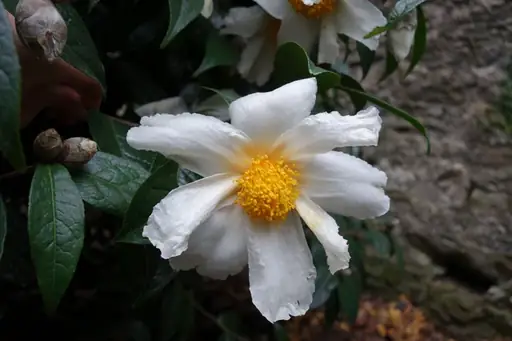
Grantham's camellia is as distinctive as the story. The tree carries enormous single white blooms, up to four or five inches across, each built around a broad cluster of golden stamens that gives the famous fried-egg effect. Leathery, dark green leaves with deeply impressed veins set off the flowers, which open in late autumn and early winter to bridge the seasons with a serene, almost ceremonial presence.
Rarity has made the species a conservation priority. Grantham's camellia is protected under Hong Kong's Forestry Regulations and listed in national and international conservation registers, and in 2024 the Hong Kong Biodiversity Genomics Consortium published a chromosome-scale genome of the plant, a foundation for genetic conservation and a deeper understanding of where this camellia sits within the genus. More than an ornamental, Grantham's camellia is a living monument carried from a remote ravine to the garden, with striking blooms and a fragile botanical history worth stewarding.
Photos courtesy of James Garnett.
Więcej do odkrycia



Pytania i dyskusja