

Ta strona jest wyświetlana w oryginalnym języku. Tłumaczenie nie jest jeszcze dostępne.
Selekcja Seedsun
Ehretia anacua
SKU: EHRE-ANAC-01G
Anacua, Ehretia anacua, is one of the signature small trees of the south Texas brush country and the lower Rio Grande, a member of the borage family that goes by a small crowd of names. The rough, sandpapery upper surface of the leaves earns the tag sandpaper tree, while old-timers along the border.
Poproś o indywidualną wycenę
Ceny, rozmiary opakowań i dostępność zostaną potwierdzone w Państwa indywidualnej wycenie. Wysłanie zapytania nie oznacza złożenia opłaconego zamówienia.
Zapytaj o przydatność, wymagania dotyczące siewu i uprawy.
Potwierdź opcje dostawy i wymagane dokumenty w swojej ofercie.
O tej odmianie
Anacua, Ehretia anacua, is one of the signature small trees of the south Texas brush country and the lower Rio Grande, a member of the borage family that goes by a small crowd of names. The rough, sandpapery upper surface of the leaves earns the tag sandpaper tree, while old-timers along the border call the tree anacua or, corrupted through generations, knockaway. Evergreen to semi-evergreen depending on the winter, the anacua holds dark green, leathery leaves that feel like fine grit under a thumb.
In spring, and often again after summer rains, the tree covers itself in dense two-to-three-inch panicles of small, white, sweetly fragrant flowers, a display heavy enough to look like a late snow and rich enough to draw clouds of bees. The flowers give way to small, round drupes about a quarter inch across that ripen from green through yellow to orange. The fruit is edible and pleasantly sweet, if a little mealy, and has long been eaten fresh or cooked into jellies, though people tend to lose the race to the birds and mammals that strip a fruiting anacua in short order.
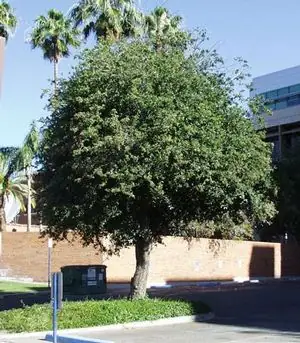
Anacua shifts shape with the site. On good ground with room and water the tree matures into a round-crowned specimen twenty to forty feet tall with handsome, flaking, cinnamon-and-gray bark, while on dry, poor soils the same species stays lower and suckers into a dense, multi-stemmed thicket. Both forms are useful: the single-trunk tree makes a tough, drought-proof shade or street tree for hot climates, and the suckering form reads as a wildlife hedge or screen. Let the anacua stand as a specimen where the spring bloom and the fruiting birds can be enjoyed, or plant a run of them for cover.
Little troubles this tree. Native to south Texas and northeastern Mexico and hardy in USDA zones 8 through 11, the anacua takes full sun, tolerates a wide range of soils including thin, alkaline, caliche ground, and shrugs off heat and drought once established. Frost at the cold edge of the range may cut back young growth, but the tree returns. Uncommon in cultivation outside the native south Texas, the anacua deserves a wider audience among gardeners who want a tough, fragrant, wildlife-feeding native for difficult sites.
Fruit picture courtesy of Rachel Cywinski.
Więcej do odkrycia



Pytania i dyskusja