

Ta strona jest wyświetlana w oryginalnym języku. Tłumaczenie nie jest jeszcze dostępne.
Selekcja Seedsun
Ilex vomitoria 'Yawkey'
SKU: ILEX-VOMI-YAWK-01G
Yaupon is the small-leaved evergreen holly of the Southeast, native along the coastal plain from Virginia to Texas and a member of the holly family, Aquifoliaceae. Salt tolerant, drought tolerant, and willing in sun or shade, Ilex vomitoria shears as cleanly as boxwood and has long been a Southern.
Poproś o indywidualną wycenę
Ceny, rozmiary opakowań i dostępność zostaną potwierdzone w Państwa indywidualnej wycenie. Wysłanie zapytania nie oznacza złożenia opłaconego zamówienia.
Zapytaj o przydatność, wymagania dotyczące siewu i uprawy.
Potwierdź opcje dostawy i wymagane dokumenty w swojej ofercie.
O tej odmianie
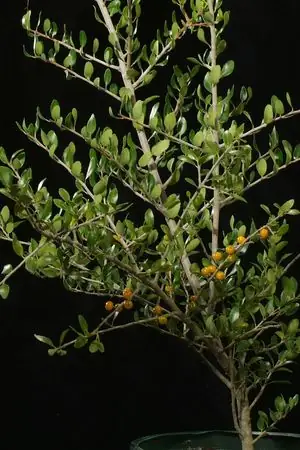
Yaupon is the small-leaved evergreen holly of the Southeast, native along the coastal plain from Virginia to Texas and a member of the holly family, Aquifoliaceae. Salt tolerant, drought tolerant, and willing in sun or shade, Ilex vomitoria shears as cleanly as boxwood and has long been a Southern mainstay for hedges and clipped structure, the females carrying translucent scarlet berries into winter. ‘Yawkey’ rewrites that last detail in a rarer color: this is a yellow-berried yaupon, hung each winter with soft amber-gold fruit instead of red, on an upright, somewhat open and spreading frame.
The species behind this oddity is no ordinary shrub. Roasted yaupon leaves and twigs were the source of the caffeinated black drink that Indigenous peoples of the Southeast brewed for ceremony, council, and trade, and that coastal colonists later drank as a homegrown coffee or tea. Yaupon remains North America’s only caffeine-bearing native plant. The unkind species name, vomitoria, records a European misreading of the ritual purging that sometimes attended the drink, a fault the holly does not carry, since modern analysis of the leaves finds neither emetic nor toxic compounds and caffeine at ordinary tea strength; the common name, from the Catawban ya’pa, means simply small tree. The fruit is the exception, mildly toxic to people and pets, and better left to the birds.
The yellow-fruited form was found by F. G. Tarbox, Jr. on the T. A. Yawkey plantation in Georgetown County, South Carolina, and introduced by Brookgreen Gardens, where a single rescued seedling first fruited in 1943. Tarbox had learned of the plant from Dr. F. A. Bell of Georgetown, who had seen a yellow yaupon growing on an old dike. Tarbox described the plant as Ilex vomitoria variety yawkeyii, the berries yellow, four to six millimeters across and slightly flattened; at the time only a couple of other plants were known to exist. Even now the yellow yaupons remain scarce in the trade, which is much of the appeal for collectors and designers hunting something out of the ordinary.
In the garden ‘Yawkey’ plays against every expectation of a holly. The amber-gold fruit glows where scarlet would shout, lovely against dark evergreens, a gray wall, or a winter sky, and pairs beautifully with a red-berried yaupon for a two-tone planting. The upright, open habit suits an informal screen or a specimen more than a tight clipped hedge, though the plant shears if asked. Site in sun for the best fruit, and keep a male yaupon within bee range for pollination: our straight Ilex vomitoria male, or the columnar ‘Will Fleming’ where there is no room for a second broad shrub. One male serves six to eight females. Read our field notes and design guide for this holly here.
Więcej do odkrycia



Pytania i dyskusja