

Ta strona jest wyświetlana w oryginalnym języku. Tłumaczenie nie jest jeszcze dostępne.
Selekcja Seedsun
Magnolia acuminata
SKU: MAGN-ACUM-01G
Magnolia acuminata, the cucumbertree, is the giant of the native magnolias and the only one hardy far into the North. A deciduous forest tree of the eastern United States, most majestic in the southern Appalachians, the cucumbertree can rise seventy to ninety feet into a broad, rounded canopy,.
Poproś o indywidualną wycenę
Ceny, rozmiary opakowań i dostępność zostaną potwierdzone w Państwa indywidualnej wycenie. Wysłanie zapytania nie oznacza złożenia opłaconego zamówienia.
Zapytaj o przydatność, wymagania dotyczące siewu i uprawy.
Potwierdź opcje dostawy i wymagane dokumenty w swojej ofercie.
O tej odmianie
Magnolia acuminata, the cucumbertree, is the giant of the native magnolias and the only one hardy far into the North. A deciduous forest tree of the eastern United States, most majestic in the southern Appalachians, the cucumbertree can rise seventy to ninety feet into a broad, rounded canopy, valued as a fast-growing, exceptionally hardy shade tree for parks and large lawns.
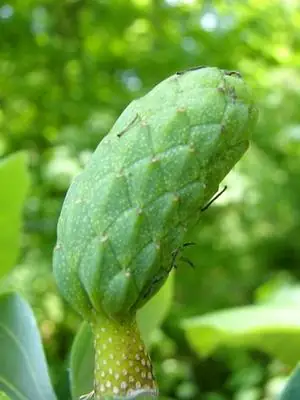
The odd common name comes from the young fruit: the knobby, elongated seed cones look, when green and unripe, remarkably like small cucumbers, before ripening to a startling pink-red and splitting to drop scarlet seeds. The tulip-shaped spring flowers are the quiet ones of the genus, greenish yellow and held high among the leaves, easy to miss, yet those same flowers carry the yellow pigment that breeders have used to create the celebrated yellow magnolias like 'Elizabeth' and 'Butterflies'. The leaves are large, six to eight inches long, with the tapered tip the epithet acuminata describes, and the genus itself honors Pierre Magnol, the seventeenth-century French botanist of Montpellier.
This is a working tree as much as an ornamental one. The pale, straight-grained wood resembles that of the related tulip tree, Liriodendron, and has long been cut and sold with it as yellow poplar. Nurseries and plant breeders prize the cucumbertree twice over: as a tough rootstock onto which choicer magnolias are grafted, and as the cold-hardy, yellow-flowered parent behind many modern hybrids. Native peoples and early settlers steeped the aromatic bark as a folk tonic, one of the tree's quieter historical uses.
Give the cucumbertree room, because this is a tree for the long view and the large space: a park, a big lawn, a woodland edge, where the massive trunk and high canopy can develop over generations. Full sun to part shade and deep, rich, well-drained soil suit the tree best, and the fast early growth rewards patience quickly. Site the cucumbertree as a stately shade tree and a piece of American forest heritage, and leave the fallen pink fruit for the birds.
Więcej do odkrycia



Pytania i dyskusja