

Ta strona jest wyświetlana w oryginalnym języku. Tłumaczenie nie jest jeszcze dostępne.
Selekcja Seedsun
Phlox divaricata
SKU: PHLO-DIVA-01Q
Wild blue phlox turned up in the catalog almost by insisting on it, growing in the woods around Aiken the way the plant has for as long as anyone can remember. We have watched these colonies for years, and taking this long to offer them is either a comment on our patience or on our woody bias..
Poproś o indywidualną wycenę
Ceny, rozmiary opakowań i dostępność zostaną potwierdzone w Państwa indywidualnej wycenie. Wysłanie zapytania nie oznacza złożenia opłaconego zamówienia.
Zapytaj o przydatność, wymagania dotyczące siewu i uprawy.
Potwierdź opcje dostawy i wymagane dokumenty w swojej ofercie.
O tej odmianie
Wild blue phlox turned up in the catalog almost by insisting on it, growing in the woods around Aiken the way the plant has for as long as anyone can remember. We have watched these colonies for years, and taking this long to offer them is either a comment on our patience or on our woody bias. Possibly both.
Phlox divaricata is a native of the eastern woodland understory, ranging from Quebec to the Gulf Coast and west to the Great Plains, a distribution that speaks to a plant far more adaptable than the delicate look suggests. In the wild the phlox threads through rich, humus-filled soils beneath deciduous canopy, forming loose colonies on the forest floor where the light arrives filtered and the moisture stays reliable. In the garden the habit is the same: a spreading, semi-evergreen groundcover that quietly fills the difficult shaded spaces where little else thrives.
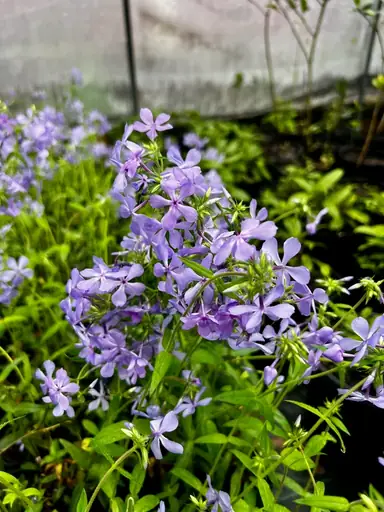
The flowers arrive in mid-spring, April into May, in loose clusters atop slender stems that stand ten to fifteen inches above the mat of foliage. The color runs from the palest lavender-blue to a deeper violet, now and then white, each five-petaled flower with a slightly notched petal tip that lends the clusters a softly fringed look up close. The fragrance is light and sweet, present on warm afternoons rather than assertive, and swallowtails find the flowers reliably.
What makes Phlox divaricata worth growing, beyond the flowers, is the behavior across the other ten months. The semi-evergreen foliage forms a low, dense mat that suppresses weeds, holds the soil, and lends quiet structure to shaded beds through winter. The phlox spreads steadily but not aggressively, slowly colonizing the ground you want covered without pressing claims on the ground you don't. A native plant doing native-plant things, with rather more grace than most.
Więcej do odkrycia



Pytania i dyskusja