

Ta strona jest wyświetlana w oryginalnym języku. Tłumaczenie nie jest jeszcze dostępne.
Selekcja Seedsun
Rhus glabra
SKU: RHUS-GLAB-01G
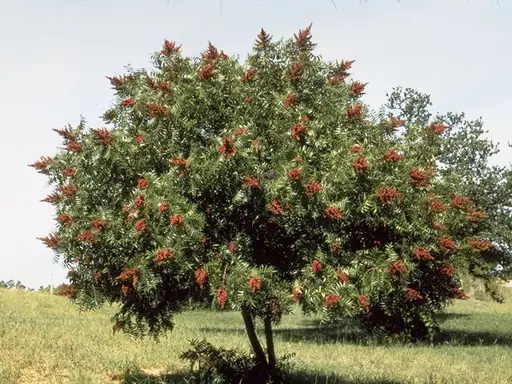
Smooth sumac is a bold, colony-forming native shrub of the eastern and central United States, in time reaching the scale of a small tree, and one of the finest plants going for a hot, dry, sunny site where little else will thrive. The long, pinnately compound leaves give an almost tropical texture.
Poproś o indywidualną wycenę
Ceny, rozmiary opakowań i dostępność zostaną potwierdzone w Państwa indywidualnej wycenie. Wysłanie zapytania nie oznacza złożenia opłaconego zamówienia.
Zapytaj o przydatność, wymagania dotyczące siewu i uprawy.
Potwierdź opcje dostawy i wymagane dokumenty w swojej ofercie.
O tej odmianie
Smooth sumac is a bold, colony-forming native shrub of the eastern and central United States, in time reaching the scale of a small tree, and one of the finest plants going for a hot, dry, sunny site where little else will thrive. The long, pinnately compound leaves give an almost tropical texture through summer, and the plant spreads by root suckers into broad, picturesque colonies, or can be held to a single tree-like specimen where the suckers are controlled.
Panicles of greenish-yellow flowers open in June and July, feeding bees and other pollinators, and female plants follow with erect, cone-shaped panicles of fuzzy crimson fruit that persist through winter and blaze against the snow. In autumn the foliage turns a brilliant scarlet, as fiery as any native shrub, so smooth sumac earns a place for both the fall color and the long-held fruit. The smooth, waxy stems, free of the velvety hairs of staghorn sumac, give the plant the name glabra.
Few native shrubs carry a richer human history. The tart red berries, high in vitamin C, steep in cool water into a red, lemonade-like drink long enjoyed across the plant's range, and Indigenous peoples across the continent drew on the astringent, tannin-rich roots, bark, leaves, and berries for a wide range of traditional remedies, from teas for digestive complaints and sore throats to dressings for the skin. The inner bark and berries also yielded yellow and red dyes. Modern interest in the genus Rhus centers on the tannins and gallic acid behind that astringent chemistry.
Give smooth sumac a large, sunny, dry site with room to run: a hot bank, a wild border, a naturalized edge, or a mass planting for erosion control, where the suckering colony is welcome. For a tidier effect, plant where mowing or edging can hold the spread, or grow a single specimen and remove the suckers. Pair with little bluestem, asters, and other tough sun-lovers, set a female plant for the fruit, and let the scarlet fall color and crimson winter panicles carry the season. Deer tend to pass the plant by, and drought only makes the colony tougher.
Additional photos courtesy of the Loughmillers and David Northington
Więcej do odkrycia



Pytania i dyskusja