

Ta strona jest wyświetlana w oryginalnym języku. Tłumaczenie nie jest jeszcze dostępne.
Selekcja Seedsun
Ruellia coccinea
SKU: RUEL-COCC-01G
Ruellia coccinea belongs to the acanthus family and comes from the Caribbean, native to Puerto Rico and the Virgin Islands, where the plant grows as a scarlet-flowered subshrub in warm, humid woodland. The Spanish common name, Yerba Maravilla, reads roughly as marvel herb, a fitting nod to the.
Poproś o indywidualną wycenę
Ceny, rozmiary opakowań i dostępność zostaną potwierdzone w Państwa indywidualnej wycenie. Wysłanie zapytania nie oznacza złożenia opłaconego zamówienia.
Zapytaj o przydatność, wymagania dotyczące siewu i uprawy.
Potwierdź opcje dostawy i wymagane dokumenty w swojej ofercie.
O tej odmianie
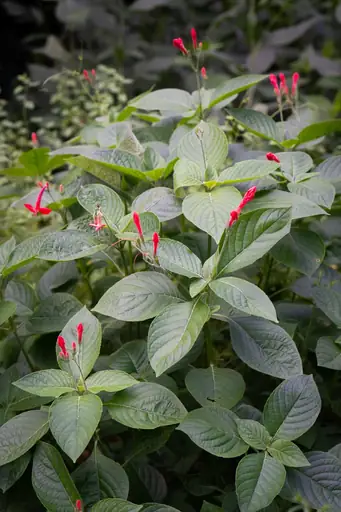
Ruellia coccinea belongs to the acanthus family and comes from the Caribbean, native to Puerto Rico and the Virgin Islands, where the plant grows as a scarlet-flowered subshrub in warm, humid woodland. The Spanish common name, Yerba Maravilla, reads roughly as marvel herb, a fitting nod to the near-constant show. Through the whole of summer R. coccinea produces slender tubular flowers about an inch long, each opening into five spreading scarlet lobes, borne in clusters from the upper leaf axils and unfurling in succession from early summer until the first frost.
That flower shape is no accident. The narrow scarlet tube is precisely the architecture a hummingbird's bill and tongue are built to enter, and hummingbirds treat a settled plant as a fixed point on their daily route. On a warm afternoon in full flush, the traffic around the flowers is considerable, with swallowtails and long-tongued native bees working the blooms alongside the birds. Deep green, glossy, ovate leaves three to four inches long lend the whole a lush, tropical-adjacent presence that sets off the scarlet.
The plant is more substantial than the phrase summer perennial suggests. In Zone 9 and warmer R. coccinea behaves as a woody subshrub, building a rounded, open-branched mound of three to four feet, sometimes taller where frost never reaches. In Zone 8 the top may die back in a hard winter and return with vigor from the roots in spring, a reliable perennial by a slightly different route. A cut back at midsummer pushes a fresh flush of growth and flowers that carries the display well into autumn.
One point is worth making plainly. Some Southern gardeners pass the genus by, having learned to distrust Ruellia on account of R. simplex, the Mexican petunia that has colonized Florida ditches and wetlands. The two share a name and a family; they share neither habit, temperament, nor growth strategy. This one stays where planted and earns a place among the best of the late-summer hummingbird plants.
Więcej do odkrycia



Pytania i dyskusja