

Ta strona jest wyświetlana w oryginalnym języku. Tłumaczenie nie jest jeszcze dostępne.
Selekcja Seedsun
Sassafras albidum
SKU: SASS-ALBI-01G
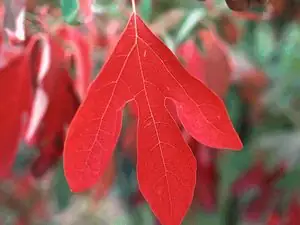
Few native trees announce themselves as cheerfully as Sassafras albidum, whose leaves come in three shapes on the same branch: an unlobed oval, a two-lobed mitten, and a three-lobed silhouette like a splayed hand. A member of the laurel family, Lauraceae, and kin to bay, cinnamon, and spicebush,.
Poproś o indywidualną wycenę
Ceny, rozmiary opakowań i dostępność zostaną potwierdzone w Państwa indywidualnej wycenie. Wysłanie zapytania nie oznacza złożenia opłaconego zamówienia.
Zapytaj o przydatność, wymagania dotyczące siewu i uprawy.
Potwierdź opcje dostawy i wymagane dokumenty w swojej ofercie.
O tej odmianie
Few native trees announce themselves as cheerfully as Sassafras albidum, whose leaves come in three shapes on the same branch: an unlobed oval, a two-lobed mitten, and a three-lobed silhouette like a splayed hand. A member of the laurel family, Lauraceae, and kin to bay, cinnamon, and spicebush, sassafras carries aromatic oils in every part, so that a snapped twig or crushed leaf releases a warm, root-beer sweetness. The common name traces back through Spanish to the colonial Southeast, where the tree was among the first American plants shipped to Europe as a marketable medicine.
Widespread through the eastern United States, sassafras is one of the region's most ornamental natives and, oddly, one of the least offered for landscape use. The trees reach thirty to sixty feet, forming a rounded, layered crown, and in autumn the foliage turns a riot of clear yellow, orange, and scarlet, often on a single tree. Small yellow flowers open in early spring before the leaves, and where a female tree grows near a male, they ripen into blue-black fruits held on coral-red stalks, quickly stripped by songbirds. Sassafras is also the larval host of the spicebush swallowtail and palamedes swallowtail butterflies, whose caterpillars feed on the leaves.
No native tree has a richer ethnobotanical record. Indigenous peoples of the Southeast treated sassafras as a whole apothecary, using root, bark, and leaf against fevers, coughs, digestive trouble, rheumatism, and wounds, and colonists soon adopted the aromatic root bark as a spring tonic and the flavoring backbone of traditional root beer. The dried, ground leaves become file, the thickening and seasoning still stirred into Louisiana gumbo. The tree's signature oil is rich in safrole, later found to be toxic to the liver in concentration, and in 1960 the United States Food and Drug Administration barred safrole from commercial foods and drugs; the root beers and teas that keep the name today are made safrole-free.
In the garden, give sassafras room to sucker and a naturalistic grove will build itself, splendid at a woodland edge, in a native or wildlife planting, or as a specimen where the fall color can blaze against evergreens. Where a single-trunked tree is wanted, simply remove the suckers as they rise. Plant in well-drained, acid to neutral soil, in sun to part shade, and pair with dogwoods, native azaleas, and other understory companions that share the light. Site the tree where a passerby can crush a leaf and catch the scent, the surest introduction sassafras can give.
Więcej do odkrycia



Pytania i dyskusja