

Ta strona jest wyświetlana w oryginalnym języku. Tłumaczenie nie jest jeszcze dostępne.
Selekcja Seedsun
Scutellaria serrata
SKU: SCUT-SERR-01G
Showy skullcap earns the flattering half of the common name honestly: of the eastern woodland skullcaps, Scutellaria serrata carries some of the largest and most richly colored flowers. The genus name comes from the Latin scutella, a little dish or tray, for the small pouch on the upper side of the.
Poproś o indywidualną wycenę
Ceny, rozmiary opakowań i dostępność zostaną potwierdzone w Państwa indywidualnej wycenie. Wysłanie zapytania nie oznacza złożenia opłaconego zamówienia.
Zapytaj o przydatność, wymagania dotyczące siewu i uprawy.
Potwierdź opcje dostawy i wymagane dokumenty w swojej ofercie.
O tej odmianie
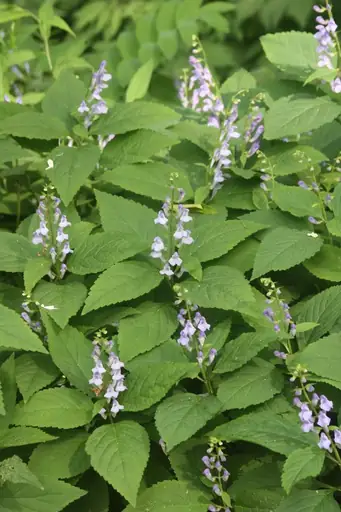
Showy skullcap earns the flattering half of the common name honestly: of the eastern woodland skullcaps, Scutellaria serrata carries some of the largest and most richly colored flowers. The genus name comes from the Latin scutella, a little dish or tray, for the small pouch on the upper side of the seed capsule that gives every skullcap its family resemblance. A member of the mint family, Lamiaceae, showy skullcap keeps the square stems and paired leaves of that clan, here with bright green, boldly toothed foliage often edged in wine-red.
Native to the eastern United States, from southern New York and Ohio south through the Appalachians to Georgia and Alabama, showy skullcap grows in rich, deciduous woodland and along shaded slopes. From a tidy clump, upright spikes of lavender to violet-blue flowers rise in late spring and early summer, each bloom a hooded tube built for a bee to push into. The plant holds a neat mound roughly one to two feet high, well-behaved and long-lived, and without the running habit of some mint-family relatives.
The skullcaps carry a long medicinal reputation, though it belongs chiefly to a few relatives rather than to this species. American skullcap, Scutellaria lateriflora, was widely used as a calming nervine in nineteenth-century North American practice, and Chinese skullcap, Scutellaria baicalensis, remains a foundational herb of traditional Chinese medicine. Scutellaria serrata itself is grown as an ornamental and has no notable tradition of medicinal use; the genus association is a piece of botanical background rather than a recommendation.
In the garden, showy skullcap belongs at the front of a shaded or part-shaded border, in a woodland planting, or drifted through a native bed, where the early-summer blue fills the gap between spring ephemerals and high-summer bloom. Native bees work the flowers eagerly, and the bitter foliage is generally left alone by deer and rabbits. Pair showy skullcap with ferns, woodland phlox, foamflower, and sedges in humus-rich, well-drained soil, and let the clump settle into a dependable, quietly elegant presence.
Więcej do odkrycia



Pytania i dyskusja