
15 of the Best Shrubs for Hedges
Planting a hedge is one of the friendliest ways to put a border around a property. Unlike fences, shrubs take time to grow, allowing you to ease into defining your space. In addition to creating privacy, hedging is a great way to divide gardens, line the sides of a driveway, and trim your home’s.
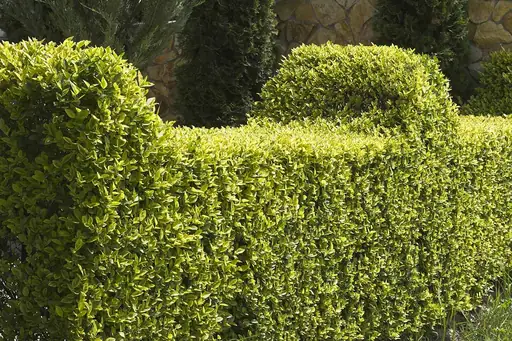
Planting a hedge is one of the friendliest ways to put a border around a property.
Unlike fences, shrubs take time to grow, allowing you to ease into defining your space.
In addition to creating privacy, hedging is a great way to divide gardens, line the sides of a driveway, and trim your home’s foundation.
The culture of planting trees and shrubs in dense, interwoven lines dates back thousands of years to the fields of farmers who needed to pen livestock and shield tender crops from seaborne winds.
In medieval days, dense thickets of thorny hawthorn kept enemies at bay.
Today’s hedges are living walls that create privacy and adorn garden spaces, forming natural borders that are functional and beautiful.
The following shrubs have stood the test of time and merit recognition as 15 of the best for hedging.
Some function well in a formal display, while others are best left to their own devices for an unassuming hedgerow.
You’re sure to find suitable options for your outdoor living space among these winners.
Here’s the lineup:
15 of the Best Shrubs for Hedges High and Low
1. Blue Arrow Juniper
2. Common Lilac
3. Double Take Quince
4. Emerald Green Arborvitae
5. Funshine Abelia
6. Green Spire Euonymus
7. Lemon Hedge Sunflower
8. Little Missy Boxwood
9. Maki Yew Pine
10. Midnight Sun Weigela
11. Otto Luyken Cherry Laurel
12. Red Tip Photinia
13. Red Twig Dogwood
14. Strongbox Inkberry Holly
15. Sunrise Forsythia
In England and Ireland, the ancient tradition of “hedge laying” is still practiced in the countryside today, in which shrub branches are cut, bent, and intermingled to create dense barriers.
More recently, formal gardens in Europe have been framed by natural borders of artistically pruned bushes that create regal, manicured landscapes.
In the broadest sense, any woody plants spaced close together to form a barrier constitute a hedge, from a towering cypress windscreen to a knee-high border of lavender.
The definition is then fine-tuned as follows:
- Formal or Informal
- Deciduous or Evergreen
When a row of intertwined shrubs is pruned, we call this a formal style. When the shrubs take their natural forms, we call it informal.
Some shrubs are evergreen in one climate and deciduous in another, something to keep in mind when making selections.
What are you looking for in a hedge?
Do you want shrubbery that’s fast growing, evergreen, and tall, to block your view of the gas station on the corner?
In addition to creating an attractive sight line, plants absorb pollutants and noise.
Perhaps you are establishing a driveway edging of shrubs to invigorate your curb appeal and keep guests from crossing the lawn to get to their cars.
Knowing your needs will help you select the right types for your property.
Be aware that while formal varieties require pruning on a regular basis, even informal ones may benefit from occasional clipping.
Let’s look at the highlights of each.
1. Blue Arrow Juniper
Evergreen Juniperus scopulorum ‘Blue Arrow’ juniper is a fast-growing cultivar for Zones 4 to 9. It has distinctive blue-green foliage and a trim, formal profile.
The branches of this upright juniper curve slightly from the base, spreading one to two feet and coming to a graceful point at a height of 10 to 15 feet.
It’s the perfect small space solution where privacy is desired.
‘Blue Arrow’ Juniper
Disease- and pest-resistant, ‘Blue Arrow’ adapts to various soils provided they drain well. It does best in full sun but tolerates part shade.
Find tips for growing junipers here.
2. Common Lilac
Common lilac (Syringa vulgaris) has deciduous leaves and robust panicles of lavender to purple spring blossoms for a flouncy, informal appearance. It is well-suited to Zones 3 to 7.
Mature heights are an imposing 12 to 16 feet tall with a spread of eight to 12 feet.
Allow it to achieve its full stature unimpeded for a low-maintenance, wildlife-friendly perimeter barrier.
Purple Common Lilac
Lilacs do best with organically-rich, moist soil and full sun.
Our guide to growing lilac bushes has planting and care instructions.
3. Double Take Quince
Passersby are sure to turn for a second look when they see Double Take™ scarlet quince (Chaenomeles speciosa ‘Scarlet Storm’) lighting up your early spring landscape with bright red double-petaled, camellia-like flowers.
It is suited to full sun placements in Zones 5 to 9.
Double Take™ Quince
This ornamental, fruitless cultivar is thornless for easy pruning post-bloom. It has a branching growth habit and foliage to the ground for no unsightly “bare legs.”
Mature dimensions are a modest three to four feet tall and four to five feet wide, making it a substantial yet friendly property divider.
See our guide to growing flowering quince for tips on cultivation.
4. Emerald Green Arborvitae
For a fast-growing, column-shaped shrub that creates privacy and blocks wind, consider Thuja occidentalis ‘Emerald Green’ arborvitae.
Suitable for Zones 4 to 9, this soft-needled, fragrant evergreen thrives in full sun in a variety of soils.
‘Emerald Green’ Arborvitae
Mature dimensions are 10 to 15 feet tall and three to four feet wide, for a substantial privacy screen, even in narrow spaces.
Once established, it requires no watering, and is cold and heat tolerant.
Our guide to growing arborvitae has more information.
5. Funshine Abelia
Proven Winners® ColorChoice® Funshine® abelia (Abelia x grandiflora ‘Minacara1’) brings color and fragrance to Zone 6 to 9 landscapes in full sun or partially shaded locations.
Yellow-orange spring foliage deepens to yellow green in the summer, and flames orange and red in the fall.
From summer into fall, sweetly fragrant, trumpet-shaped, lavender blossoms attract a host of pollinating bees, butterflies, and hummingbirds.
Funshine® Abelia
Mature dimensions are a modest two to three feet tall and wide with dense, compact, leafy branching to the ground, so no bare legs.
Prune minimally for an informal, naturalistic appearance where a friendly divider is desired.
6. Green Spire Euonymus
Cold-hardy, evergreen Euonymus japonicus ‘Green Spire’ has a columnar form with uniform, upright branches densely packed with small glossy green leaves well-suited to formal pruning.
Tiny greenish blossoms subtly accent the foliage in late spring to early summer.
Mature dimensions are six to eight feet tall and one to two feet wide, perfect for shielding small or large-scale living spaces from unwanted visibility.
‘Green Spire’ Euonymus
‘Green Spire’ tolerates road salt and pollution making it a practical choice for streetside urban plantings.
See our guide to growing euonymus for care instructions.
7. Lemon Hedge Sunflower
You may be surprised to find an annual flower in a best hedges round-up. Okay, this isn’t a shrub, but it’s a fun option to consider.
Unlike more permanent options, Lemon Hedge sunflowers (Helianthus annuus ‘Lemon Queen’) offer growers the unique opportunity to mass plant for a temporary midsummer to fall botanical divider for separating garden spaces, creating privacy around patios, and edging walkways.
Plants have a dense, multi-stemmed growth habit, heights of 36 to 48 inches, and a spread of 14 to 18 inches.
Lemon Hedge Sunflower
The yellow blossoms reach an eye-catching four to six inches across. When they run to seed in the fall, they attract a range of large songbirds.
Lemon Hedge sunflowers are available from .
Our sunflower growing guide has cultivation tips.
8. Little Missy Boxwood
Buxus ‘Little Missy’ is a dwarf boxwood cultivar prized for its high resistance to boxwood blight.
It has the signature small leaves and rounded form of larger boxwoods, but does not suffer from bare legs as it is compact and dense to the ground.
Mature dimensions are a diminutive two-and-a-half to three-and-a-half feet tall and wide for a low-profile formal border around specimen plantings or beside sidewalks.
‘Little Missy’ Boxwood
It does best in Zones 5 to 9 with full sun to part shade. Minimal pruning is required.
Our guide to growing boxwood has more information.
9. Maki Yew Pine
The ‘Maki’ yew pine, aka Japanese yew pine or bigleaf podocarp, is a small, slow-growing cultivated variety of Podocarpus macrophyllus.
It is a soft-needled evergreen for Zones 7 to 11 with dense foliage to the ground that is easy to prune for a structured, formal hedge.
Despite the common name, this shrub is neither a yew nor a pine.
‘Maki’ is a non-flowering shrub that grows best in full sun to part shade. It reaches a height of eight to 12 feet with a spread of four to five feet, perfect for a wind or privacy screen.
Ornamental purplish berry-like cones grace the branches from late summer to fall, attracting foraging songbirds.
Yew pines are highly resistant to pests and disease.
10. Midnight Sun Weigela
Weigela florida Midnight Sun® is a petite, deciduous dwarf shrub that has dark purple-green leaves, pink trumpet-shaped flowers, and an overall round shape. It does best in Zones 4 to 8.
It blooms profusely in the spring and then sporadically throughout the growing season.
Midnight Sun® Weigela
Midnight Sun® prefers full sun but tolerates partial shade. Mature dimensions are 12 to 18 inches tall and wide, ideal for edging garden spaces.
Whether you prune or let nature take its course, this weigela is well-suited to smaller yards.
Our guide to growing weigela has more information.
11. Otto Luyken Cherry Laurel
Fast-growing, free-flowering Prunus laurocerasus ‘Otto Luyken’ cherry laurel has thick, glossy green leaves and upright panicles of sweetly scented white blossoms.
Black ornamental fruit-like drupes appear in late summer and attract local birds.
Suited to Zones 6 to 8, ‘Otto Luyken’ grows fast in full sun, typically achieving mature dimensions of three to four feet tall and six to eight feet wide, although it can grow larger.
‘Otto Luyken’ Cherry Laurel
Prune after flowering to maintain a more formal appearance and keep the size in check.
This cultivar is noteworthy for its exceptional drought and shade tolerance.
See our guide to growing cherry laurel for more information.
12. Red Tip Photinia
Red tip photinia (Photinia x fraseri) is a fast-growing evergreen hybrid of P. glabra and P. serrulata. It’s named for the bold red new growth it puts on in the spring.
A year-round beauty, photinia has fragrant white blossoms that are followed by the appearance of red berry-like fruits called pomes. Mature leaves darken to a rich green.
Red Tip Photinia
This broadleaf shrub is hardy in Zones 7 to 9, where it thrives in full sun and well-drained soil. It tolerates some shade, but the risk of disease is lowest in full sun.
You may try it in Zone 6, but plant it in a sheltered area, or provide winter protection.
Unpruned, photinia may reach both a height and width of 15 feet.
Read more about growing red tip photinia here.
13. Red Twig Dogwood
For outstanding year-round interest, consider red twig dogwood (Cornus sericea), a deciduous shrub with showy white spring blossoms and scarlet stems that feature prominently in the winter.
It’s best-suited to Zones 3 to 7 where it thrives in full sun to partial shade, rapidly forming a dense thicket.
Red Twig Dogwood
The mature height is six to nine feet tall with a spread of seven to 10 feet. Prune to maintain desired proportions in late winter to early spring before new growth appears.
Find cultivation tips in our red twig dogwood growing guide.
14. Strongbox Inkberry Holly
Compact, rounded Strongbox® inkberry holly (Ilex glabra) is a cultivated native evergreen species.
Its form and foliage are similar to boxwood, but it grows faster and has better disease resistance.
Suited to Zones 5 to 9, Strongbox® is two to three feet tall and wide with foliage to the ground. It is easy to maintain with minimal pruning for a structured, formal look.
Strongbox® Inkberry Holly
Note that this is a female shrub that will produce black fruit-like drupes if there is a male holly within approximately 50 feet.
See our inkberry holly growing guide for more information.
15. Sunrise Forsythia
Forsythia is one of the earliest spring bloomers, with bright yellow flowers signaling winter’s end. It’s a deciduous shrub, with leaves that drop in autumn.
‘Sunrise’ is a fast-grower suitable for Zones 4 to 8 that prefers full sun and tolerates any type of soil.
Once established, it’s able to withstand a moderate degree of dry, hot weather.
‘Sunrise’ Forsythia
This cultivar has the sweeping branches typical of forsythia, but a more compact shape than some.
Expect unpruned specimens to reach a height and girth of approximately five feet for a dense, natural hedgerow.
Forsythia is a great option for cutting and forcing branches in the spring.
Learn more about growing and caring for forsythia here.
Tips for Success
Here are three quick tips to consider as you decide which shrubs meet your hedging needs:
1. Check for Invasives
If a shrub says it’s fast growing, make sure that’s not because it’s an invasive species.
Privet (Ligustrum), burning bush (Euonymus alatus), Japanese barberry (Berberis thunbergii), rose of Sharon (Hibiscus syriacus), and orange jasmine (Murraya paniculate) are commonly cultivated, but may overtake a landscape and pose a threat to native species.
If these shrubs appeal to you, look for “sterile” varieties that do not self-sow.
2. Don’t Block the View
Do not obscure your house completely with shrubbery.
In addition to purchasing with caution, when installing tall rows of shrubbery, do not completely block the view of your doors and windows from passersby.
Doing so may enable potential burglars, and others, to approach your home unseen.
3. Prune Carefully
To prune shrubs properly, don’t just lop off the top and sides with your power trimmer and call it a day.
Take the time to make the top a little narrower in diameter than the sides and bottom, so sunlight reaches the lower branches.
Then use hand pruners to make a few cuts deep inside to promote air circulation and increase light penetration.
For details, see our article on pruning shrubs.
Functional and Stylish
Gradually, shrubs placed close together will interweave to form a dense thicket, helping to promote soil conservation, inhibit flooding, reduce snow drifting, and sustain wildlife.
And, whether it’s 20 feet high or a mere 10 inches, your new hedge will add function and visual appeal to your outdoor living space.
Some gardeners find peace and relaxation while pruning, and others prefer to let nature dictate her own design.
Whatever your pleasure, hedging is another option in your horticultural toolbox that you may use to enhance your surroundings.
Let us know in the comments below how hedges feature in your outdoor décor.
And for more information about growing shrubs in your landscape, add these guides to your reading list next:
- Why Autumn is the Best Time for Planting Shrubs
- The Best 15 Woody Shrubs for Fall Color
- Create a Sustainable Landscape with Essential Native Trees and Shrubs for the Eastern US
- Facebook142
- X




Perguntas e discussão