
How to grow celeriac
Seed to Harvest Growing Guide How to grow celeriac A practical guide to germinating tiny seed, raising a long-season transplant, maintaining steady moisture, and lifting firm celery roots for fall and winter storage. Start 8–10 weeks early for a long seasonKeep evenly moist all summerHarvest at 3–5.
Seed to Harvest Growing Guide
How to grow celeriac
A practical guide to germinating tiny seed, raising a long-season transplant, maintaining steady moisture, and lifting firm celery roots for fall and winter storage.
Start 8–10 weeks early for a long seasonKeep evenly moist all summerHarvest at 3–5 inches before hard freeze Shop celeriac seed →Start the guide ↓ Crop family: Apiaceae Start8–10 weeks earlyBefore transplanting outdoors DepthSurface sowBarely cover; seed needs light LightFull sunAt least 6 hours Spacing10–12 inchesRows 18–30 inches apart Harvest100–150 daysVariety and climate affect timingBefore you begin
Give celeriac time, fertility, and uninterrupted moisture.
Celeriac—also called celery root—is grown for its knobbly swollen stem rather than a true root. It germinates slowly, grows for months, and rewards steady care with crisp white flesh that stores far longer than stalk celery.
Best first decisionConfirm that your season is long enough. Start indoors early, but wait to transplant until prolonged cold is unlikely because chilled celery-family plants may bolt.Build your celeriac-growing plan
Plan the long season, plant count, moisture supply, and fall harvest.
Reserve fertile ground where shallow roots can stay consistently moist without sitting in water.
When to sow celeriacFind your local planting windowConnect your frost dates with an 8–10 week indoor start and a transplant date after prolonged cold risk.Check celeriac timing → Lay out the celeriac bedReserve season-long spacePlace plants in full sun with 10–12 inches between plants and enough room to weed without damaging shallow roots.Plan the celeriac bed → How much celeriac seedCalculate the seed you needEstimate seedlings from bed dimensions and final spacing, allowing extras for slow or uneven germination.Calculate celeriac seed → Aim for a fall harvestCheck the variety maturityUse the verified Brilliant product details and packet directions to count backward from cool weather before hard freeze.View Brilliant celeriac →Celeriac at a glance
The path from seed to harvest
Select any milestone to jump directly to its full instructions.
01PlanLong cool season02Start8–10 weeks ahead03TransplantAfter cold risk04GrowMoist and fertile05ProtectScout weekly06HarvestAt 3–5 inchesStage 1–3
Start early, germinate with light, and keep the crown high
Tiny celeriac seed is slow to emerge. Raise uniform transplants without chilling them, then plant shallowly so the swollen stem develops above the soil line.
01Prepare a moisture-holding bed
Choose full sun and fertile, well-drained soil rich in organic matter.
- Use a soil test to guide lime and fertilizer.
- Build water access into the plan before planting.
- Rotate away from celery-family crops and remove diseased debris.
Surface-sow indoors
Start seed 8–10 weeks before transplanting. Press the tiny seed onto moist mix, barely cover, and keep near 70°F with light and humidity until it sprouts.
Expect patienceEmergence commonly takes 14–21 days. Thin to one plant per cell and never let the shallow seedling root zone dry out. 03Harden and transplant
Acclimate seedlings gradually without exposing them to prolonged cold, then plant after hard-freeze danger has passed.
- Space plants 10–12 inches apart.
- Leave roughly 18–30 inches between rows.
- Set the crown at the same depth as in the cell.
- Water immediately and protect from wind.
Stage 4
Keep the shallow root zone moist and growth continuous
Celeriac is a heavy feeder with little tolerance for drought, deep cultivation, or rapid swings between dry and saturated soil.
WWater evenly
Provide roughly 1–2 inches each week, including rain. Soak the root zone and avoid repeated wilting as the swollen stem expands.
FFeed by test
Build fertile soil before planting and side-dress as recommended by a soil test. Pale, slow plants rarely make large roots.
MMulch shallow roots
Apply clean organic mulch after the soil warms to conserve moisture, suppress weeds, and limit cultivation near the surface.
CKeep the crown exposed
Do not hill soil over the swollen base. A high crown develops fewer side roots and is easier to trim at harvest.
Growth checkpoints
Know what to watch for.
Use emergence, plant stature, crown position, and swollen-stem diameter—not only the calendar—to judge progress.
About 14–21 daysEmergence
Fine celery-like seedlings appear slowly; remove humidity covers, keep them brightly lit, and maintain even moisture.
8–10 weeksTransplant ready
Plants are stocky with several true leaves and an established root ball, but have not been chilled or overgrown.
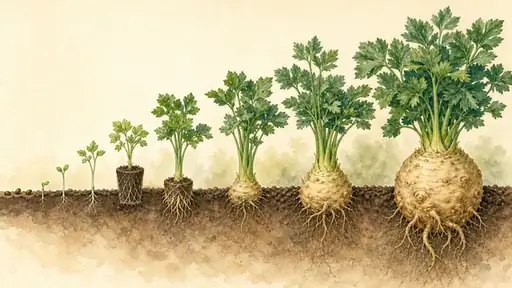
Mid to late summerStem swelling
The pale knobbly crown begins expanding above the soil while deep green leaves continue feeding it.
3–5 inches wideHarvest window
Lift firm swollen stems once useful size and cool weather arrive, before soil freezes hard.
Stage 5
Diagnose celeriac problems early
Open a symptom to compare what you see, likely causes, and the next practical check.
PestAphidsClusters of soft-bodied insects, curled growth, or sticky leavesCheck tender growth and leaf undersides. Dislodge light colonies with water, encourage beneficial insects, control weeds, and use a labeled insecticidal soap if needed while protecting pollinators.
DiseaseCelery leaf blightSmall yellow-brown spots enlarge and develop dark specksBegin with clean seed and transplants, rotate away from celery-family crops, remove infected residue, water at soil level, increase airflow, and avoid handling plants while leaves are wet.
Physiological disorderBlackheartYoung inner crown leaves darken, collapse, and dieBlackheart is a localized calcium-uptake problem aggravated by uneven moisture or rapid growth. Keep soil moisture uniform, avoid excessive nitrogen, and use a soil test before adding calcium.
Growth stressSmall or cracked rootsSwollen stems remain undersized or split after uneven growthDrought followed by heavy watering, low fertility, crowding, or late planting can reduce quality. Mulch, irrigate consistently, space correctly, and give plants the full long season.
Stage 6
Lift firm swollen stems after cool weather arrives
Celeriac can be used once the swollen base reaches about 3–5 inches. Flavor often improves after light frost, but hard freezing can damage roots and make digging difficult.
- Lift: Loosen soil with a fork and pull carefully without puncturing the swollen stem.
- Trim: Cut tops to about 1/4 inch and remove fine roots and clinging soil without washing for storage.
- Store: Hold sound roots cold and very humid; home gardeners can refrigerate them in perforated bags.
Choose with purpose
Choose the verified celeriac seed offered by Urban Farmer
The live celeriac collection currently contains one product, so the guide links only to that verified listing instead of inventing unavailable varieties.
Round white-fleshed rootBrilliantA verified celeriac selection that produces a large round swollen stem, dark green celery-like leaves, and white flesh.Shop Brilliant celeriac → Live crop collectionAll celeriac seedVisit the current Urban Farmer celeriac collection for available packet sizes, pricing, and future additions.Browse celeriac seed →Questions gardeners ask
Celeriac growing FAQ
Quick answers for slow germination, transplant timing, crown depth, moisture, swollen-stem development, harvest, and storage.
What is celeriac?Celeriac is a form of celery grown for a round, knobbly swollen stem at the soil surface. It is often called celery root, although the edible bulb-like portion is not a true root.
When should celeriac seed be started?Start seed indoors about 8–10 weeks before the intended transplant date. The crop needs a long season—often 100–150 days depending on variety and conditions.
Does celeriac seed need light to germinate?Yes. Press the tiny seed onto moist mix and cover only very lightly. Keep it warm, bright, and humid until emergence, which commonly takes 14–21 days.
When can celeriac be transplanted outdoors?Plant after hard-freeze danger and when prolonged temperatures below roughly 50–55°F are unlikely. Extended chilling can trigger bolting instead of a good swollen base.
How far apart should celeriac plants be spaced?Space plants about 10–12 inches apart, with roughly 18–30 inches between rows. Closer spacing produces smaller individual roots and crowded foliage dries more slowly.
Should the celeriac crown be buried?No. Set transplants at the same depth they grew in their cells and keep the crown at soil level. Hilling encourages more side roots and makes harvested roots harder to trim.
How much water does celeriac need?Provide about 1–2 inches per week, including rain, and keep soil uniformly moist. Its shallow root system and long season make drought stress especially damaging.
Why is my celeriac not forming a bulb?Celeriac swells slowly and may not size up until late summer. Late planting, drought, poor fertility, crowding, deep planting, or premature bolting can keep the swollen stem small.
Why is the center of my celeriac turning black?Blackheart is a localized calcium-uptake disorder often aggravated by uneven moisture and rapid growth. Maintain consistent irrigation and use a soil test before applying calcium.
Can celeriac tolerate frost?Mature plants tolerate light frost and flavor may improve afterward, but prolonged cold can induce young plants to bolt and a hard freeze can damage roots. Harvest before the ground freezes solid.
When is celeriac ready to harvest?Lift roots once the swollen base reaches about 3–5 inches and feels firm. Gardeners often wait for cool fall weather or a light frost, then finish harvest before hard freezing.
How should harvested celeriac be stored?Trim tops and fine roots, brush off soil, and store sound unwashed roots cold and humid. Refrigerated roots keep for weeks; controlled near-freezing, high-humidity storage can preserve them for months.
Ready to plant?
Choose celeriac for your garden.
Review the verified Brilliant selection, packet sizes, pricing, and current availability from Urban Farmer.
Shop all celeriac seed →



Perguntas e discussão