
How to grow collards
Seed to Harvest Growing Guide How to grow collards A practical guide to direct sowing or transplanting collards, protecting broad leaves from brassica pests, and harvesting tender outer leaves repeatedly through cool weather. Grow in cool weather for sweet leavesSpace 12–18 inches for full.
Seed to Harvest Growing Guide
How to grow collards
A practical guide to direct sowing or transplanting collards, protecting broad leaves from brassica pests, and harvesting tender outer leaves repeatedly through cool weather.
Grow in cool weather for sweet leavesSpace 12–18 inches for full plantsPick outside leaves for regrowth Shop collard seed →Start the guide ↓ Crop family: Brassicaceae Start4–6 weeks earlyOr direct sow outdoors Depth1/4–1/2 inchKeep the mix evenly moist LightFull sunAt least 6 hours Spacing12–18 inchesRows 24–36 inches apart HarvestAbout 55–85 daysOuter leaves can start soonerBefore you begin
Build the crop around repeated leaf harvests.
Collards are non-heading brassicas that tolerate both heat and frost better than many relatives, but their sweetest, most tender leaves develop in cool weather. Plants may be direct sown or transplanted and harvested whole or cropped from the outside for weeks.
Best first decisionChoose whole-plant bunching or repeated outer-leaf harvest before spacing the bed. Full plants need 12–18 inches, while baby greens can be grown much closer.Build your collard-growing plan
Plan the cool window, harvest style, plant count, and first picking.
Reserve a sunny bed and time the crop so established plants produce through cool weather.
When to sow collardFind your local planting windowEnter your ZIP code to connect workable soil, frost dates, and the cool spring or fall weather collard prefer.Check collard timing → Lay out the collard bedReserve mature plant spacePlace plants in full sun with 12–18 inches between plants and 24–36 inches between rows.Plan the collard bed → How much collard seedCalculate the seed you needEstimate seed or transplants from bed dimensions, spacing, and harvest style.Calculate collard seed → Aim for cool harvestsWork backward from first harvestChoose when you want the first full leaves, then schedule sowing or transplanting.Plan the harvest date →Collards at a glance
The path from seed to harvest
Select any milestone to jump directly to its full instructions.
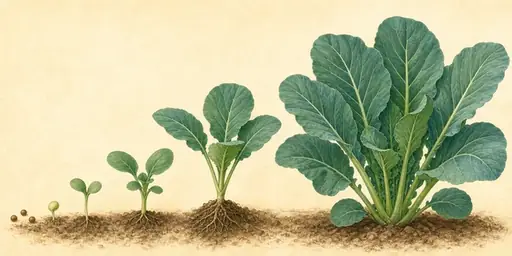
01PlanCool spring or fall02Start4–6 weeks ahead03Transplant4–6 true leaves04GrowSteady leaf growth05ProtectScout weekly06HarvestAbout 55–85 daysStage 1–3
Direct sow or transplant, then protect the growing point
Collards establish readily from seed or young transplants and need room to build an open crown of broad leaves.
01Prepare a fertile bed
Choose full sun and well-drained soil rich in organic matter.
- Use a soil test to guide lime and fertilizer.
- Rotate away from brassicas for disease control.
- Plan for row cover before planting if caterpillars are common.
Sow indoors or outside
Sow 1/4–1/2 inch deep. Start transplants 4–6 weeks early, or direct sow once the bed is workable for a spring or fall crop.
Transplant targetMove compact plants outdoors with 4–6 mature leaves. Direct-sown seedlings can be thinned at 3–4 true leaves. 03Harden and transplant
Gradually acclimate seedlings, then set them out about 2–3 weeks before the last spring frost.
- Space plants 12–18 inches apart.
- Leave 24–36 inches between rows.
- Plant at the same depth or slightly deeper than the cell.
- Water immediately and protect from wind.
Stage 4
Keep new leaves coming steadily
Even moisture, moderate fertility, shallow weed control, and an intact crown support repeated harvests.
WWater evenly
Supply about 1–2 inches of water per week, including rain. Drought makes leaves tough and slows regrowth.
FFeed by soil test
Build fertile soil before planting and side-dress as recommended, especially after repeated leaf harvests.
CKeep roots cool
Mulch after the soil warms to conserve moisture, suppress weeds, and moderate temperature swings.
SScout every leaf
Look under leaves and around the crown for caterpillars, aphids, flea beetles, and disease.
Growth checkpoints
Know what to watch for.
Use leaf count, plant height, and leaf texture—not only the calendar—to judge progress.
About 5–10 daysEmergence
Seedlings appear with round cotyledons; provide strong light and even moisture.
4–6 mature leavesTransplant ready
Harden compact plants gradually before moving them into the garden.
10–12 inches tallFirst leaf harvest
Outer leaves reach useful size while the top crown remains actively growing.
Weekly in cool weatherRepeat harvest
Pick low outside leaves and always leave at least four leaves at the top.
Stage 5
Diagnose collard problems early
Open a symptom to compare what you see, likely causes, and the next practical check.
PestCabbage worms and loopersRagged holes, green caterpillars, or frass on leavesInspect leaf undersides and the crown, handpick caterpillars, and use insect netting before moths arrive. If needed, use a labeled Bacillus thuringiensis product on small larvae.
PestCabbage aphidsWaxy gray-green colonies on curled leaves or the crownCheck new growth and leaf undersides. Wash off small colonies, conserve beneficial insects, remove badly infested leaves, and avoid excess nitrogen.
DiseaseBlack rotYellow V-shaped lesions advancing inward from leaf marginsRemove infected plants and residue, avoid overhead irrigation and working among wet plants, rotate away from brassicas, control crucifer weeds, and begin with clean seed and transplants.
PestFlea beetlesMany tiny round shot holes appear on young leavesProtect seedlings immediately with insect netting, manage crucifer weeds, keep plants growing steadily, and remove covers before they trap damaging heat.
Stage 6
Pick tender outer leaves and keep the crown growing
Begin once leaves are a useful size—often under 10 inches for the most tender texture—or cut the whole young plant at 6–10 inches tall.
- Pick low: Remove the oldest outside leaves first with a clean knife or downward pull.
- Protect: Leave the stem, growing point, and at least four top leaves intact.
- Cool: Refrigerate promptly in a perforated bag and use within about one week.
Choose with purpose
Find the right collard for your garden
Compare plant size, bolt resistance, winter hardiness, leaf texture, and harvest style.
Heat-tolerant heirloomGeorgia SouthernLarge open plants with sweet blue-green leaves, strong heat tolerance, and useful frost hardiness.Shop Georgia Southern → Slow-bolting standardVatesA high-yielding compact standard with dark-green leaves and dependable slow-bolting performance.Shop Vates → Upright hybridTop Bunch 2.0An improved compact hybrid with large smooth leaves and an upright habit that simplifies repeated picking.Shop Top Bunch 2.0 →Questions gardeners ask
Collard growing FAQ
Quick answers for timing, sowing, spacing, row cover, repeated picking, frost, harvest, and storage.
When should collards be planted?Plant for spring or fall, using local frost dates and variety maturity. Fall crops often give the sweetest leaves because established plants tolerate frost.
Should collards be direct sown or transplanted?Both work. Start transplants 4–6 weeks ahead for predictable spacing, or direct sow 1/4–1/2 inch deep and thin at 3–4 true leaves.
How deep should collard seed be planted?Sow 1/4–1/2 inch deep in moist seed-starting mix or finely prepared soil. Provide strong light immediately after emergence.
How far apart should collards be spaced?Space full plants 12–18 inches apart with rows about 24–36 inches apart. Baby-leaf crops can be much closer.
Do collards need full sun?Give plants at least six hours of sun. Light afternoon shade can reduce heat stress in very warm climates.
Should collards be grown under row cover?Early insect netting excludes cabbage moths and flea beetles when edges are sealed. Vent or remove covers before they trap heat.
Why are worms eating my collards?Imported cabbageworms and loopers feed on brassicas. Inspect leaf undersides, handpick larvae, and use netting or a labeled biological control while larvae are small.
Can collards survive frost?Established collards tolerate frost, and cool weather often improves flavor. Protect young plants from severe freezes and check the variety’s winter hardiness.
How are collards harvested repeatedly?Pick the lowest outside leaves first and leave the stem, growing point, and at least four top leaves intact for regrowth.
How much water do collards need?Provide about 1–2 inches weekly, including rain. Uniform moisture keeps leaves tender and supports regrowth after picking.
When are collards ready to harvest?Harvest individual leaves once they reach useful size; leaves under about 10 inches are especially tender. Whole young plants may be cut at 6–10 inches tall.
How should harvested collards be stored?Cool leaves promptly and refrigerate them dry in a perforated bag. Use within about one week for best texture and flavor.
Ready to plant?
Choose collards for your garden.
Compare maturity, plant size, bolt resistance, winter hardiness, and packet size.
Shop all collard seed →



Perguntas e discussão