

Esta página é exibida em seu idioma original. A tradução ainda não está disponível.
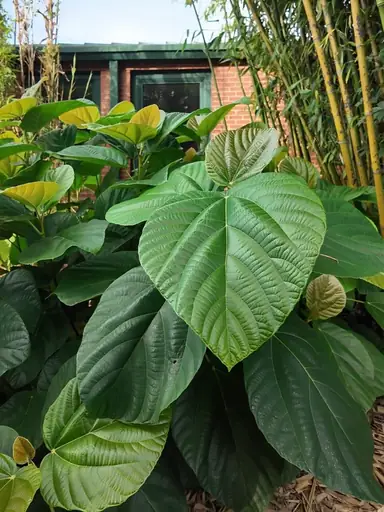
A seleção Seedsun
Ficus roxburghii
SKU: FICU-ROXB-01G
In the forests of the Himalayan foothills and across monsoon Asia grows a fig of ancient bearing, Ficus roxburghii, known to botanists today as Ficus auriculata and to gardeners as the elephant-ear fig. This is no dainty exotic. In the tropics the plant makes a bold small tree; in the American.
Solicite um orçamento personalizado.
Os preços, tamanhos das embalagens e disponibilidade serão confirmados em seu orçamento personalizado. O envio de uma consulta não implica na efetivação de um pedido pago.
Informe-se sobre a adequação, o período de semeadura e os requisitos de cultivo.
Confirme as opções de entrega e os documentos necessários em seu orçamento.
Sobre esta variedade
In the forests of the Himalayan foothills and across monsoon Asia grows a fig of ancient bearing, Ficus roxburghii, known to botanists today as Ficus auriculata and to gardeners as the elephant-ear fig. This is no dainty exotic. In the tropics the plant makes a bold small tree; in the American South, where hard frost cuts back the top, the fig returns from the root each year as a heroic perennial, with a presence as memorable as a live oak draped in Spanish moss.
Here in the Deep South, where the soil runs sandy and red and winter knocks more gently, the elephant-ear fig has found a second home. Joe LeVert of Augusta, Georgia, a true Southern plantsman, first brought the plant to our attention; his thriving, root-hardy specimen, proven through many a Southern winter, became the mother of our current stock, a plant born of grit, heritage, and care.
The leaves are the glory, sometimes stretching fifteen inches or more across, round, glossy, and substantial, rising like lacquered shields to turn any bed into a living tapestry of the tropics. In the warmest gardens the fig also bears in the curious way called cauliflory, the fat, downy fruit erupting directly from the trunk and old wood rather than the twigs. Those figs are genuinely good, eaten fresh or cooked, folded into jams and curries, or sliced green into a Vietnamese salad, and the tree carries deep ethnobotanical weight across the native range, valued for food, folklore, and traditional medicine alike.
Plant the elephant-ear fig where the roots can stretch and where water is not a stranger, in fertile, moisture-retentive soil with shelter from wind and hard frost. Give a warm, protected corner, a shaded wall or a wind-still glen, and the fig repays the kindness with almost prehistoric grandeur, the boldest foliage a Southern garden can hold short of a banana. Root-hardy to about zone 8 with a deep winter mulch, and a superb container subject that can be wheeled under cover farther north.
Há muito mais para descobrir.



Perguntas e discussão