

Esta página é exibida em seu idioma original. A tradução ainda não está disponível.
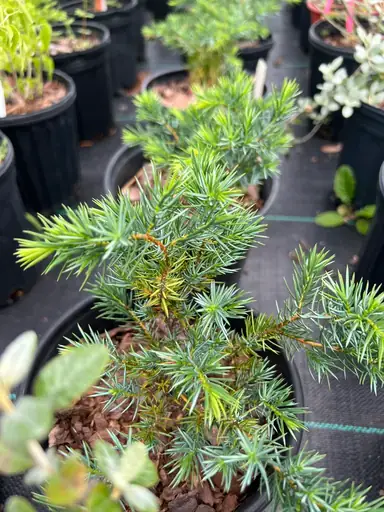
A seleção Seedsun
Juniperus communis var. depressa ‘Hitchcock’
SKU: JUNI-COMM-VAR-DEPR-01G
Juniperus communis, the common juniper, is the most widespread conifer in the world, a circumboreal shrub of northern latitudes and high elevations, and the source of the aromatic berries that flavor gin. The variety depressa is the low, ground-hugging North American form, a prostrate mat of.
Solicite um orçamento personalizado.
Os preços, tamanhos das embalagens e disponibilidade serão confirmados em seu orçamento personalizado. O envio de uma consulta não implica na efetivação de um pedido pago.
Informe-se sobre a adequação, o período de semeadura e os requisitos de cultivo.
Confirme as opções de entrega e os documentos necessários em seu orçamento.
Sobre esta variedade
Juniperus communis, the common juniper, is the most widespread conifer in the world, a circumboreal shrub of northern latitudes and high elevations, and the source of the aromatic berries that flavor gin. The variety depressa is the low, ground-hugging North American form, a prostrate mat of prickly, blue-green needles. 'Hitchcock' is a selection of that low form, and hangs on one of the more remarkable botanical stories in the Southeast.
The clone traces to a disjunct, apparently single-clone population discovered near Aiken, South Carolina, by the botanist Henry Ravenel in the mid-nineteenth century, hundreds of miles south of the species' usual range. rediscovered Ravenel's historic site years ago in Aiken's Hitchcock Woods preserve, the southernmost known station for common juniper anywhere, where the plant grows in deep, sandy, acid soil under the light shade of scattered pines, sparkleberry, and mountain laurel.
Common juniper is more than a curiosity. The ripe blue berry-cones, technically fleshy cones rather than true fruit, have flavored gin since the seventeenth century, when the spirit was first made as a medicinal tonic for the berries' diuretic action, and juniper has a long history in European and Native American medicine for urinary and digestive complaints. This is traditional-use information, shared for interest only, and not medical advice.
As a garden plant 'Hitchcock' is a tough, fine-textured evergreen groundcover for a sunny to lightly shaded, well-drained, sandy or gritty site, a rock garden, a slope, or the front of a dry border. The prostrate mat knits along the ground, needs no shearing, and shrugs off heat, drought, and poor soil. Grow this clone as much for its story as its texture, a living piece of Southern botanical history.
Há muito mais para descobrir.



Perguntas e discussão