

Esta página é exibida em seu idioma original. A tradução ainda não está disponível.
A seleção Seedsun
Luma apiculata
SKU: LUMA-APIC-01G
Luma apiculata, the Chilean myrtle, is grown above all for the extraordinary bark: smooth, sinuous trunks in warm cinnamon-orange that peel to reveal cream beneath, a living sculpture that glows in low winter light. An evergreen of the myrtle family, Myrtaceae, the plant hails from the temperate.
Solicite um orçamento personalizado.
Os preços, tamanhos das embalagens e disponibilidade serão confirmados em seu orçamento personalizado. O envio de uma consulta não implica na efetivação de um pedido pago.
Informe-se sobre a adequação, o período de semeadura e os requisitos de cultivo.
Confirme as opções de entrega e os documentos necessários em seu orçamento.
Sobre esta variedade
Luma apiculata, the Chilean myrtle, is grown above all for the extraordinary bark: smooth, sinuous trunks in warm cinnamon-orange that peel to reveal cream beneath, a living sculpture that glows in low winter light. An evergreen of the myrtle family, Myrtaceae, the plant hails from the temperate rainforests of Chile and neighboring Argentina, where whole groves, most famously the Bosque de Arrayanes on Lake Nahuel Huapi, are built of these twisting, apricot-barked trunks.
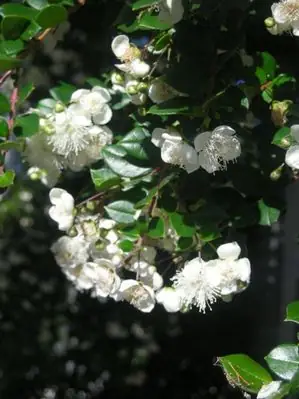
Every part is aromatic. The small, pointed, glossy dark green leaves release a sweet, spicy scent when crushed, and the epithet apiculata notes the little pointed tip on each leaf. In summer the branches fill with small, waxy, four-petaled white flowers, sweetly fragrant and heavy with nectar, so valued in South America that the myrtle is an important honey plant. Purple-black berries follow, edible and pleasantly sweet, eaten fresh in Chile and cooked into sauces and jams, and much loved by birds.
In the tree's homeland the plant carries the Mapuche name luma and the Spanish arrayan, and the dense, heavy wood has long been prized for tool handles and turnery. Slow and shrubby when young, the Chilean myrtle builds with age into a large multi-stemmed shrub or small tree of twenty feet and more, and the bark only improves over the years. The plant takes kindly to hard pruning and is a favorite subject for bonsai, where the cinnamon bark can be admired in miniature.
Long a signature plant of California gardens, the Chilean myrtle also does well in the milder Southeast, asking only for full sun to part shade and moist, well-drained soil. Give the plant a spot where the bark can be seen and touched, near a path, a patio, or a low wall, and limb up the lower branches with age to reveal the trunks. Evergreen, aromatic, and quietly beautiful in every season, Luma apiculata rewards a gardener willing to grow something a little out of the ordinary.
Há muito mais para descobrir.



Perguntas e discussão