

Esta página é exibida em seu idioma original. A tradução ainda não está disponível.
A seleção Seedsun
Pieris ryukyuensis 'Temple Bells'
SKU: PIER-RYUK-TEMP-BELL-01G
Pieris ryukyuensis is the lily-of-the-valley shrub of the Ryukyu Islands, the warm archipelago that trails south from Japan toward Taiwan, and 'Temple Bells' is a choice selection of this heat-tolerant species. The glossy, slightly toothed evergreen leaves emerge a warm bronze and mature to deep.
Solicite um orçamento personalizado.
Os preços, tamanhos das embalagens e disponibilidade serão confirmados em seu orçamento personalizado. O envio de uma consulta não implica na efetivação de um pedido pago.
Informe-se sobre a adequação, o período de semeadura e os requisitos de cultivo.
Confirme as opções de entrega e os documentos necessários em seu orçamento.
Sobre esta variedade
Pieris ryukyuensis is the lily-of-the-valley shrub of the Ryukyu Islands, the warm archipelago that trails south from Japan toward Taiwan, and 'Temple Bells' is a choice selection of this heat-tolerant species. The glossy, slightly toothed evergreen leaves emerge a warm bronze and mature to deep green, giving a polished, year-round presence on a dense, rounded frame of three to six feet.
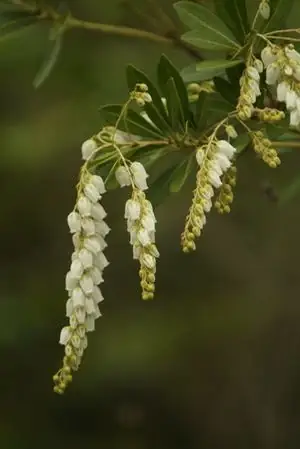
In spring the shrub hangs dense clusters of small white, bell-shaped flowers, the strings of temple bells behind the name, nodding sweetly above the foliage and drawing the season's first pollinators. Set against dark evergreens or a shaded wall, the white bells and bronze new growth read especially clean.
The great virtue of this species is climate. Native to a land of mild winters and hot, humid summers, Pieris ryukyuensis takes the heat of the southeastern United States far better than the familiar Japanese pieris (Pieris japonica) grown in northern gardens, which sulks where summers are long and warm. For Southern gardeners who have wanted a pieris and watched the northern kinds struggle, 'Temple Bells' is the answer.
Grow 'Temple Bells' in well-drained, acid soil in semi-shade, as for azaleas, camellias, and rhododendrons, and mulch with pine straw to keep the roots cool and sour. Give supplemental water through dry spells, shelter from harsh afternoon sun, and pair with other broadleaf evergreens and shade companions. Like other members of the heath family, every part is poisonous if eaten, which also keeps deer at bay.
Há muito mais para descobrir.



Perguntas e discussão