

Эта страница отображается на языке оригинала. Перевод пока недоступен.
Выбор Seedsun
Hibiscus paramutabilis x syriacus 'Tosca'
Артикул: HIBI-PARA-SYRI-TOSC-01G
'Tosca' is the offspring of a rare and deliberate cross, a marriage of Hibiscus paramutabilis, the regal, large-flowered species of southeastern China, with Hibiscus syriacus, the familiar Rose of Sharon of countless summer gardens. From that union comes a woody shrub that carries the best of both.
Запросите индивидуальное предложение.
Цены, размеры упаковки и наличие товара уточняются в вашем индивидуальном предложении. Отправка запроса не является оформлением платного заказа.
Уточните пригодность, требования к посеву и выращиванию.
В вашем коммерческом предложении уточняйте варианты доставки и необходимые документы.
Об этом сорте
'Tosca' is the offspring of a rare and deliberate cross, a marriage of Hibiscus paramutabilis, the regal, large-flowered species of southeastern China, with Hibiscus syriacus, the familiar Rose of Sharon of countless summer gardens. From that union comes a woody shrub that carries the best of both parents: the scale and drama of the Chinese species and the toughness and reliability of the old dooryard favorite.
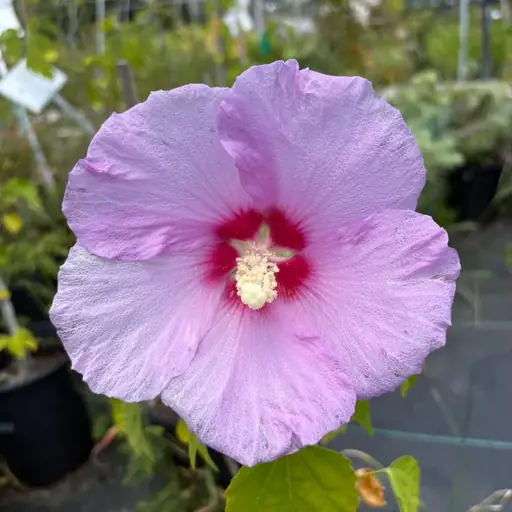
The flowers are the reason to grow 'Tosca'. Oversized and softly ruffled, they open in shades of orchid-pink to magenta, each bloom marked by a dramatic carmine eye that bleeds outward toward the petal edges like a watercolor stroke. The flowers run larger and more flamboyant than those of an ordinary Rose of Sharon, with a looser, more romantic form that recalls antique garden cultivars, yet they sit on a plant with a far hardier constitution.
Unlike the tropical members of the hibiscus tribe, 'Tosca' is a reliably deciduous shrub, growing upright and well-branched and dropping the leaves cleanly each fall. The plant is hardy through the Deep South and can be pushed farther north with a sheltered, wind-protected site. Rose of Sharon has been a fixture of temperate gardens since the species reached Europe from Asia centuries ago, valued precisely for blooming late and asking little, and 'Tosca' inherits that easygoing streak: once established, the shrub shrugs off heat, drought, and less-than-perfect soil, though full sun and sharp drainage bring out the best flowering.
In the garden, 'Tosca' belongs wherever late-summer color is wanted without the fragility of a tropical hibiscus. Use the shrub as a specimen, a flowering hedge, or a bold accent in a mixed border, and set the plant where the huge orchid-magenta flowers can be seen up close as the season tips toward fall. Quiet green neighbors and a plain backdrop let the eye and the carmine-centered blooms do the rest, turning the tail of summer into something close to high opera.
Ещё многое предстоит узнать



Вопросы и обсуждение