
How to Grow and Care for Bay Laurel Trees
Laurus nobilis Bay laurel (Laurus nobilis) is a wonderfully versatile evergreen tree, prized in the garden for its ornamental value, and its aromatic leaves much loved in the kitchen. In culinary applications, the dried leaves are widely used as a seasoning – most notably in herb blends and slow.
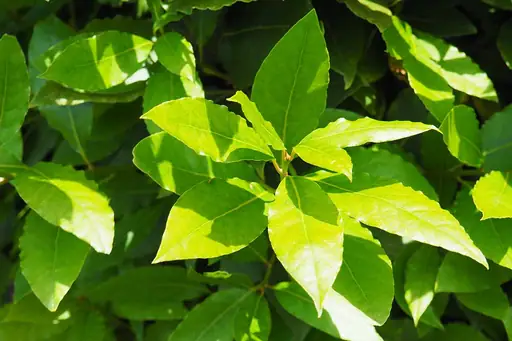
Laurus nobilis
Bay laurel (Laurus nobilis) is a wonderfully versatile evergreen tree, prized in the garden for its ornamental value, and its aromatic leaves much loved in the kitchen.
In culinary applications, the dried leaves are widely used as a seasoning – most notably in herb blends and slow simmering dishes where they impart a sweet, woodsy flavor with a hint of menthol.
In the garden, the lush plants are revered for their dense foliage canopies, rich with glossy clusters of dark green, leathery leaves.
Photo by Lorna Kring.These low maintenance plants require little care and make an outstanding addition to containers, barriers, hedges, and privacy screens.
Plus, they’re easily pruned and can be sculpted into striking topiary specimens with standard shapes or unique, whimsical forms.
In late spring, clusters of small, mostly inconspicuous cream to pale yellow flowers form at the base of the leaves and if pollinated, develop into green, then purple-black berrylike drupes, each containing a single seed.
And while the flowers and berries are pretty, it’s the foliage that shines in the bay laurel show – which also makes a lovely, lightly fragrant addition to cut flower arrangements and winter wreaths.
Is your garden in need of a sweet bay tree? Then let’s jump into the details of how to grow and care for bay laurel.
Here’s what you’ll find ahead:
What You’ll Learn
- What Is Bay Laurel?
- Cultivation and History
- Propagation
- How to Grow
- Cultivars to Select
- Pruning and Maintenance
- Managing Pests and Disease
- Harvesting
- Preserving
- Quick Reference Growing Guide
What Is Bay Laurel?
Bay laurel, also known as sweet bay, true laurel, and Grecian laurel, is an evergreen tree in the flowering laurel family, Lauraceae, native to the Mediterranean region.
The genus name Laurus is Latin for laurel, and the specific epithet nobilis is Latin for notable or excellent.
Photo by Lorna Kring.California bay (Umbellularia californica), aka Oregon myrtle, is sometimes marketed as bay laurel, but the flavor of the leaves is much stronger and more mentholated.
There are many other trees using the name “bay” that may or may not be part of or related to the Laurus genus and may not be edible.
True bay laurel’s aromatic leaves are a popular dried herb for culinary use, most notably in sauces, soups, and stews, and in herb blends like bouquet garni.
Fresh leaves have a milder flavor and can be used in faster cooking dishes like stir fries.
Fresh or dried, the leaves are removed from the dish before serving. Ingestion of the dried leaves should be avoided unless in ground form – the edges are sharp and can cause discomfort if swallowed.
Bay leaf is rich in essential oils with many health-boosting properties, and along with culinary applications, is used in the cosmetics and pharmaceutical industries, as well as in holistic practices like aromatherapy and ayurveda.
The trees are also valued as ornamentals, and their ability to take a hard pruning makes them a popular choice for creating uniquely sculpted topiary specimens.
Tender new foliage emerges a bright chartreuse and darkens to a glossy forest green as the two- to five-inch, elliptical leaves mature and take on a leathery texture.
Plants are dioecious, with male and female flowers developing on separate specimens. If there is a male plant nearby for pollination, the female plants will produce berrylike drupes.
Mature trees can grow up to 55 feet in a columnar or rounded shape, but growth is slow and maintaining a smaller size is easily achieved with regular pruning.
In its native habitat, L. nobilis grows in wooded thickets and damp, rocky ravines.
Bay laurel enjoys regular moisture and can handle moderately wet conditions provided the soil is well-draining.
Once established, they have good drought tolerance, but young trees can struggle if the soil dries out completely and should be watered regularly.
Hardy in USDA Hardiness Zones 7 to 10, in regions with cold winters you can still enjoy sweet bay as a container plant, moving it indoors for the winter months.
Cultivation and History
Steeped in history and myth, wreaths of L. nobilis have been used to symbolize victory, personal achievement, and social status for millennia.
The ancient Greeks used the leaves to crown the victors of athletic competitions that were the precursors of the modern Olympic games.
This idea carried into the Roman era where emperors wore a laurel wreath like a crown to denote their divine lineage.
Editorial credit: Javi Az /During the Renaissance period, doctors who completed their training were adorned with berried branches of L. nobilis – from which we get the word “baccalaureate.”
Among sweet bay’s many beneficial compounds, their fragrant oils also have pest-busting properties that make these plants effective garden companions for other kitchen herbs like basil, oregano, and thyme, as well as vegetables like green beans.
These insecticidal properties also extend to safeguarding stored dry goods – you can add a leaf or two of bay laurel to containers of cereal, grain, or flour to keep unfriendly insects “at bay.” (Sorry, couldn’t help myself!)
Bay Laurel Propagation
Bay laurel can be propagated by seed and from stem cuttings.
From Seed
To sow seeds, collect the seed-bearing drupes in fall and remove the fleshy outer case, or pericarp – if left in place, the pericarp can induce dormancy and prevent germination.
Only about half of the sown seeds will germinate and fresh seeds sprout better than dried ones. Plus, they need a 50- to 70-day cold stratification period in a moist soilless medium.
This involves putting the seeds in a plastic baggie with the medium and placing it in the fridge.
Keep the medium lightly moist but not soggy. Once the seeds sprout, you can remove them from the refrigerator and pot them up.
Be sure to follow the steps outlined in our guide on how to grow bay laurel from seed.
From Cuttings
Propagation from stem cuttings produces better results than from seed, but patience is still required. Heel cuttings are generally more successful than stem cuttings taken on an angle.
Heel cuttings are taken with a small tag of older wood at their base that contains a larger area the bark’s cambium layer than stem cuttings.
The cambium contains auxins – naturally occurring growth hormones – which are helpful with difficult to root plants.
Heel cuttings. Photo by Lorna Kring.In the past, I’ve tried rooting softwood cuttings, semi-ripe cuttings, and hardwood cuttings, both with and without rooting hormone powder, and cuttings in water. None rooted.
It wasn’t until I tried heel cuttings that rooting was successful.
Heel cuttings are most successful when taken in mid to late summer.
Be sure to read our guide on how to propagate bay laurel from cuttings and follow the instructions carefully to achieve the best results.
Transplanting
To transplant saplings, first loosen the planting site soil to a depth and width of 18 to 24 inches.
Mix in a shovelful or two of compost or well-rotted manure to enrich the soil.
Photo by Lorna Kring.Add in another shovelful or two of grit, such as landscape sand, pea gravel, or stone chips to improve drainage as needed.
Before planting, finish prepping the soil by mixing in two or three tablespoons of bone meal for healthy, strong roots.
Plant saplings at the same depth as in their nursery container.
Backfill with soil and firm in place.
Water gently but deeply to settle plants.
After planting, water regularly and deeply, providing one or two inches of water every week and allowing the top two inches of soil to dry between applications.
How to Grow Bay Laurel
L. nobilis grows best in moderately fertile, well-draining soil with a slightly acidic to slightly alkaline pH of 5.5 to 7.5.
Photo by Lorna Kring.They prefer a full sun location in cooler regions and benefit from light afternoon shade in hot climates.
If you plan on letting your tree grow to its full size, plant in a sheltered location protected from high winds, which can cause weaker limbs to break.
Container plants typically need more frequent, weekly watering than those grown in the ground.
For container growth, use pots and planters with drainage holes. I like to add a two-inch layer of loose material such as broken pottery or pebbles to ensure the roots don’t sit in water.
Fill containers with nutrient rich, humusy, well-draining soil and transplant as described above.
Repot every two to three years, or when growth has doubled, gently trimming away approximately one-third of the roots and removing the top two to four inches of soil.
Replant the trimmed root ball in a fresh mix of fertile soil, replacing the top layer of soil as well.
Growing Tips
- Plant in full sun.
- Provide organically-rich, well-draining soil.
- In the absence of rain, provide one to two inches of water.
Pruning and Maintenance
True laurel responds well to pruning, and how much to prune depends on whether your tree has been trained as a topiary, grown as a shrub, or allowed to mature into a full-sized tree.
Photo by Lorna Kring.For maintenance purposes, prune out any dead or damaged leaves and branches in mid to late spring.
For shrubs and specimen plants, use a clean, sharp saw or pruners to remove dead or broken branches close to the trunk, and remove any unwanted stems by cutting them close to the soil.
Mature, full-grown trees rarely get leggy, but they can be pruned hard if rejuvenation is needed.
However, regrowth is slow and it’s best to carry out hard pruning over a two- or three-year period to maintain some greenery while new growth forms. Cut back the stems by one-third or one-half in the first year, then repeat in years two and three as needed.
To reduce the width of plants with multiple stems, remove up to one third of the stems from the exterior perimeter, cutting at the soil level.
And don’t toss the wood after pruning larger branches. Instead, clean the limbs of foliage then cut the branches into six-inch pieces and use them on the BBQ to add a sweet, smoky flavor to grilled foods.
To maintain a manageable hedge or shrub size, in late spring cut back the previous year’s growth by pruning stems to a leaf bud pointing in the direction you want growth to follow.
Trim away lower branches for a bare trunk, and remove suckers by cutting them just below soil level.
Through summer, pinch back any stem tips that have grown too long.
To keep topiaries crisp, in early summer prune the current year’s growth by cutting back to leaf nodes facing the direction of desired growth. Step back frequently to check your progress and to maintain a balanced form, even trimming, and a harmonious shape.
Continue to clip topiaries over summer when growth is most vigorous – a summer trim quickly promotes branching with new growth and lush, dense foliage.
Find more tips on pruning bay laurel here.
For winter care, protect the root zone with a thick, four-inch layer of mulch using compost, leafmold, untreated sawdust, or straw.
Should a period of freezing weather threaten, cover the foliage with a frost blanket to prevent blackened leaves.
Containers can be protected by placing them in a sheltered location with mulch on the soil surface. Protect the roots by wrapping the container with bubble wrap or an old blanket until spring.
In areas with harsh winters, move containers indoors to a bright, cool room. Reduce water and fertilizer applications and return the pots outdoors once overnight temperatures remain above 50°F.
Specimens growing in the ground require little supplemental feeding aside from a top dressing of two inches of compost in early spring.
Or you can apply a balanced, slow release granular fertilizer in midspring and again in midsummer.
Container plants need more frequent feedings. Use a liquid or water-soluble formula like fish or kelp emulsion applied at half strength every two weeks from spring until the end of August.
Neptune’s Harvest Organic Fish and Seaweed
Bay Laurel Cultivars to Select
You can find bay laurel varieties in well-stocked garden centers and online shops.
Bay Laurel
In addition to the species plant, there are a number of L. nobilis cultivars available:
Aurea
‘Aurea,’ aka yellow-leaved bay tree, has glowing, golden-yellow foliage, and grows up to 32 feet tall with a spread of 26 feet.
Crispa
‘Crispa’ has undulating, wavy leaf edges and a pyramidal shape, reaching 15 feet tall and eight feet wide.
Little Ragu
A charming dwarf cultivar, Little Ragu® (‘MonRik’) features deeply aromatic, dark green foliage that grows in an easily maintained pyramid shape.
With a mature height and spread of six-to-eight feet, Little Ragu® is ideal for planters, pots, and urns, as a specimen or topiary standard, or clipped into a formal hedge.
Little Ragu
Saratoga
‘Saratoga’ is a male cultivar that doesn’t produce fruit. It grows to a mature height of up to 30 feet with a spread of up to 25 feet.
Willow Leaf
Willow leaf, or narrow-leaved bay, (L. nobilis f. angustifolia) features narrow, lance-shaped leaves.
Managing Pests and Disease
Hardy and easily cultivated, bay laurel is largely disease- and pest-free, with only a few problems that are easily remedied.
Sapsucking insects like aphids, psyllids, and scale can cause yellow spotting on the leaves and may secrete a trail of honeydew that can lead to problems like sooty mold.
Remove aphids and psyllids with a strong spray of water from the garden hose or treat problem infestations and scale with a natural insecticide like neem oil.
Crown and root rot can be a problem in wet soil, causing yellowing leaves, wilting, and overall plant decline.
To prevent problems like root rot, ensure your trees are planted in well-draining soil.
Plant in raised beds if wet winter soil is common in your area or amend the planting site with plenty of grit to keep water flowing freely away from the roots.
For container plants, give pots and planters a thick layer of drainage material at the bottom of the pot, and use only containers with drainage holes.
Harvesting
After trees are at least two years old, leaves can be harvested at any time throughout the year, but the flavor is best in summer.
Large, mature leaves have more flavor and fragrance than tender new growth.
Photo by Lorna Kring.For the richest flavor, harvest leaves in the morning before the heat from the sun starts to dissipate the essential oils.
Choose large, healthy leaves and snip them off with clean, sharp scissors.
Find more tips on harvest leaves here.
Preserving
To dry bay leaves, line a baking sheet with parchment paper or paper towels and spread the leaves out in a single layer without overlapping.
Photo by Lorna Kring.Allow them to dry in a warm, dry location out of direct sunlight for 10 to 14 days.
You can also dry the leaves in a food dehydrator at its lowest setting, this would normally take a few hours, depending on the humidity. Note that a standard oven is too hot to dry the leaves without burning them, even at its lowest setting.
Store the dried bay leaves in a glass jar with a tight fitting lid in a cool, dark cupboard for up to two years.
Fresh bay leaves can be placed in a sealed container or ziptop bag and stored in the refrigerator for up to two weeks.
Quick Reference Growing Guide
| Plant Type: | Evergreen tree | Foliage Color: | Green, yellow |
| Native to: | Mediterranean Basin | Maintenance: | Low |
| Hardiness (USDA Zones): | 7-10 | Tolerance: | Drought (once established), deer |
| Season: | Year round foliage interest | Soil Type: | Moderately fertile |
| Exposure: | Full sun | Soil pH: | 5.5-7.5 |
| Time to Maturity: | 2 years to harvest leaves | Soil Drainage: | Well-draining |
| Spacing: | 2 to 3 feet for hedges or screens | Attracts: | Bees |
| Planting Depth: | Same depth as nursery container | Companion Planting: | Green beans; basil, coriander, oregano, parsley, and thyme |
| Height: | Up to 60 feet | Order: | Laurales |
| Spread: | Up to 20 feet | Family: | Lauraceae |
| Water Needs: | Moderate | Genus: | Laurus |
| Common Pests and Diseases: | Aphids, psyllids, scale; crown and root rot | Species: | Nobilis |
Tasty Ornamentals
Bay laurel is a wonderfully versatile tree that adds visual interest to the garden all year long – and the tasty leaves are a delicious addition to many recipes!
Photo by Lorna Kring.Plant in full sun with well-draining soil and prune in summer for thick, lush foliage and to manage the size of container plants, hedges, screens, and topiary specimens.
For kitchen use, you can harvest the leaves at any time of the year, but they’re most flavorful in summer – remember to pick plenty to dry and store for winter use.
Container plant, hedge, or full-sized tree… how do you folks grow sweet bay? Let us know in the comments section below.
And for more L. nobilis know-how, check out these guides next:
- How to Grow Bay Laurel In Containers
- How to Transplant a Bay Laurel Tree
- Facebook512
- X




คำถามและการอภิปราย