
How to grow chicory
Seed to Harvest Growing Guide How to grow chicory A practical guide to growing radicchio, frisée, and escarole through cool weather, steady moisture, careful spacing, and timely harvest for crisp leaves and balanced bitterness. Finish in cool weatherKeep growth steadyHarvest before bolting Shop.
Seed to Harvest Growing Guide
How to grow chicory
A practical guide to growing radicchio, frisée, and escarole through cool weather, steady moisture, careful spacing, and timely harvest for crisp leaves and balanced bitterness.
Finish in cool weatherKeep growth steadyHarvest before bolting Shop chicory seed →Start the guide ↓ Crop family: Asteraceae SeasonSpring or fallCool weather gives best qualityDepth¼ inchKeep seedbed evenly moistLightFull sunAfternoon shade in heatSpacing8–12 inchesMatch the mature typeHarvest60–90 daysCheck the variety listingBefore you begin
Match the chicory type to a cool harvest window.
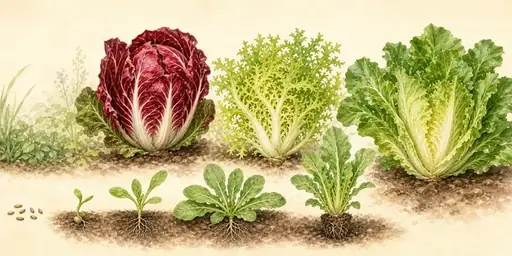
Chicory is a diverse cool-season group that includes tight red radicchio, finely cut frisée, and broad-leaf escarole. Seed germinates best near 65–70°F, while heat can reduce emergence, intensify bitterness, cause tipburn, and trigger bolting.
Best first decisionChoose the mature form before planting. Head-forming radicchio needs time and uniform spacing; frisée and escarole form leafy rosettes and may be blanched shortly before harvest.Build your chicory-growing plan
Plan the cool window, bed space, seed quantity, and harvest date.
Aim the crop at cool weather so heads color, leaves stay crisp, and bitterness remains balanced.
When to sow chicoryFind your local planting windowUse local frost timing to choose an early spring or late-summer start for a cool finish.Check chicory timing →Lay out the chicory bedReserve well-drained spaceAllow 8–12 inches per plant with airflow, irrigation access, and optional afternoon shade.Plan the chicory bed →How much chicory seedCalculate the seed you needEstimate seed or transplants from bed dimensions, final spacing, and expected germination.Calculate chicory seed →Aim for cool harvestsWork backward from harvestChoose a target date in cool weather and use variety maturity to schedule sowing or transplanting.Plan the harvest date →Chicory at a glance
The path from seed to harvest
Select any milestone to jump directly to its full instructions.
01PlanCool-season finish02Sow¼ inch deep03Thin8–12 inches04GrowEven moisture05ProtectScout weekly06HarvestAbout 60–90 daysStage 1–3
Sow shallowly and establish the crop before heat
Direct sow where seasons are long and cool, or raise transplants for a more predictable head count and harvest date.
01Prepare fertile, well-drained soil
Choose full sun in cool weather and soil that holds moisture without staying saturated.
- Use a soil test before fertilizing.
- Work only well-composted organic matter into the surface.
- Rotate away from lettuce-family crops where disease has occurred.
Sow seed ¼ inch deep
Direct sow 3–4 weeks before the average last frost, or start transplants about 4–6 weeks before planting out.
Protect late-summer germinationTemperatures above about 80°F reduce germination. Use shade cloth, a cool seed-starting area, and frequent light irrigation. 03Thin or transplant carefully
Move sturdy plants with 4–6 mature leaves and keep the crown at soil level.
- Space radicchio about 8–10 inches apart.
- Give larger escarole 10–12 inches.
- Water immediately after thinning or transplanting.
- Use row cover only until flowering weeds or crop blooms require pollinator access.
Stage 4
Keep leaves growing steadily and crowns ventilated
Uniform moisture and moderate fertility help chicory fill without excessive bitterness, loose heads, or scorched margins.
WWater evenly
Provide roughly 1–2 inches weekly, including rain. Drought slows leaf growth and strengthens bitter flavor.
FFeed moderately
Follow a soil test and avoid excess nitrogen after heads begin forming; lush growth can be loose and disease-prone.
MMulch for cool soil
Use clean organic mulch to conserve moisture, suppress weeds, and moderate late-summer soil temperatures.
BBlanch if desired
Tie dry outer leaves over frisée or escarole centers 1–2 weeks before harvest. Never tie wet heads, which may rot.
Growth checkpoints
Know what to watch for.
Use leaf count, head fill, color, and texture—not only the calendar—to judge progress.
Seedling stageTrue leaves
Plants form low rosettes; thin before roots tangle and maintain a cool, moist seedbed.
4–6 mature leavesTransplant ready
Roots hold the plug together and the crown remains compact, not stretched or flowering.
MidseasonHead or rosette fill
Radicchio tightens and colors in cool weather; frisée and escarole expand from the crown.
Variety sizeHarvest window
Cut when heads are firm or rosettes are full, before a central flower stalk begins to rise.
Stage 5
Diagnose chicory problems early
Open a symptom to compare what you see, likely causes, and the next practical check.
PestAphidsSoft-bodied insects cluster in curled inner leavesCheck leaf undersides and the crown. Dislodge light colonies with water, encourage beneficial insects, remove host weeds, and use a labeled insecticidal soap only when needed.
PestLeafminersWhite winding tunnels or blotches form inside leavesRemove badly mined leaves, crush larvae inside fresh mines, manage host weeds, and protect young plantings with insect netting before adult flies lay eggs.
Physiological disorderTipburnYoung inner leaf margins turn brown and dryTipburn is linked to poor calcium movement during rapid growth, heat, or uneven moisture. Irrigate consistently, avoid excessive nitrogen, improve airflow, and use soil testing before amendments.
DiseaseBottom rotLower leaves become water-soaked, brown, and collapsedImprove drainage and airflow, keep crowns at soil level, water the soil rather than foliage, remove infected plants and residue, and rotate away from susceptible leafy crops.
Stage 6
Cut full heads while leaves are crisp
Harvest radicchio when heads feel firm and reach variety size. Cut frisée or escarole when rosettes are full and tender, before heat or a rising seed stalk reduces quality.
- Check: Look for full color, firm heads, or a well-filled leafy center.
- Cut: Use a clean knife just above the soil line, leaving damaged outer leaves behind.
- Cool: Refrigerate promptly, dry and loosely wrapped, and use within about 1–2 weeks.
Choose with purpose
Choose a chicory type for your garden and table
Compare compact red radicchio, finely cut frisée, and broad smooth escarole.
Heading radicchioRed VeronaMini red heads with white ribs and a tangy flavor suited to salads, steaming, or grilling.Shop Red Verona →Curled endiveSalad KingVigorous, uniform frisée-type growth with deeply cut leaves and useful tolerance of light frost and fall rain.Shop Salad King →Broad-leaf escaroleFull Heart Escarole 65Broad dark-green leaves surrounding a creamy, naturally blanched center for crisp salads and cooking.Shop Full Heart Escarole →Questions gardeners ask
Chicory growing FAQ
Quick answers for types, timing, sowing, spacing, bitterness, blanching, bolting, harvest, and storage.
What is culinary chicory?Culinary chicory includes several related leafy vegetables. Radicchio forms red or variegated heads, frisée has finely cut leaves, and escarole has broader smoother leaves.
When should chicory be planted?Plant for a cool spring or fall harvest. Direct sow roughly 3–4 weeks before the average last frost, or sow in late summer early enough to mature after temperatures cool.
How deep should chicory seed be planted?Sow about ¼ inch deep in finely prepared soil or seed-starting mix. Keep the upper layer uniformly moist until emergence.
What temperature is best for germination?Chicory seed germinates best around 65–70°F. Temperatures above about 80°F can sharply reduce germination, making shade and cooling helpful for fall starts.
How far apart should chicory plants be?Space compact radicchio around 8–10 inches apart and larger frisée or escarole about 10–12 inches apart. Follow the variety listing when it gives a more specific recommendation.
Why is my chicory very bitter?Bitterness increases with heat, drought, age, and bolting. Grow the crop in cool weather, irrigate consistently, and harvest promptly when the head or rosette is full.
Why did my chicory bolt?Heat, long days, stress, or poorly timed cold exposure can trigger a flower stalk. Use locally suitable planting dates and varieties, and avoid letting plants dry out.
Does chicory need blanching?Radicchio usually colors and heads without tying. Frisée and escarole can be tied when dry 1–2 weeks before harvest to produce a paler, milder center, but blanching is optional.
Can chicory be grown in containers?Yes. Use a container at least 8–12 inches deep with drainage and enough width for the mature spacing. Container crops need especially reliable watering.
Can outer leaves be harvested individually?Loose-leaf types can spare a few outer leaves, but repeated stripping delays full head development. For radicchio or a blanched center, allow the plant to mature intact.
When is chicory ready to harvest?Harvest radicchio when the head is firm and full sized. Cut frisée or escarole when the rosette is well filled, crisp, and still free of a rising flower stalk.
How should harvested chicory be stored?Remove damaged outer leaves, cool the crop promptly, and refrigerate it dry in a perforated bag or loosely wrapped container. Use within roughly 1–2 weeks.
Ready to plant?
Choose chicory for your cool-season garden.
Compare radicchio, frisée, escarole, and other verified chicory seed from Urban Farmer.
Shop all chicory seed →
คำถามและการอภิปราย