
How to grow coreopsis
Native Species · Seed to Bloom How to grow coreopsis Grow native tickseed from compact golden clumps to airy prairie stands with months of pollinator-friendly color. Start seed correctlyMatch the siteSupport wildlife Shop coreopsis seed →Start the guide ↓ Life cycleAnnual or perennialSpecies.
Native Species · Seed to Bloom
How to grow coreopsis
Grow native tickseed from compact golden clumps to airy prairie stands with months of pollinator-friendly color.
Start seed correctlyMatch the siteSupport wildlife Shop coreopsis seed →Start the guide ↓ Life cycleAnnual or perennialSpecies dependentSow depth1/2 inchLight coverPretreatment30 cold-moist daysProduct MasterSpacing6–12 inchesAllow branchingBloomSummerDeadhead selectivelyNative plant profile
Choose by species and habitat.
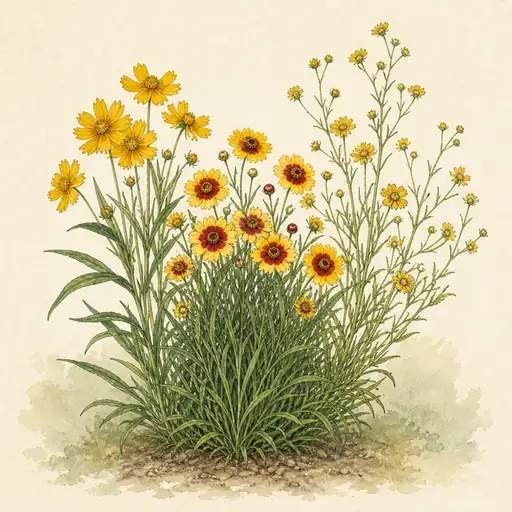
Lance Leaf Coreopsis is a drought-tolerant perennial, Plains Coreopsis is a fast annual with red-centered yellow flowers, and Tall Coreopsis is a towering perennial for large naturalistic plantings.
Native-range cueUse the Product Master state records and a local flora reference before restoration planting.Coreopsis at a glance
From seed to coreopsis bloom
Use the growing path to time pretreatment, planting, establishment, and bloom.
01Chill30 moist days02SowLight cover03Sprout7–30 days04Space18–24 inches05BranchBuild airflow06BloomMidsummerEstablishment
Build a clean seedbed and steady early roots
Provide 30 days of cold-moist stratification, cover seed about 1/2 inch, and keep evenly moist through germination. Space plants 6–12 inches apart in full sun and match mature height to the site.
01Prepare the seed
Follow the pretreatment and depth shown above.
02Protect emergence
Use gentle watering, strong light, and a weed-free surface.
03Harden and transplant
Acclimate seedlings for 7–10 days before planting into their final site.
Ongoing care
Use four simple habits
Maximize sun
Full sun keeps plants floriferous and stems strong.
Water while young
Establish roots, then avoid keeping dry-site species soggy.
Give tall forms room
Keep Tall Coreopsis away from paths and small neighbors.
Deadhead selectively
Remove some spent blooms while retaining seed for birds.
Native establishment checkpoints
Expect roots and structure before peak flowering.
Watch the plant's pace rather than forcing growth with fertilizer.
10–30 daysSeedlings emerge
Keep weeds controlled and respond to moisture, light, and spacing.
First summerCorms enlarge
Keep weeds controlled and respond to moisture, light, and spacing.
Year two onwardSpikes strengthen
Keep weeds controlled and respond to moisture, light, and spacing.
MidsummerTop-down bloom opens
Keep weeds controlled and respond to moisture, light, and spacing.
Bloom, seed, and habitat
Harvest selectively and leave ecological value standing
Cut when the upper florets begin opening, dry selected spikes for crafts, and leave remaining stems to mature seed and support wildlife.
Urban Farmer selections
Choose a variety matched to your site
Questions native gardeners ask
Coreopsis growing FAQ
How much sun is best?Full sun produces the strongest flowering and stem quality.
When should seedlings be transplanted?After hardening for 7–10 days and once severe frost risk has passed.
Should every seedhead be removed?No. Leave selected heads for birds, seed, and winter habitat.
Is every selection native everywhere?No. Confirm the botanical species and its regional range.
Ready to plant?
Add native bloom and habitat.
Choose a selection matched to your region, moisture, and garden purpose.
Shop blazing star seed →

คำถามและการอภิปราย