
How to Choose the Best Pots and Trays for Starting Seeds
Starting plants from seed for the vegetable patch, flower border, or even for your houseplant collection is a fun and empowering gardening project. There are a few supplies you’ll need, and among the most important are the trays or pots you choose to grow in. If this is your first time growing.
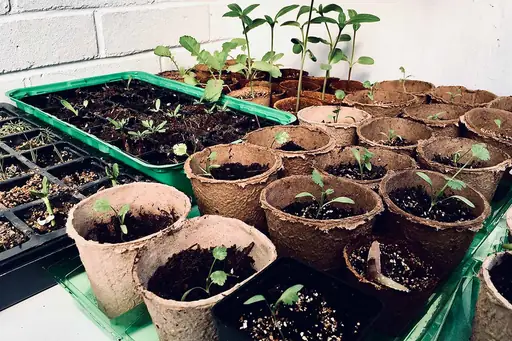
Starting plants from seed for the vegetable patch, flower border, or even for your houseplant collection is a fun and empowering gardening project.
There are a few supplies you’ll need, and among the most important are the trays or pots you choose to grow in.
If this is your first time growing starts from seed, it pays to make sure you have the right type of containers.
There are many material options to choose from, and one key feature that’s an absolute must.
That’s exactly what we’ll cover in this article, the types of pots and containers you need for starting seeds.
Here’s a preview of what’s to come:
What You’ll Learn
Trays vs Pots
DIY Options
Biodegradable
Plastic
Rubber and Silicone
Reusing
Whatever type of container you use to start your seedlings, make sure it provides good drainage.
If the roots of your seedlings stay too wet, they will be more susceptible to diseases such as damping off.
Photo by Kristina Hicks-Hamblin.Also, it may seem counterintuitive, but you need to make sure the containers aren’t too big.
Start small and transplant them up if needed, since petite plants in oversized pots are at risk of rotting, as a result of the excess soil holding water.
Before we start considering the different types of materials you can choose from, let’s consider the benefits of starting seeds in flats versus individual pots.
Trays vs Pots
Seeds can be started in small, individual containers or larger, multi-celled trays or “flats.”
Which you should choose depends on how many seeds you’ll be starting and where you plan to put them.
For instance, if you’re growing on a windowsill, a tray may not fit, so measure your intended growing location before you make a decision.
Also, some annuals, such as tomatoes, can grow quickly, so even if you start with flats, you may need to transplant them into individual containers before moving them to the garden.
On the other hand, other plants, such as some types of succulents, may be extremely slow growing, and you can keep the plant in the same container for a year or more.
Finally, are you wondering what size to start with?
Most seeds can be started in two-inch pots or similar sized flat cells, and then repotted up to a four-inch size if needed before transplanting into the garden.
DIY Options
If you are taking a frugal or ecologically minded approach to gardening, you may be wondering if you can use DIY pots.
Some gardeners repurpose egg cartons, toilet paper rolls, paper or plastic cups, or nearly any other shallow vessel that will hold growing medium.
I tried the DIY egg carton and toilet paper roll methods years ago, and while this creative reuse scores points for the environment, these aren’t my favorite starter container options.
Cardboard egg cartons may work for smaller starts, but most annuals will outgrow their shallow cells very quickly.
And the year I tried using toilet paper rolls as seed cups, they started falling apart well before the seedlings were ready to transplant.
I can’t really give a hearty recommendation to either of these options.
Photo by Kristina Hicks-Hamblin.You can get creative and find other containers to start your seeds, but if you want to hedge your bets, your best option may be to purchase containers intended for this purpose.
Biodegradable Pots and Trays
You may also want to consider commercially made biodegradable trays or pots.
Seedlings grown in these can be planted, container and all, directly into your garden soil, raised bed, or even into a larger container, without disturbing the delicate roots of your seedlings.
As far as biodegradable options go, I highly recommend CowPots, a more environmentally friendly option than those made from peat moss.
CowPots are made from composted cow manure sourced from a Vermont dairy farm.
Not only do they have a light environmental footprint since they reuse waste material, but after transplanting, they will nourish your plants as they break down.
CowPots #3 Six Cell Flat
Each cell in the flat is approximately three inches square by three inches deep.
These flats can also be cut into individual containers!
And just like the biodegradable seed flats mentioned above, CowPots are also available in larger sizes for repotting.
CowPots #5 Square
So for young seedlings that dry out quickly between waterings, I stick with plastic, reserving my biodegradable containers for transplanting tomatoes and peppers that have outgrown their two-inch containers.
If you live in a temperate climate, if you choose a biodegradable option you won’t have to worry about it drying out too quickly.
Plastic Pots and Trays
Plastic can be an economical choice for propagation, and if you choose your product wisely, you may even be able to reuse the pots for future projects.
Another advantage of this material is that the growing medium won’t dry as quickly as it will with biodegradable types.
If plastic seems like the best option for you, you first need to decide whether you’re going to start your seeds in multi-celled trays or individual pots.
If you’re going with trays, this six-celled option is an excellent choice for growing starts. Each cell is 1.5 inches square by 2 3/4 inches deep – a good size for your baby plants.
6 Cell Seed Starter Trays in Packs of 10
You can find these in packs of 10 trays at .
Prefer to grow seedlings individually?
2.75-Inch Plastic Nursery Pots
Measuring 2.75-inches wide and 3.25-inches deep, these plastic containers are tough and don’t warp in hot conditions like some.
I purchased a pack of these several years ago and have been re-using them year after year for everything from starting annual and perennial seeds, to growing succulents from leaf cuttings and offsets.
Rubber and Silicone Pots and Trays
Plastic isn’t the only moisture-retentive material for growing seedlings – there are also rubber and silicone options, which are both intended for reuse.
The flexible nature of both of these materials means you’ll be more likely to find them as flats rather than individual pots.
The advantage of a container made from flexible rubber or silicone, is that the bottom of the cell can be pushed up when you’re ready to remove the seedling, minimizing root disturbance.
Silico Tray
If you like the perks of a flexible container, you might want to also consider rubber trays which are both re-usable and plastic free.
Rubber Seed Starting Tray
Reusing Pots and Trays
If you’re wondering if you can reuse plastic seed trays and pots, the answer is yes.
Just make sure to thoroughly wash them out with hot, soapy water, rinse thoroughly, and then disinfect them.
I recommend a hydrogen peroxide based disinfectant over chlorine-based household bleach, since chlorine bleach can be problematic.
Photo by Kristina Hicks-Hamblin.Chlorine bleach can damage your garden tools and irritate or burn your skin, inhaling the vapor can aggravate certain medical conditions, plus it may prove toxic to your plants if any residue remains. This household cleaner really is not as harmless as we might think, despite its widespread use.
ZeroTol HC fungicide is a good alternative to chlorine bleach.
It contains hydrogen peroxide and is safe to use on containers, tools, and other surfaces, killing pathogens that cause plant diseases – including those responsible for damping off – when used as directed.
ZeroTol HC
Always use as directed.
Grow Something Beautiful
Whatever you’re planning to grow, I’m sure it’ll be just lovely. And now you know what your choices are for getting your plant of choice off to a perfect start!
Do you have any remaining questions about what to grow seedlings in? Let us know in the comments section below!
And to read more about propagation, check out these guides next:
- Vegetable Seeds: Which to Sow Outdoors vs. Indoors?
- Quick Guide to Understanding Seed Packets
- When and How to Start Seeds in a Greenhouse
- Facebook38
- X




คำถามและการอภิปราย