
Propagating Tradescantia: How to Root Spiderwort Cuttings
If you’re going for an indoor jungle vibe with your houseplant decor, tradescantia – also known as “spiderwort” or “wandering dude” – is a fantastic plant to have on hand. It has two winning characteristics that make it the perfect plant for indoor gardening fun: it’s both easy to propagate and a.
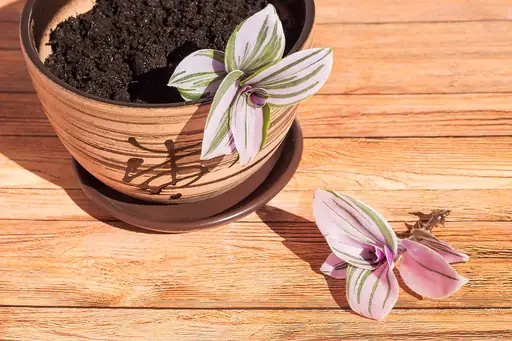
If you’re going for an indoor jungle vibe with your houseplant decor, tradescantia – also known as “spiderwort” or “wandering dude” – is a fantastic plant to have on hand.
It has two winning characteristics that make it the perfect plant for indoor gardening fun: it’s both easy to propagate and a fast grower. This is why it’s also called “inch plant,” since it seems to grow an inch a day.
And since it’s so quick to grow, you can start with a small specimen and soon you’ll be up to your ears in newly propagated spiderwort, making increasing your resident population of houseplants easy on the wallet.
There are three methods you can use to grow new plants from the stems of a parent spiderwort, and I’m going to cover all three.
Here’s a sneak peek at everything we’ll cover up ahead:
How to Propagate Spiderwort
- In Water
- In Growing Medium
- Through Layering
Whichever method you choose, you’ll need a mature spiderwort to take cuttings from. If you don’t have a mature specimen of your own, you might try requesting cuttings from a friend.
Be aware that there are many different types of wandering dudes, so start with the one you want to see more of in your home!
Spiderwort in 6” Basket
But before we get started, if you want to brush up on what’s required to care for this plant, be sure to read our guide on how to grow wandering dude.
1. In Water
Starting cuttings in water is a fun method. If you use a transparent glass jar, you can watch the new plant’s roots developing in their container.
This is also a convenient propagation method to know about in case you accidentally break a stem from your houseplant and want to keep it alive until you have time to pot it.
To propagate spiderwort in water you’ll need:
- a pair of sterilized scissors or garden pruners
- a transparent glass container filled with water
Tradescantia produces new roots most easily from its nodes. Make sure to take a length of stem that includes several of these.
Remove the lower leaves from the cutting, and insert it into the glass container.
Make sure to keep the container topped off with water, and if it starts to look murky, change it out with fresh water.
Place the container of cuttings in bright, indirect light.
If you’re wondering when you should transition your rooted stems from their jar to a container filled with soil, that’s really up to you.
There is no minimum root growth you’re looking for – this method is best suited either for convenience or fun, so plan to pot up your new inch plants whenever you are ready.
2. In Growing Medium
When grown outdoors, these plants have a reputation for being impossible to get rid of, and that’s because they take root extremely easily.
That means rooting them indoors in soil is also just as easy.
For this method you’ll need:
- a spray bottle full of water
- a pair of sterilized scissors or garden snips
- an all-purpose houseplant growing medium
- a pencil or chopstick
- some small pots
Small pots are recommended since these young spiderwort plants won’t have large root systems at first, but it’s up to you to decide what size you’d like to start with – just make sure they have drainage holes in the bottom.
For single stems, I recommend using a two-inch container.
120-Pack of 4” Round Plastic Nursery Pots
For my all-purpose houseplant growing medium, I prefer De La Tank’s Houseplant mix.
De La Tank’s Houseplant Soil
Fill the containers with potting medium, leaving half an inch to an inch between the top of the soil and the rim of the pot.
This will make watering your houseplants less messy, so soil doesn’t spill over the rim.
Decide how full you want your new specimen to look and poke holes in the soil with the chopstick, spacing out the holes half an inch to an inch apart.
Photo by Kristina Hicks-Hamblin.Take as many cuttings from the parent tradescantia as you need, taking cuttings that each have several nodes.
Use the scissors to snip off the bottom leaves from each cutting.
Photo by Kristina Hicks-Hamblin.Insert each cutting into one of the holes, and press the soil around it to close the hole.
Moisten the growing medium with the aid of your spray bottle. Keep the soil moist, but not soggy.
Either water with the spray bottle daily, or, to save yourself some time and energy, place the containers into resealable plastic bags, a terrarium, or your greenhouse.
Growing these young wandering dudes in a higher humidity environment will help to keep them hydrated as they begin to develop roots.
Keep the cuttings exposed to bright, indirect light.
When the soil starts drying out more quickly and the cuttings start to grow, they can be removed from their plastic bags or terrarium and watered normally from then on, with a watering can adapted for houseplants.
Continue caring for them as you would mature specimens.
3. Through Layering
Finally, the last method you can use to propagate spiderwort from stems is by layering.
With this method, instead of first cutting off a stem and then rooting it, you will leave the stem attached to the parent tradescantia and let it root in a separate container of soil.
Only once it has rooted do you cut the stem from the parent inch plant.
The only potential disadvantage to this method is that it might be awkward to move these pots while rooting is taking place. Layering will work better for specimens that don’t need to be moved when you water them.
For this method, you’ll need:
- a parent tradescantia with vines long enough to reach another container
- a spray bottle full of water
- a small nursery pot for each new specimen you wish to root
- growing medium
- small stones or floral pins to hold down the stems
50-Pack of Floral Pins
Fill the new container with growing medium, leaving about an inch of space at the top.
Next, drape the stem from the parent tradescantia across the pot. Repeat if you wish to root more than one stem in the same pot.
Weigh down the stems with small stones or pin them in place with floral pins.
Photo by Kristina Hicks-Hamblin.Keep the growing medium in the new pot damp, but not soggy, by moistening it with a spray bottle.
Check the stem after a few weeks by gently pulling on it to see if it has rooted. If it hasn’t rooted yet, put it back in place and give it a few more weeks.
Once the stem is rooted, you can use a pair of sterilized garden pruners or scissors to cut the stem from the parent tradescantia, giving both new and old specimens their independence.
Let Your Wandering Dude Put Down Some Roots
Even a wandering dude likes to put down roots, and now you know how to help him do just that!
Tell us about your tradescantia propagation projects! Which method are you using? Do you love to watch your wandering dude’s roots developing inside a glass container?
Are you partial to how easy it is to root these babies in potting medium, or do you prefer the layering method? Let us know in the comments section below.
If you aren’t quite done growing your indoor jungle, here are some more houseplant propagation articles that are sure to be of help:
- Propagating Succulents in 5 Easy Steps
- How to Propagate Dieffenbachia to Grow Extra Dumb Cane Plants
- How to Propagate Parlor Palms from Seed in 5 Steps
- Facebook102
- X




คำถามและการอภิปราย