
Why Your Snake Plant Is Drooping and How to Fix It
The snake plant, aka mother-in-law’s tongue, Dracaena trifasciata (formerly Sansevieria trifasciata) is an herbaceous perennial with stiff, upright, usually variegated leaves. It’s a member of the Asparagaceae family native to tropical western and southern Africa and suited to outdoor cultivation.
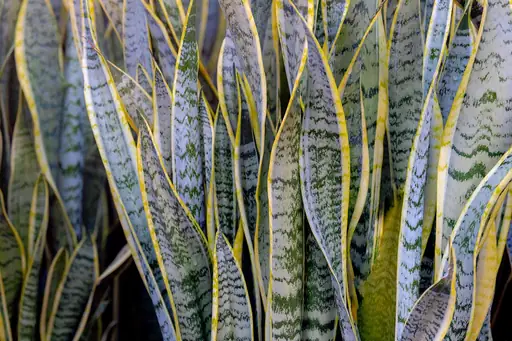
The snake plant, aka mother-in-law’s tongue, Dracaena trifasciata (formerly Sansevieria trifasciata) is an herbaceous perennial with stiff, upright, usually variegated leaves.
It’s a member of the Asparagaceae family native to tropical western and southern Africa and suited to outdoor cultivation in USDA Hardiness Zones 10 to 12.
In other regions, it is a reliable, easy-care houseplant.
Our guide to growing snake plants has all you need to know to grow your own. This article zeroes in on troubleshooting one common issue – drooping leaves.
Here’s what we’ll cover:
Reasons for Droopy Snake Plants
1. Depleted Soil or Overfertilization
2. Inadequate Sun Exposure
3. Over- or Underwatering
4. Wrong Pot Size
5. Pests and Disease
Indoors, choose a location with bright, indirect sunlight, such as through a sheer curtain on a south-facing window or about three feet from an unshielded easterly exposure.
Use a container two to three inches wider than the root mass for a relatively snug fit.
It should have at least one drainage hole and be made of porous material to drain and evaporate excess moisture.
Because D. trifasciata has shallow roots, standard pot depths are suitable.
The growing medium should be fertile, light, moisture-retentive, and well-draining.
These drought-tolerant houseplants only require water when the soil completely dries out. A moisture meter can help with this task.
Fertilizer can also help to sustain vibrant health. Choose a nitrogen-rich product to support foliar development.
During the spring-to-summer growing season, feed every time you water by adding half a teaspoon of liquid fertilizer to each gallon of water required.
Discontinue feeding and reduce watering as needed during the fall and winter.
Finally, monitor for signs of pests, such as sapsucking mealybugs and spider mites, and root rot caused by soil pathogens.
Despite meeting its growing needs, the foliage may begin to droop because it is suffering from one of the following forms of stress:
1. Depleted Soil or Overfertilization
Even if the snake plant doesn’t need repotting into a larger container, with each year that goes by the soil nutrients become more depleted.
And even the lightest potting medium may eventually become compacted. Poor soil quality may affect the foliage and cause it to become less rigid and start to droop.
If you suspect this is the cause, simply repot the specimen into fresh potting soil, providing a container one size larger if required.
Regular fertilization supplements soil nutrients, but in excess, it may burn the roots, adversely affecting nutrient uptake.
This can result in growth anomalies, including wilting.
Make sure you fertilize with an appropriate, mild product and hold off during the winter months.
2. Inadequate Sun Exposure
In their native habitat, snake plants grow in arid, rocky regions with full sun exposure.
When we bring them indoors, it’s essential to give them the bright light needed for photosynthesis.
However, because glass intensifies sunlight, the light should be indirect to avoid burning tender foliage.
Without enough light, the foliage may turn pale, fragile, and wilted.
With too much exposure, it may turn brown and crisp. As D. trifasciata is a phototropic species, the leaves may stretch toward the light, causing them to have a droopy appearance.
You can use a light meter to check the intensity of sunlight in the location of your specimen, and move it to a more suitable spot if required.
3. Over- or Underwatering
Too much water can cause root rot, where the roots are essentially drowning, allowing pathogens to take hold.
Signs of root rot include leaves turning yellow and soft before flopping over.
Too little water may result in browning, desiccation, and wilting.
Overwatering is far more common than underwatering, and it’s a good idea to get in the habit of checking the soil with a moisture meter or your finger, rather than watering on a schedule.
4. Wrong Pot Size
Overpotting is putting small flora in an overly large vessel. It may lead to prolonged soil wetness, rotting, and flopping.
Underpotting is putting a large specimen in a container that is too small. Without room for root development and enough soil for efficient water and nutrient uptake, the leaves may droop.
When a container is too small there is competition for light, nutrients, and water. As mentioned, D. trifasciata is phototropic.
Leaves with inadequate exposure as a result of overcrowding may lean toward a light source, causing them to appear to droop.
Make sure you are growing your specimens in containers with a diameter two to three inches wider than the root mass and a standard depth.
5. Pests and Disease
Sapsucking insects and root-rotting pathogens can cause foliar and root anomalies.
During an infestation or infection, leaves may lose their ability to remain upright from disruptions to nutrient uptake, impaired chlorophyll production, and leaf and root tissue damage.
Potential pests include aphids, mealybugs, and spider mites. These can be dealt with using neem oil or a strong spray of water from the hose.
Rinse the foliage, remove significantly damaged leaves, and treat with organic neem oil.
Yellow and wilting foliage may signify bacterial or fungal root rot that started with overwatering.
To salvage what you can, unpot and use clean garden scissors to cut off mushy, malodorous rootstock, discard it, and clean your scissors.
Rinse and repot healthy-rooted portions with fresh potting medium in a sanitized vessel.
Read more about root rot in houseplants here.
Defy the Droop
A snake plant thrives when given the soil, sun, and water it would receive in its native habitat.
Additional perks like fertilizer, monitoring for and treating pests and disease, soil replenishment, and repotting further support optimal health.
With best cultural practices and avoiding the stressors discussed, the variegated, swordlike leaves will be vertical instead of droopy for a display to be proud of.
Do you grow snake plants? Have you dealt with droopy foliage? Please share your tips in the comments below.
If you found this article informative and want to learn more about growing and caring for snake plants, we recommend the following:
- 21 Different Varieties of Snake Plants to Grow Indoors
- Reasons and Fixes for Snake Plant Leaves Curling
- How to Encourage Indoor Snake Plants to Bloom
- Facebook2
- X




คำถามและการอภิปราย