
การคัดเลือกโดย Seedsun
Baptisia 'Grape Taffy' (FALSE INDIGO)
ขอใบเสนอราคาที่ปรับแต่งให้เหมาะสมกับความต้องการของคุณ

รหัสสินค้า: CAME-EDIT-01G
Most gardeners who grow camellias know two of them. Camellia japonica opens in winter, C. sasanqua in autumn, and between the two a practiced collector can have flowers from October through March. What happens in April is generally someone else's problem. 'Heimudan' solves that problem. A cultivar.
ราคา ขนาดบรรจุภัณฑ์ และความพร้อมจำหน่ายจะได้รับการยืนยันในใบเสนอราคาส่วนบุคคลของคุณ การส่งคำสอบถามไม่ได้หมายถึงการสั่งซื้อและชำระเงินเรียบร้อยแล้ว
Most gardeners who grow camellias know two of them. Camellia japonica opens in winter, C. sasanqua in autumn, and between the two a practiced collector can have flowers from October through March. What happens in April is generally someone else's problem.
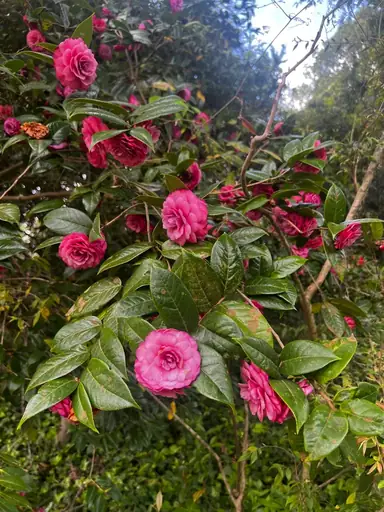
'Heimudan' solves that problem. A cultivar of Camellia edithae, a species from the forests of southeastern China little known in Western gardens, this plant blooms in mid to late spring, through April and into May, at the precise moment the last japonica has finished and the garden is turning toward summer. The flowers are fully double and deep rose-red, carried at the stem tips with the density and formality the name promises. 'Heimudan' translates from Chinese as Dark Peony, accurate both as a description of the flower and as a statement of intent. The blooms are heat-tolerant in a way late-season japonica flowers rarely manage, holding color and form through the warming days of spring rather than browning at the edges.
The foliage is the plant's other argument. Camellia edithae carries leaves unlike those of any other camellia in common cultivation: thick, leathery, and deeply furrowed along the veins, a strongly textured, almost sculptural surface. The undersides and the young stems are densely hairy, another trait that sets the species apart from the smooth-leaved japonica and sasanqua types. This is a shrub worth growing for eleven months on foliage alone, and then flowering in the twelfth at a moment no other camellia reaches.
Camellia edithae grows in forests between 200 and 1,000 meters across southeastern China, a range that has produced reasonable cold hardiness for the genus. 'Heimudan' was selected in Fujian Province in 1989 as a natural seedling. is among the very few nurseries making this camellia available to American gardeners, which is either a statement about obscurity or about priorities. We consider it both.
ขอใบเสนอราคาที่ปรับแต่งให้เหมาะสมกับความต้องการของคุณ

ขอใบเสนอราคาที่ปรับแต่งให้เหมาะสมกับความต้องการของคุณ

ขอใบเสนอราคาที่ปรับแต่งให้เหมาะสมกับความต้องการของคุณ

ขอใบเสนอราคาที่ปรับแต่งให้เหมาะสมกับความต้องการของคุณ
คำถามและการอภิปราย