
การคัดเลือกโดย Seedsun
Baptisia 'Grape Taffy' (FALSE INDIGO)
ขอใบเสนอราคาที่ปรับแต่งให้เหมาะสมกับความต้องการของคุณ

รหัสสินค้า: CYCA-REVO-01G
The Sago Palm is not a palm at all. Cycas revoluta belongs to the cycads, an ancient line of seed-bearing gymnosperms far closer to conifers than to any true palm, and the feathered crown is a case of convergent evolution rather than kinship. Cycads carried this same architecture through the age of.
ราคา ขนาดบรรจุภัณฑ์ และความพร้อมจำหน่ายจะได้รับการยืนยันในใบเสนอราคาส่วนบุคคลของคุณ การส่งคำสอบถามไม่ได้หมายถึงการสั่งซื้อและชำระเงินเรียบร้อยแล้ว
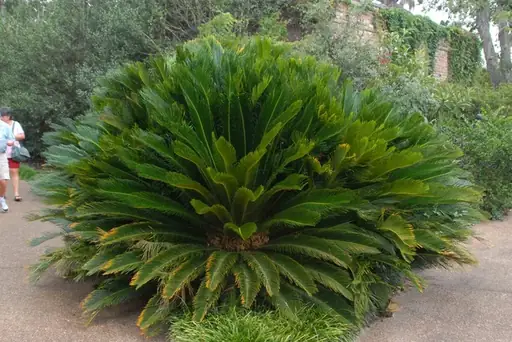
The Sago Palm is not a palm at all. Cycas revoluta belongs to the cycads, an ancient line of seed-bearing gymnosperms far closer to conifers than to any true palm, and the feathered crown is a case of convergent evolution rather than kinship. Cycads carried this same architecture through the age of the dinosaurs, which is part of what lends the Sago Palm such a primeval presence in a modern garden.
Native to the warm coasts and hillsides of southern Japan, including Kyushu and the Ryukyu Islands, Cycas revoluta has been cultivated in East Asian gardens for centuries and became a fixture of Deep South landscapes in the United States, where the stiff, lacquered rosettes read as both tropical and formal. The plant grows with great patience, slowly building a stout trunk crowned by whorls of arching fronds, each divided into narrow, glossy, dark green leaflets that catch the light like something machined. Older specimens declare their sex: male plants push up an elongated, cone-like pollen structure, while female plants cradle a low nest of large, apricot-colored seeds at the center of the crown.
Beyond ornament, the Sago Palm carries a long ethnobotanical history. Across Japan and Southeast Asia the starchy pith and seeds were processed, at real risk, into a famine food, and various parts appear in traditional Chinese and Philippine medicine. That heritage comes with a serious caveat, because every part of this cycad is highly toxic when eaten, and the seeds most of all.
In the garden, treat Cycas revoluta as living sculpture. A single rosette anchors a courtyard, frames an entry, or punctuates a gravel bed, and a row of them lends rhythm to a poolside or Mediterranean planting. Give the plant well-drained soil and sun to partial shade. In the cooler margins of zone 8 the fronds may brown or drop after a hard freeze, but a fresh flush usually unrolls once warm weather returns.
ขอใบเสนอราคาที่ปรับแต่งให้เหมาะสมกับความต้องการของคุณ

ขอใบเสนอราคาที่ปรับแต่งให้เหมาะสมกับความต้องการของคุณ

ขอใบเสนอราคาที่ปรับแต่งให้เหมาะสมกับความต้องการของคุณ

ขอใบเสนอราคาที่ปรับแต่งให้เหมาะสมกับความต้องการของคุณ
คำถามและการอภิปราย