
การคัดเลือกโดย Seedsun
Baptisia 'Grape Taffy' (FALSE INDIGO)
ขอใบเสนอราคาที่ปรับแต่งให้เหมาะสมกับความต้องการของคุณ

รหัสสินค้า: IRIS-BREV-01G
Iris brevicaulis is the low, quiet member of a famous clan. One of the five wild species known collectively as the Louisiana irises, the plant carries broad blue to violet flowers on curiously kinked, zigzagging stems, so short that the blooms rarely clear the fan of sword-shaped leaves. Botanists.
ราคา ขนาดบรรจุภัณฑ์ และความพร้อมจำหน่ายจะได้รับการยืนยันในใบเสนอราคาส่วนบุคคลของคุณ การส่งคำสอบถามไม่ได้หมายถึงการสั่งซื้อและชำระเงินเรียบร้อยแล้ว
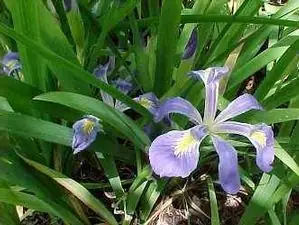
Iris brevicaulis is the low, quiet member of a famous clan. One of the five wild species known collectively as the Louisiana irises, the plant carries broad blue to violet flowers on curiously kinked, zigzagging stems, so short that the blooms rarely clear the fan of sword-shaped leaves. Botanists call that back-and-forth habit fractiflex, and the trait gives the plant one of the common names, zigzag iris; the Latin brevicaulis, short-stemmed, records the same feature, while a third name, Lamance iris, honors the American horticulturist Lora La Mance.
The species ranges widely for a wetland plant, from the north shore of Lake Erie in Ontario down through the Mississippi basin to the Gulf, following river bottoms and damp meadows. That broad, hardy distribution made Iris brevicaulis one of the cornerstones of Louisiana iris breeding. The five species interbreed freely with one another and with nothing else, and one of the earliest deliberate crosses, W. R. Dykes's 'Fulvala', paired this iris with the coppery Iris fulva. From that small beginning came the whole race of Louisiana iris hybrids grown around the world today, so a gardener who plants the zigzag iris is holding a piece of that living pedigree.
For all the horticultural importance, Iris brevicaulis keeps a wildflower's modesty. The blooms open in late spring and early summer, two to three inches across, in shades from clear blue to violet and now and then white, each fall marked with a paler signal that guides visiting bees to the nectar. Like most irises the rhizomes are best left uneaten, since the family is mildly toxic, a quiet chemical defense that also helps explain why deer and rabbits tend to pass the fans by. The zigzag stems, sometimes lying along the ground before turning up at the tips, lend cut stems and garden clumps alike an informal, faintly architectural line.
In the garden the plant belongs wherever the ground stays reliably moist: the margin of a pond, the low end of a border, a rain garden, or a bog bed, in full sun to part shade. Massed, the short habit reads as a dense, grassy groundlayer studded with blue, and a drift naturalizes slowly into a handsome colony over the years. Pair the zigzag iris with other moisture lovers such as Louisiana iris hybrids, swamp milkweed, and native sedges, and give a little afternoon shade where summers turn fierce. Little else is needed once the clump settles, beyond dividing every few years to keep the rhizomes vigorous.
ขอใบเสนอราคาที่ปรับแต่งให้เหมาะสมกับความต้องการของคุณ

ขอใบเสนอราคาที่ปรับแต่งให้เหมาะสมกับความต้องการของคุณ

ขอใบเสนอราคาที่ปรับแต่งให้เหมาะสมกับความต้องการของคุณ

ขอใบเสนอราคาที่ปรับแต่งให้เหมาะสมกับความต้องการของคุณ
คำถามและการอภิปราย