
27 of the Best Echeveria Varieties
Uniquely beautiful succulents, species and hybrids of the Echeveria genus are popular ornamentals for the home and garden. Beloved for their handsome rosettes of thick, fleshy leaves, echeveria plants come in an impressive range of colors, from icy tones of blue, green, and lilac to dark, sultry.
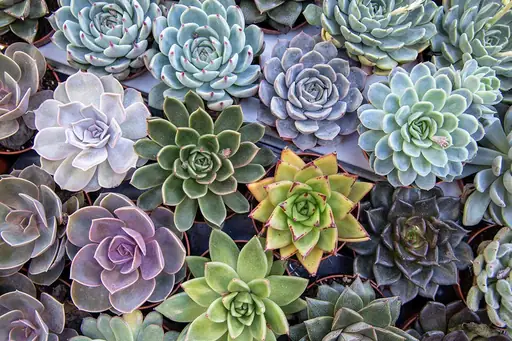
Uniquely beautiful succulents, species and hybrids of the Echeveria genus are popular ornamentals for the home and garden.
Beloved for their handsome rosettes of thick, fleshy leaves, echeveria plants come in an impressive range of colors, from icy tones of blue, green, and lilac to dark, sultry shades of burgundy, chocolate, eggplant, plum, scarlet, and orange.
Leaf texture is equally interesting with forms that can be bumpy, cabbage-like, crinkled, curled, peaked, ruffled, or wavy.
The flowers are equally eye-catching, blooming several times a year in the right conditions.
The tall flower stems bear buds of bold rosy pink, opening to bell-like or starry flowers in bright shades of peach, pink, red, orange, white, and yellow.
Striking ornamentals that are low maintenance and easy-care to the max, is your home or garden in need of some exciting echeveria?
Then you’ve come to the right place to learn about 27 of the most popular echeveria varieties!
Here’s a selection of top picks to get you started:
27 of the Best Echeveria Varieties to Grow at Home
1. Afterglow
2. Allegra
3. Black Knight
4. Black Prince
5. Blue Curls
6. Blue Rose
7. Bumps
8. Chroma
9. Culibra
10. Doris Taylor
11. Imbricata
12. Irish Mint
13. Lipstick
14. Lola
15. Mauna Loa
16. Melaco
17. Mexican Firecracker
18. Mexican Snowball
19. Molded Wax
20. Neon Breakers
21. Painted
22. Peacock
23. Red Velvet
24. Topsy Turvy
25. Truffles
26. Perle Von Nurnberg
27. Violet Queen
Echeveria succulents are superb as solitary specimens, massed in groups for borders or containers, and in succulent groupings for gravel, meditation, rock, and fairy gardens.
And many echeveria varieties develop darling, mini-me offsets over the growing season, spreading into handsome clumps as they grow.
Plus, they make a creative addition to bridal bouquets, living walls, and wreaths as well.
Hailing from semi-desert conditions in mountainous regions of Mexico, Central America, and South America, they’re highly drought tolerant and make an excellent choice for water-wise gardens and xeriscapes.
Wonderfully showy in the garden, echeveria requires excellent soil drainage and full sun to thrive.
Frost-tender perennials, they’re cold-hardy in USDA Zones 9 to 11. But beyond this range, they need to be brought indoors to survive winter.
If you’re gardening outside of their hardiness range, consider planting them in containers to make the move indoors fast and easy when fall arrives – be sure to check our growing guide for details about how to care for echeveria plants.
Now, let’s explore those popular echeveria varieties!
1. Afterglow
Satisfaction is a sure thing with the large, luminous rosettes of hybrid Echeveria ‘Afterglow.’
The leaves gleam in shades of gray and powdery lavender-pink and plants produce stout stalks adorned with fiery orange flowers over the growing season.
Plants reach a height and width of 12 to 24 inches and make an eye-catching addition to water-wise containers and tabletop displays, path and sidewalk borders, and in rock or succulent gardens.
2. Allegra
A joyous addition to any setting, ‘Allegra’ has luminous, blue-gray leaves tinged in mauve and finished with a powdery frosting.
The open, cupped rosettes of this hybrid grow six to eight inches tall and five to six inches wide, producing spikes of flowers in bright fuchsia and orange.
Producing multiple offsets, ‘Allegra’ forms attractive mounding clusters that add a sumptuous look to borders, living walls, patio planters, and troughs.
3. Black Knight
For a touch of dark drama, E. affinis aka Black Knight echeveria, has long, pointy, lotus-like rosettes of kiwi green that darken to deep eggplant purple as they mature.
Colors will vary depending on the amount and intensity of light they receive.
Rosettes grow to six inches tall and wide and can be solitary or produce offsets, developing tall stalks of scarlet flowers – a sumptuous selection for raised beds, borders, containers, and rockeries.
4. Black Prince
A regal performer, ‘Black Prince’ (E. shaviana x E. affinis) features tight rosettes of lime green that change to dark chocolate brown or dark purple in full sunlight.
The clumping rosettes grow four to 10 inches tall and wide, and produce offsets as well as spikes of small, bell-shaped crimson flowers.
An excellent choice for adding contrast to mixed containers, as a specimen for tabletop planters, and throughout gravel and rock gardens.
Learn how to grow Black Prince echeveria here.
5. Blue Curls
Beautifully colored with crinkled, wavy leaves, ‘Blue Curls’ – an E. gibbiflora hybrid – has a blue-green heart edged in bright shades of pink, plum, or scarlet that darkens in spring and fall.
The single rosettes grow 12 inches tall and wide, and produce flower spires of hot pink to orange.
‘Blue Curls’
It makes an attractive addition to containers, tabletop planters, and fairy or succulent gardens.
6. Blue Rose
One of the oldest and most common hybrids, ‘Blue Rose’ has tight, symmetrical rosettes of large, spoon-shaped leaves in powdery, pale blue-green with a pink blush at the edges and tips.
As plants mature, they develop clusters of offsets and produce arching spikes of pretty red-tipped orange flowers.
‘Blue Rose’ grows eight inches tall with a width of six inches, and makes a lovely cool-colored choice for borders, containers, and rockeries.
7. Bumps
Compellingly attractive, hybrid ‘Bumps’ features single, loose rosettes in luminous colors and wide, undulating leaves covered in strange, bumpy nodules. It produces small, tubular flowers of coral pink.
Growing up to 12 inches wide and six inches tall, this echeveria variety has core colors of ice to jade green, with leaf edges in red tones of neon pink to mulberry.
Visually arresting, ‘Bumps’ makes a perfect specimen for centerpiece planters, fairy and rock gardens, and Halloween tables!
See our guide to spooky and scary-looking plants for more suggestions in this vein.
8. Chroma
A beautiful succulent with dark, variegated foliage, ‘Chroma’ changes color depending on the amount of light it receives, with core hues of blue-green, celery green, and blush pink, and edging or splotches of bronzy-brown, burgundy, grape, and orange.
The rosettes of this hybrid grow up to six inches tall and four inches wide, producing offsets and spikes of bell-shaped, orange to ruby flowers with yellow tips.
‘Chroma’ makes a unique accent in mixed succulent plantings or massed into borders, containers, and rockeries.
9. Culibra
Whimsically odd, hybrid ‘Culibra’ glows in pastel colors with uniquely furled, bumpy leaves.
The rosette’s heart is cool ice green that transitions to powder blue and lilac with bright pink edging, and is finished with a waxy frost.
Rosettes are mostly solitary and grow up to 10 inches tall and seven inches wide, producing stalks of deep pink flowers tipped in yellow.
‘Culibra’ adds unique flair to containers, tabletop planters, and fairy or sci-fi gardens.
10. Doris Taylor
Also known as the wooly rose, ‘Doris Taylor’ (E. pulvinata x E. setosa) has thick, celery-green colored leaves with a pink flush that are covered in silvery hairs, giving a soft, fuzzy appearance.
The short stems produce numerous vertical offsets, forming loose clumps with spikes of attractive, orange-tinged, yellow flowers.
Plants grow up to five inches tall and eight inches wide and make a lovely addition to borders, green roofs, and patio planters.
11. Imbricata
Popular for its vigorous growth and mesmerizing geometry, ‘Imbricata’ (E. glauca x E. gibbiflora ‘Metallica’) has tight rosettes of ice green to powdered teal, with loose spikes of bell-shaped, flame orange flowers.
Multiplying freely, offsets hug the mother tightly, creating beautiful fractal patterns that beautifully fill containers, rock gardens, and centerpiece arrangements.
12. Irish Mint
With a distinctive, tubular leaf shape and upswept growth habit, ‘Irish Mint’ (E. derenbergii hybrid) ranges in color from icy and mint greens to shades of mauve or burgundy.
The uneven rosettes pup readily into sprawling clumps and develop stalks of coral pink buds that open to showy orange flowers.
Mature plants measure up to six inches tall and eight inches wide and make a unique addition to centerpieces, containers, and gravel or rock gardens.
13. Lipstick
With striking, intense colors, E. agavoides ‘Lipstick’ features lime green leaves with crimson margins – and the more stressed the plant is, the more extensive and vivid the red tones are.
For echeveria, “stressed” conditions include hot sun and low water, which they love!
The crisp rosettes are thick fleshed, with a sharp, triangular shape and plants offset freely forming attractive clumps.
‘Lipstick’
‘Lipstick’ grows up to six inches tall and 12 inches wide and develops orange to red flowers with yellow edges – an eye-catching choice for containers, living walls, and rock gardens.
14. Lola
Cool and refreshing, E. lilacina ‘Lola’ has lustrous sage green to mauve or pink leaves that are finished with a waxy alabaster coating.
The tight, uniform rosettes grow up to four inches wide and six inches tall, slowly developing hugging offsets and arching spires of sunshine yellow to neon pink flowers.
‘Lola’ is well suited to beds, containers, tabletop displays, and in meditation, rock, or Zen gardens.
15. Mauna Loa
Erupting in vividly colored, loose rosettes, ‘Mauna Loa’ (E. gibbiflora hybrid) has spectacular, wide leaves with bumps, wavy edges, and wrinkles.
Plants start out a cool, glacier green then the colors heat up as they mature, morphing into blue, burgundy, and lilac tones with magma red edges.
The mostly single, cabbage-like rosettes grow up to 18 inches tall with a diameter of 12 to 24 inches and develop tall, branching spires of nodding, orange pink flowers.
A surreal specimen for borders, patio planters, and spilling down rockeries.
16. Melaco
With rich, glossy leaves, ‘Melaco,’ an E. gibbiflora hybrid, features handsome rosettes of spade-shaped foliage in burnished shades of chocolate brown, copper, plum, and salmon with a lime green heart, and loose clusters of bright orange tubular flowers.
The rosettes grow six to eight inches tall and three to four inches wide, producing many offsets.
‘Melaco’
Use ‘Melaco’ as a specimen in borders, containers, and tabletop arrangements or for a handsome contrast in succulent gardens.
17. Mexican Firecracker
With bright, firecracker-like blooms and kiwi green leaves covered in short, frosty hairs, E. setosa aka Mexican firecracker echeveria, is an explosive choice for beds, troughs, and rockeries.
The stemless rosettes grow three inches wide and up to six inches tall, pupping freely into handsome mounds and producing tall stalks of fiery, crimson to papaya colored flowers with yellow edging.
18. Mexican Snowball
E. elegans, also called Mexican snowball echeveria, is beloved in succulent gardens for its elegant, uniform rosettes of icy sage-green leaves with numerous spires of small tubular flowers, deep red at the base with bright yellow tips.
Mexican Snowball
Plants grow six to eight inches tall and wide, and produce small offsets. A gorgeous choice for containers, ground covers, and gravel or zen gardens.
19. Molded Wax
Highly showy, E. agavoides, aka molded wax echeveria, features fleshy, agave-like, triangular leaves of lime green with broad margins of vibrant burgundy to crimson – and the brighter the sunlight, the brighter the red tones.
Solitary rosettes grow six inches tall with a spread of eight to 12 inches and produce spires of red bell-shaped flowers with yellow tips.
A striking choice for borders, containers, and gravel or succulent gardens.
20. Neon Breakers
Buzzing in electric shades of burgundy, mauve, and purple with a cool, moraine green core, hybrid ‘Neon Breakers’ is a showstopper with wide, spade-like leaves and charming, ruffled edges.
The loose rosettes grow up to three inches tall and eight inches wide and produce spires of coral pink flowers and mounding offsets.
An exceptional and colorful choice for living walls, planters, and rockeries – plant in full sun for the brightest purple tones.
21. Painted
Pretty as a picture, E. nodulosa aka painted echeveria is noted for its branched, erect or sprawling habit and fabulous colors – olive green at the core with broad margins in vivid hues of burgundy, cranberry, magenta, plum, and scarlet.
The rosettes produce multiple offsets and can grow 12 to 24 inches tall with a diameter of up to four inches.
Tall stalks of bell-shaped yellow flowers with pink to red markings are a standout feature of this exceptionally colorful choice for containers and gravel, rock, or succulent gardens.
22. Peacock
Strutting its finery, E. peacockii, aka peacock echeveria varieties have sharply pointed, spoon shaped leaves of glowing blue gray to mauve with red tips and margins, and a waxy finish.
The tight rosettes grow three to 12 inches tall with a spread of four to six inches and develop spikes of urn-like, coral pink flowers.
Multiple offsets create a spreading carpet of pups that make attractive container plants and ground covers, and in gravel or rock gardens.
Learn more about growing peacock echeveria.
23. Red Velvet
Lush and plush, E. pulvinata ‘Red Velvet’ is highly ornamental with plump, spade-like leaves of jade green, deep margins of burgundy to scarlet, and a covering of short white hairs.
The short stemmed, shrub-like echeveria plants grow up to 12 inches tall with loose rosettes three to four inches wide.
Bearing an abundance of fiery blooms in orange, red, and yellow, ‘Red Velvet’ lends a striking presence to gravel and rock gardens, in containers, and as a rambling ground cover.
24. Topsy Turvy
Unusual and appealing, the silvery gray green leaves of E. runyonii ‘Topsy Turvy’ have a downward fold along their length with upward sweeping tips.
Plants form large, loose rosettes and pup freely, growing eight to 12 inches in height and width, and develop small bell-like flowers of yellow or orange.
A striking echeveria specimen for containers, centerpieces, patio planters, and rockeries.
Learn more about ‘Topsy Turvy’ echeveria here.
25. Truffles
Rich and earthy with large, loose rosettes of crinkled and wavy leaves, E. shaviana ‘Truffles’ shines in cool tones ranging from clay blue and seafoam green to dusty plum.
The single rosettes grow four to six inches tall with a diameter of six to eight inches, producing tall wands of bell-shaped blooms in peach and pink.
‘Truffles’
This echeveria cultivar is handsome as a specimen for borders and planters or massed in mixed succulent gardens.
26. Perle Von Nurnberg
Highly popular with florists, ‘Perle Von Nurnberg’ (E. gibbiflora ‘Metallica’ x E. potosina) has beautiful, uniform rosettes with thick, spoon-shaped leaves of frosty mauve gray edged in pink.
The solitary rosettes grow eight to 10 inches tall with a diameter of six to eight inches, and send up multiple stalks of coral pink flowers.
‘Perle Von Nurnberg’
An exceptional choice for containers as well as bouquets, floral arrangements, and wreaths.
27. Violet Queen
A vision of calm coolness, ‘Violet Queen’ (E. elegans hybrid) has tall, narrow leaves with a core of silvery seafoam green and pale pink or lilac margins and outer petals.
The symmetrical, lotus-like rosettes produce spires of urn-shaped orange flowers and grow four to five inches tall with a width of six to eight inches.
Offsetting readily into thick mounds, ‘Violet Queen’ echeveria is a beautiful choice for containers, ground covers, wreaths, and meditation or Zen gardens.
Sweet Succulents!
Echeveria are among the sweetest of succulents, typically with symmetrical rosettes glowing in gorgeous colors ranging from cool greens to fiery reds!
What are your preferred settings to cultivate your favorite echeveria succulents? Let us know in the comments section below.
And for more cacti and succulent know-how, be sure to add these articles to your reading list next:
- 11 of the Best Hens and Chicks Varieties
- 13 of the Best Aloe Varieties for Landscaping and Containers
- 27 of the Best Xerophytes to Plant in a Water-Wise Garden
- Facebook42
- X




Sorular ve tartışma