
How to grow turnips
Seed to Harvest Growing Guide How to grow turnips A practical guide to direct-sowing turnips in cool soil, thinning for smooth roots, diagnosing common problems, and harvesting before roots become hot or pithy. Sow in cool weatherThin promptly for round rootsHarvest young for crisp texture Shop.
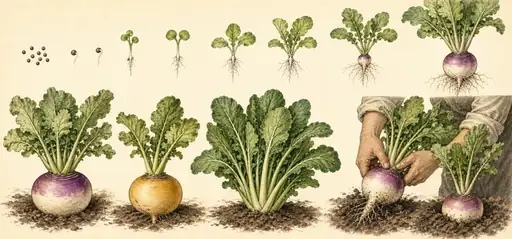
Seed to Harvest Growing Guide
How to grow turnips
A practical guide to direct-sowing turnips in cool soil, thinning for smooth roots, diagnosing common problems, and harvesting before roots become hot or pithy.
Sow in cool weatherThin promptly for round rootsHarvest young for crisp texture Shop turnip seed →Start the guide ↓ Crop family: Brassicaceae SeasonCool weatherSpring and fallSow depth1/2 inchDirect sow outdoorsLightFull sunAfternoon shade in warmthSpacing2–6 inchesDepends on root typeHarvest30–60 daysSpring to winter typesBefore you begin
Grow quickly in cool, loose soil.
Turnips make their best roots and greens when growth never stalls. Cool weather, even moisture, and prompt thinning prevent woody, cracked, overly pungent, or misshapen roots.
Best first decisionChoose a root variety for tender globes, or a greens-focused type when leafy harvests are the priority.Build your turnip-growing plan
Plan cool sowing, bed space, seed quantity, and repeat harvests.
Small sowings every 7–14 days produce better roots than one oversized row.
When to plant turnipsFind your local planting windowMatch spring and fall sowing with cool root-growing weather.Check turnip timing →Lay out the turnip bedUse loose accessible soilTuck short rows between slower crops without creating shade.Plan the turnip bed →How much turnip seedCalculate the seed you needEstimate seed from row length and final root spacing.Calculate turnip seed →Extend the turnip harvestPlan staggered sowingsSchedule small sowings 7–14 days apart while cool weather lasts.Plan turnip successions →Turnips at a glance
The path from seed to harvest
Select any milestone to jump directly to its full instructions.
01PlanCool season02Sow1/2 inch03ThinFirst leaves04GrowFast and even05ProtectScout weekly06Harvest30–60 daysStage 1–3
Direct sow thinly and make room early
Turnips dislike transplanting, and crowded seedlings cannot form smooth, uniform roots.
01Prepare loose soil
Choose stone-free, well-drained soil. Loosen deeply for large-rooted types; avoid fresh manure and excess nitrogen.
- Use full sun in cool weather.
- Provide light afternoon shade as days warm.
- Rake a fine, level seedbed.
Sow directly
Plant about 1/2 inch deep in rows, spacing seed roughly 1 inch apart. Keep the surface evenly moist until rapid emergence.
Sow small batchesRepeat every 7–14 days rather than planting a long row all at once. 03Thin promptly
Thin spring turnips to 2–4 inches and larger winter types to 3–6 inches, following the variety’s mature diameter.
- Snip extras to avoid disturbing roots.
- Eat thinnings as microgreens.
- Cover early to exclude flea beetles and root flies.
Stage 4
Keep root growth fast and uninterrupted
Even moisture, cool soil, and open spacing produce crisp roots with mild flavor.
WWater evenly
Keep the top 6 inches moist without saturation; drought followed by heavy water encourages cracking.
TKeep soil cool
Use light mulch after emergence and shift to heat-tolerant crops when warm weather arrives.
NLimit nitrogen
Excess nitrogen makes lush tops and small roots. Follow a soil test instead of feeding routinely.
CCheck roots often
Brush soil from shoulders and harvest as soon as the variety reaches eating size.
Growth checkpoints
Know what to watch for.
Root shoulders and texture are more useful than the calendar alone.
3–7 daysEven emergence
Seedlings form a uniform row without crusted soil.
First true leavesFinal spacing
Each plant has room equal to the expected root diameter.
Root swellingVisible shoulders
Roots color and expand without cracking or insect scars.
Harvest sizeCrisp texture
Roots are firm, juicy, and solid before heat triggers pithiness.
Stage 5
Diagnose turnip problems early
Open a symptom to compare what you see, likely causes, and the next practical check.
PestFlea beetlesMany tiny round holes in seedling leavesCover immediately after sowing with insect netting, seal edges, control brassica weeds, and rotate the bed.
PestCabbage root maggotsBrown tunnels, scars, and stunted plantsUse exclusion netting before flies lay eggs, rotate crops, remove infested roots, and avoid leaving brassica residues in the bed.
DiseaseClubrootYellow wilted tops and swollen distorted rootsImprove drainage, avoid moving infested soil, raise pH only according to a soil test, and rotate away from brassicas for several years.
Growing stressBolting or pithinessFlower stalks, woody heat, or hollow rootsPlant in cool weather, water evenly, thin promptly, choose a suitable variety, and harvest immediately at mature size.
Stage 6
Pull roots while they are crisp and solid
Spring turnips can pass their peak in days, especially as temperatures rise.
- Check: Brush back soil and compare the shoulder diameter with the variety description.
- Pull: Harvest after watering or loosen large roots with a fork to prevent breaking.
- Store: Remove tops, wash and dry roots, and refrigerate in a perforated bag.
Choose with purpose
Match turnip type to your harvest goal
Compare a classic purple-top root, an amber heirloom, and a variety selected for abundant greens.
Classic fall rootPurple Top White GlobeFine-grained purple-and-white globes with excellent yield and flavor improved by cool weather.Shop Purple Top White Globe →Golden heirloom rootGolden BallRound 3–4 inch amber globes with a distinctive peppery flavor and historic appeal.Shop Golden Ball →Greens-focused typeSeven TopA dependable old-fashioned choice grown chiefly for masses of tender, flavorful turnip greens.Shop Seven Top →Questions gardeners ask
Turnip growing FAQ
Quick answers for timing, sowing, thinning, watering, containers, roots, bolting, and harvest.
When should turnips be planted?Sow in early spring and again in late summer for fall. Most spring turnips decline quickly in hot weather.
How deep should turnip seed be planted?Sow about 1/2 inch deep in a fine, moist seedbed.
How far apart should turnips be?Thin small round types to 2–4 inches and larger root types to 3–6 inches.
Can turnips be transplanted?Direct sowing is best because transplanting disturbs the taproot and can produce forked roots.
How often should turnips be watered?Keep soil evenly moist, usually with about 1 inch weekly adjusted for soil and weather.
Why are my turnips all tops and no roots?Crowding, excess nitrogen, shade, heat, or harvesting too soon can prevent root swelling.
Why are turnips hot or woody?Heat, drought, slow growth, and overmaturity intensify flavor and toughen texture.
Why do turnips crack?Uneven moisture—especially heavy watering after drought—causes rapid swelling and splitting.
Can turnips grow in containers?Yes. Use at least 6 inches of soil for round types and a deeper container for long roots.
Can turnip greens be eaten?Yes. Young clean leaves are edible raw or cooked; remove damaged or tough older foliage.
When are turnips ready to harvest?Check the variety’s expected diameter and pull as soon as roots are full size, firm, and crisp.
How should harvested turnips be stored?Remove tops, wash and dry roots, and refrigerate in a perforated bag. Winter types store longer than spring turnips.
Ready to plant?
Choose turnips for your garden.
Compare round, elongated, daikon, winter, colorful, organic, heirloom, and hybrid varieties.
Shop all turnip seed →



Sorular ve tartışma