

Bu sayfa orijinal dilinde gösterilmektedir. Çevirisi henüz mevcut değil.
Seedsun seçimi
Distylium myricoides
Ürün Kodu: DIST-MYRI-01G
Distylium myricoides is an evergreen member of the witch-hazel family, Hamamelidaceae, and a quiet cousin to the fragrant winter witch-hazels, though the family resemblance hides in the flowers rather than the leaves. The genus name comes from the Greek for "two styles," for the paired styles at.
Size özel fiyat teklifi isteyin.
Fiyatlandırma, paket boyutları ve stok durumu kişisel teklifinizde teyit edilecektir. Sorgulama göndermek ücretli sipariş anlamına gelmez.
Uygunluk, ekim ve yetiştirme gereksinimleri hakkında bilgi alın.
Teklifinizde teslimat seçeneklerini ve gerekli belgeleri teyit edin.
Bu çeşit hakkında
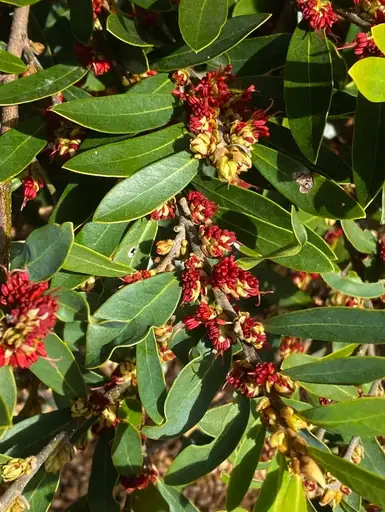
Distylium myricoides is an evergreen member of the witch-hazel family, Hamamelidaceae, and a quiet cousin to the fragrant winter witch-hazels, though the family resemblance hides in the flowers rather than the leaves. The genus name comes from the Greek for "two styles," for the paired styles at the heart of each small bloom, while the species epithet myricoides means "resembling Myrica," the bayberries, a nod to the narrow, leathery foliage.
Native to the cool mountain forests of central and southern China, this is a gracefully arching, layered shrub that grows in time into a small tree, reaching roughly ten to twelve feet with an equal spread. The narrow, oblanceolate leaves are thick and glossy, cast in a distinctive blue-green that has earned the plant the nickname blue-leaf isu tree, and they hold their color through the year. New growth often flushes bronze before settling to that cool, eucalyptus tone.
Come late winter and early spring, the shrub does something unexpected for so restrained a plant: clusters of tiny, petal-less flowers open along the branches in puffs of deep red stamens, an early and welcome source of nectar when little else is blooming. The display is subtle rather than showy, best appreciated up close, but the timing makes Distylium myricoides a favorite of early bees. American gardeners owe the plant to the Arnold Arboretum, which introduced the species from a collection made in China.
In the garden, Distylium myricoides makes a superb evergreen screen, an informal hedge, or a handsome specimen where the arching, tiered branches can be seen. Tough and adaptable, the shrub shrugs off heat, wind, drought, and even brief flooding once established, and deer tend to leave the leathery foliage alone. Pair with camellias, mahonia, and ferns in a woodland border, or use in a row for year-round structure and privacy. Photo credit to Scott A.
Keşfedilecek daha çok şey var.



Sorular ve tartışma