

Bu sayfa orijinal dilinde gösterilmektedir. Çevirisi henüz mevcut değil.
Seedsun seçimi
Helianthus verticillatus
Ürün Kodu: HELI-VERT-01G
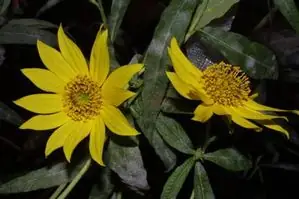
Helianthus verticillatus is a sunflower you grow as much for the story as the flower, though the flower holds up on merit. The plainest field mark is the leaves: narrow, lance-shaped, and arranged in distinct whorls of three or four around the stem rather than in the usual opposite or alternate.
Size özel fiyat teklifi isteyin.
Fiyatlandırma, paket boyutları ve stok durumu kişisel teklifinizde teyit edilecektir. Sorgulama göndermek ücretli sipariş anlamına gelmez.
Uygunluk, ekim ve yetiştirme gereksinimleri hakkında bilgi alın.
Teklifinizde teslimat seçeneklerini ve gerekli belgeleri teyit edin.
Bu çeşit hakkında
Helianthus verticillatus is a sunflower you grow as much for the story as the flower, though the flower holds up on merit. The plainest field mark is the leaves: narrow, lance-shaped, and arranged in distinct whorls of three or four around the stem rather than in the usual opposite or alternate pairs, a tidy structural signature that names the plant and sets the species apart from every common sunflower. Tall and strong-stemmed, the plant rises six to ten feet and lifts open clusters of clear yellow, dark-centered flowers in late summer and early fall.
The whorled sunflower came within a whisker of vanishing. First collected in 1892 near Henderson, Tennessee, the species then dropped from sight for over a century and was widely presumed extinct, until a botanist rediscovered a stand along the Coosa River in Floyd County, Georgia, in 1994. A handful of other populations have since turned up in Tennessee, Georgia, and Alabama, but the total is tiny: only a few sites, and by one genetic study perhaps three to four hundred distinct individuals in all the world. Federal protection followed, and the whorled sunflower was listed as endangered in 2014. Much of the decline traces to the loss of fire, since the open, damp prairie habitat the plant needs closes over without periodic burning.
For all that fragility in the wild, the plant is vigorous in cultivation. A member of the aster family and a true perennial sunflower, the whorled sunflower spreads by rhizome, grows fast, and flowers generously in full sun and moist to average soil. The late-season bloom arrives when pollinators most need the fuel, and bees and butterflies work the flowers heavily, while the seed heads feed birds into winter. Given room and light, a clump builds quickly into a strong vertical presence.
In the garden, use the whorled sunflower at the back of a large sunny bed, in a native or meadow-style planting, or in a pollinator border where height and a long autumn show are wanted. Give full sun and steady moisture, allow space for the rhizomes to travel, and pair with asters, native grasses, and other late bloomers for a rich fall picture. Growing a nursery-propagated plant is also a small act of conservation, keeping a nearly lost native alive and in circulation well beyond the few wild places the species still holds.
Keşfedilecek daha çok şey var.



Sorular ve tartışma