

Bu sayfa orijinal dilinde gösterilmektedir. Çevirisi henüz mevcut değil.
Seedsun seçimi
Ilex laevigata
Ürün Kodu: ILE-LAEV-01G
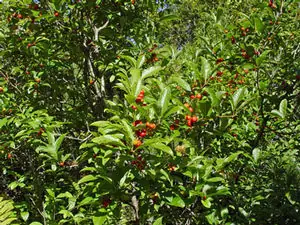
Smooth winterberry is similar to the common winterberry, Ilex verticillata, but is much less common in cultivation, and the differences reward a close look. The finely toothed deciduous leaves are glossy above rather than dull, which gives the whole shrub a cleaner and lighter quality through the.
Size özel fiyat teklifi isteyin.
Fiyatlandırma, paket boyutları ve stok durumu kişisel teklifinizde teyit edilecektir. Sorgulama göndermek ücretli sipariş anlamına gelmez.
Uygunluk, ekim ve yetiştirme gereksinimleri hakkında bilgi alın.
Teklifinizde teslimat seçeneklerini ve gerekli belgeleri teyit edin.
Bu çeşit hakkında
Smooth winterberry is similar to the common winterberry, Ilex verticillata, but is much less common in cultivation, and the differences reward a close look. The finely toothed deciduous leaves are glossy above rather than dull, which gives the whole shrub a cleaner and lighter quality through the growing season. Female plants produce attractive red berries, larger and slightly more orange than those of common winterberry, ripening in autumn and eaten by birds. The habit is upright and open, ten to twelve feet in time on a narrow four to six foot frame, with smooth gray bark and a fine twiggy silhouette once the leaves drop.
Laevigata means smooth or polished, for those glossy leaves, and Ilex is borrowed from the classical Latin name of the Mediterranean holm oak, whose foliage the European holly happens to resemble. The species occurs in the Atlantic Coast states from southern Maine to South Carolina, possibly reaching Georgia, and is uncommon in the southern portion of the range. In the wild you find smooth winterberry in acid swamps and seepage areas, very often growing with Atlantic white cedar, Chamaecyparis thyoides, in a habitat that has itself been reduced to fragments across most of the coastal plain.
In cultivation, plant in acid sandy soil with adequate moisture. This is a wetland plant, entirely happy in ground that stays saturated, and it belongs at a pond edge, in a bog garden, along a ditch, or in the low wet corner where nothing else has thrived. Full sun to part shade; fruit set is heavier in sun. Alkaline soil brings on chlorosis quickly. Pair with Chamaecyparis thyoides if you want to reconstruct the wild association, or with Clethra alnifolia, Itea virginica, Cyrilla racemiflora, and Magnolia virginiana for a southern wet planting. This is a collector's and restorationist's holly rather than a landscape staple, and that is rather the point.
Keşfedilecek daha çok şey var.



Sorular ve tartışma