

Bu sayfa orijinal dilinde gösterilmektedir. Çevirisi henüz mevcut değil.
Seedsun seçimi
Malvaviscus drummondii
Ürün Kodu: MALV-DRUM-01G
Malvaviscus drummondii is the small Turk's cap, the wild, native cousin of the larger Mexican wax mallow and, for many Southern gardeners, the better plant of the two. A relative of the hibiscus in the mallow family, Malvaceae, this shrubby perennial is native to Texas, the Gulf Coast states, and.
Size özel fiyat teklifi isteyin.
Fiyatlandırma, paket boyutları ve stok durumu kişisel teklifinizde teyit edilecektir. Sorgulama göndermek ücretli sipariş anlamına gelmez.
Uygunluk, ekim ve yetiştirme gereksinimleri hakkında bilgi alın.
Teklifinizde teslimat seçeneklerini ve gerekli belgeleri teyit edin.
Bu çeşit hakkında
Malvaviscus drummondii is the small Turk's cap, the wild, native cousin of the larger Mexican wax mallow and, for many Southern gardeners, the better plant of the two. A relative of the hibiscus in the mallow family, Malvaceae, this shrubby perennial is native to Texas, the Gulf Coast states, and on south, and grows wild in the dappled shade of woodland edges and stream banks where few other bright flowers will bloom.
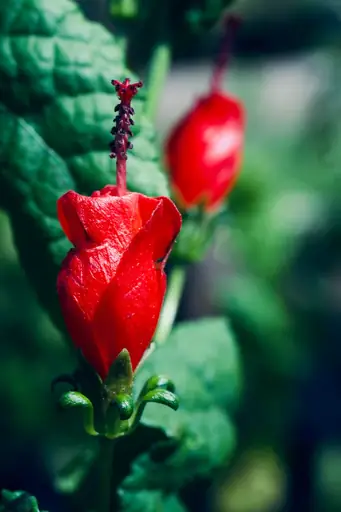
The flowers are the same enchanting puzzle as the rest of the tribe: bright red, less than two inches long, and furled tight so they never quite open, like a hibiscus caught mid-yawn. They come without pause through the hot months, when hummingbirds need them most, and small apple-like fruits follow, red and mildly sweet, edible and quickly taken by birds. In good conditions the plant self-sows gently, so a single shrub can become a soft colony over time.
For gardens in the middle and upper South, the small Turk's cap has a real advantage over the larger species: it is markedly hardier. Where Malvaviscus arboreus sulks at the first hard freeze, this native behaves as a reliable perennial across most of the South, dying back in winter and returning from the root, and growing more shrubby only in the warmest sections. The genus name Malvaviscus means sticky mallow, and drummondii honors Thomas Drummond, the Scottish naturalist who botanized Texas in the 1830s.
Best of all, the small Turk's cap flowers freely in shade, which makes the plant invaluable for the dry, dappled places where color is hard to come by, under high trees, along a shaded fence, or at a woodland edge. Give the shrub a sunny to partly shaded bed with well-drained soil, and it asks almost nothing in return: heat, drought, and poor soil hold no terror for a plant this tough. Three to six feet of nonstop red bloom and a steady traffic of hummingbirds is a fair return for so little trouble.
Keşfedilecek daha çok şey var.



Sorular ve tartışma