

Bu sayfa orijinal dilinde gösterilmektedir. Çevirisi henüz mevcut değil.
Seedsun seçimi
Quercus texana (nuttallii)
Ürün Kodu: QUER-TEXA-FORM-NUT-BARE
Nuttall oak is named for Thomas Nuttall, the restless English-American naturalist who botanized the young United States more thoroughly than almost anyone of his generation. Long known as Quercus nuttallii, the tree now carries the name Quercus texana in most botanical usage, a change that has.
Size özel fiyat teklifi isteyin.
Fiyatlandırma, paket boyutları ve stok durumu kişisel teklifinizde teyit edilecektir. Sorgulama göndermek ücretli sipariş anlamına gelmez.
Uygunluk, ekim ve yetiştirme gereksinimleri hakkında bilgi alın.
Teklifinizde teslimat seçeneklerini ve gerekli belgeleri teyit edin.
Bu çeşit hakkında
Nuttall oak is named for Thomas Nuttall, the restless English-American naturalist who botanized the young United States more thoroughly than almost anyone of his generation. Long known as Quercus nuttallii, the tree now carries the name Quercus texana in most botanical usage, a change that has caused no end of confusion, since the name once belonged to a different oak. Whatever the label, this is a large deciduous red oak of the Southern bottomlands, at home in the floodplain forests of the Gulf Coast and the Mississippi valley.
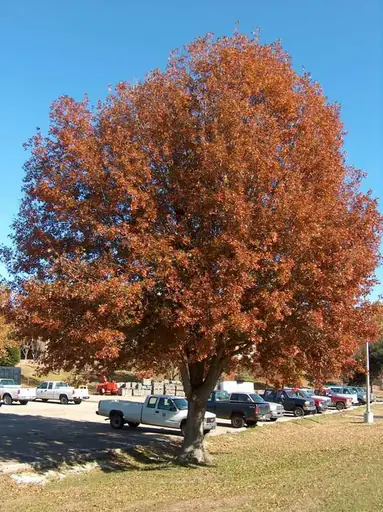
For most of the twentieth century Nuttall oak went overlooked, mistaken in the trade for other red oaks, but the tree has since become a favorite of growers for good reason. Fast, clean, and easy to transplant, Nuttall oak builds a straight trunk and a well-shaped, open crown, and finishes the year in some of the most dependable red-oak fall color of the South, brilliant red and scarlet often lingering into winter.
The wild home is the bottomland, and it shows in the temperament. Nuttall oak takes heavy, wet clay and seasonal flooding that would drown many oaks, yet adapts just as readily to ordinary garden and street conditions, shrugging off compaction and city air. The heavy annual acorn crop is prized by wood ducks and other waterfowl, along with deer, turkey, and squirrels, which makes the tree as valuable for wildlife and bottomland restoration as for shade.
In the garden, use Nuttall oak as a fast shade or street tree for a large lawn, a park, a parking island, a rain garden, or a low, wet spot where quicker shade is wanted and standing water defeats other trees. Give full sun and room for a sixty- to eighty-foot crown, water young trees to establish, and give early structural pruning for a strong single leader. Pair with overcup oak, bald cypress, and other bottomland natives on wet ground.
Keşfedilecek daha çok şey var.



Sorular ve tartışma