

Bu sayfa orijinal dilinde gösterilmektedir. Çevirisi henüz mevcut değil.
Seedsun seçimi
Viburnum japonicum
Ürün Kodu: VIBU-JAPO-01G
Carl Peter Thunberg, the Swedish physician who talked his way onto the Dutch trading island of Dejima in 1775 and used the post to become one of the first Europeans to seriously botanize a closed Japan, was the first to describe this plant to science. Richard Oldham, the last of the great Kew.
Size özel fiyat teklifi isteyin.
Fiyatlandırma, paket boyutları ve stok durumu kişisel teklifinizde teyit edilecektir. Sorgulama göndermek ücretli sipariş anlamına gelmez.
Uygunluk, ekim ve yetiştirme gereksinimleri hakkında bilgi alın.
Teklifinizde teslimat seçeneklerini ve gerekli belgeleri teyit edin.
Bu çeşit hakkında
Carl Peter Thunberg, the Swedish physician who talked his way onto the Dutch trading island of Dejima in 1775 and used the post to become one of the first Europeans to seriously botanize a closed Japan, was the first to describe this plant to science. Richard Oldham, the last of the great Kew collectors, gathered the shrub again near Nagasaki in 1862 and called the plant, a little dismissively, a small tree on the hills. In a garden the plant never quite loses that ambition, settling instead into a sturdy, slow evergreen bush.
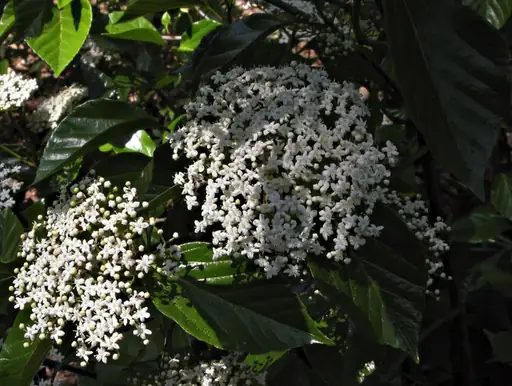
The leaves are the first thing you notice: thick, glossy, dark green, and leathery enough to look lacquered. Turn one over and the underside is finely stippled with tiny dark dots, a quiet diagnostic that confirms the true plant and not Viburnum odoratissimum, with which the Japanese viburnum has been muddled in gardens for more than a century. Early summer brings rounded clusters of white flowers carrying a true jonquil sweetness, the kind of scent that travels across a yard, and red berries follow to hang on well past the leaves.
Slow is the operative word, and patience is the cost of admission. Hardy to about zone 7 and content in sun or near-full shade, the shrub is happiest set against a warm wall where the cold cannot find it. Japanese viburnum remains uncommon in American gardens and is likely to stay that way, which is most of the reason to grow one.
Use the plant as a glossy evergreen specimen, a fragrant anchor near a path or doorway where the early-summer scent can be caught, or a slow, substantial backbone in a sheltered shrub border. Pair with camellias, tea olive, and other broadleaf evergreens, give a warm, protected spot at the cold edge of the range, and let the lacquered foliage and jonquil-scented bloom reward the wait.
Keşfedilecek daha çok şey var.



Sorular ve tartışma