
Why Isn’t My Passionflower Vine Producing Fruit?
I can’t tell you how many people I’ve met who don’t realize that passionflower is the same plant that produces passion fruit. Many growers are perfectly happy to produce the magnificent blossoms and then just move on. But the vast majority of Passiflora species produce edible fruits – though some.
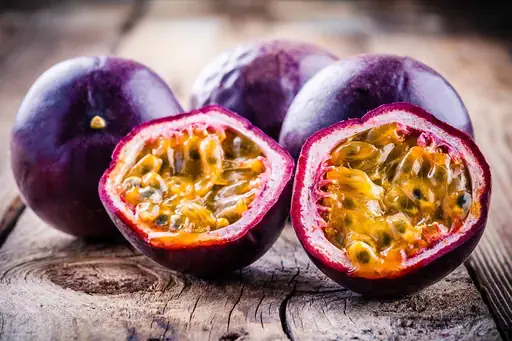
I can’t tell you how many people I’ve met who don’t realize that passionflower is the same plant that produces passion fruit.
Many growers are perfectly happy to produce the magnificent blossoms and then just move on.
But the vast majority of Passiflora species produce edible fruits – though some are more flavorful than others.
If you’re growing passionflowers, you can grow passion fruit. But that doesn’t mean you won’t run into trouble now and then.
It’s possible for your vine to produce flowers but fail to fruit. And when that happens, it’s a matter of troubleshooting to figure out the cause and find a solution.
That’s what this guide will help you do. Here’s what we’ll cover:
5 Common Reasons Why Passionflower Fails to Produce Fruit
1. Age
2. Fertilizer
3. Pollination
4. Sunlight
5. Variety
If this is your first time growing these vines or you’re just running into trouble this year, our guide can hopefully set you on the right path.
Let’s get started.
1. Age
A young plant won’t produce flowers and fruit – and identifying the root cause of your trouble may be as simple as that.
Unless your plant is about three or four years old, you shouldn’t expect fruits. So if you have new plantings, you’ll need to just sit back and relax for a few seasons.
However, once the flowers start forming, the berries should follow. If they don’t, something else is going on.
Let’s continue through the list of common culprits to find out what the problem might be.
2. Fertilizer
It’s always a smart idea to test your soil before you start adding fertilizer. Passionflowers are hungry plants, but they can often get everything they need from the existing soil.
If you start feeding and the plant takes up too much nitrogen, it might focus its energy on growing leaves at the expense of all else – and it will only produce sad, spindly little flowers that don’t produce fruits.
Instead of tossing fertilizer onto your soil and plants, do a soil test first. Then, only add what is lacking. Do this once a year.
If you accidentally added too much fertilizer, flush the soil with water on a nice sunny day when the soil will dry quickly.
Learn more about how to fertilize your vines for optimal health in our guide.
3. Pollination
As with many other types of plants, passionflowers need to be pollinated to produce fruits.
If you’re growing one in a container somewhere that it won’t be visited by bees, it could simply be that the flowers weren’t pollinated, and that means no fruit to follow when the blooms fade.
There are two ways to deal with this. The first is to ensure that you have plenty of pollinators in your garden.
We have a whole guide to help you figure out how to bring bees, butterflies, and more to your garden space to ensure that fruiting plants are being fertilized.
Passionflowers aren’t pollinated by the wind. They need an insect or other type of animal to come around and carry the pollen. Honeybees (Apis spp.) and carpenter bees (Xylocopa sonorina) are the main pollinators for these in most areas of the US.
If encouraging more pollinators to visit doesn’t work, or if you’re growing your plant in a location that’s difficult for bees to access – say, on a highrise patio or indoors – you can hand-pollinate the flowers.
To do this, take a paintbrush or toothpick and touch it to an anther. The anther is the prominent part just above the corona and below the stigma. You’ll see five anthers, and they are typically green or yellow and covered in yellow pollen.
Then, touch the tool that you’re using to collect the pollen to a stigma. That’s the part of the flower that protrudes out from it the most, and there are three stigmas on each passionflower.
Do this a few times so that each stigma is pollinated.
You can also pull an anther off and use it to pollinate the stigmas.
There are a few hybrids, cultivars, and species that are self-incompatible, so be sure to check if you are growing one of these. Self-incompatible plants can’t pollinate themselves, and they need a different cultivar to be growing nearby for cross-pollination and berry production.
For example, P. ‘Betty Myles Young’ requires a species such as P. caerulea as a pollinating partner. P. ‘Incense’ fruits best with a purple passionflower growing nearby.
Compatibility should be noted on the information card that accompanies most nursery plants.
4. Sunlight
If your passionflower isn’t receiving the sun it needs, it won’t produce flowers and fruit. Eight or more hours of sun per day is ideal for most species, though some might be able to survive in a little bit less.
Watch the sun on your plants during the day and see if they’re being shaded too much.
You might need to move them or prune other plants in the area around your vines if lack of sun is an issue. However, if the vines are producing lots of large flowers, this likely isn’t the problem.
5. Variety
While most species, hybrids, and cultivars are capable of producing fruits, there are a few that don’t. Or rather, there are a few that produce such small ones that they aren’t notable.
Research your particular plant to make sure it’s one that should be producing large, edible berries.
There are many species that produce edible, good-tasting fruits.
For instance, if you have the common species P. edulis or P. incarnata, those both produce edible fruits. But P. ‘Damsen’s Delight’ is sterile and doesn’t set fruit. P. ‘Snow Queen’ does so only rarely.
Don’t Miss Out on Those Fantastic Passion Fruits
Passion fruits are like nothing else, so it’s a shame if you can’t enjoy them because some issue is preventing your vines from forming them.
Once you resolve the situation, be sure to come back and let us know what worked for you. Please share in the comments below!
Looking for more help to make the most of your passionflower plants? You might find the following guides useful:
- How to Propagate Passionflower Vines
- 7 Common Reasons Why Passionflower Fails to Bloom
- 17 of the Best Passionflower Species and Hybrids to Grow at Home
- Facebook44
- X




问题与讨论