

此页面以其原始语言显示,暂无翻译版本。
Seedsun 精选
Camellia oleifera
SKU: CAME-OLEI-01G
Three things to know about this camellia. First, the tea-oil camellia is the most economically important non-tea member of the genus. China has cultivated Camellia oleifera for over two thousand three hundred years for the oil pressed from the seeds, a light, sweetish, monounsaturated cooking oil.
索取定制报价
价格、包装规格和供货情况将在您的专属报价单中确认。发送询价并不代表您已下单付款。
询问其适宜性、播种和生长要求。
请在报价单中确认送货方式和所需文件。
品种介绍
Three things to know about this camellia. First, the tea-oil camellia is the most economically important non-tea member of the genus. China has cultivated Camellia oleifera for over two thousand three hundred years for the oil pressed from the seeds, a light, sweetish, monounsaturated cooking oil chemically close to olive oil (around eighty percent oleic acid in both), used for cooking, traditional cosmetics, hair tonics, and the historic rust-proofing of Japanese woodworking tools and chef's knives. Tea oil sits with olive, palm, and coconut among the four major woody oil crops on Earth. This is a working tree.
Second, the tea-oil camellia is also the quiet foundation of cold-hardy camellia growing in North America, and almost no one knows it. In the late 1970s a run of brutal winters at the US National Arboretum in Washington, D.C. destroyed 941 of the 956 camellias in the collection. Among the handful that came through unharmed were specimens of Camellia oleifera. Dr. William Ackerman, then a research geneticist at the Arboretum, took notice, and beginning in 1979 crossed the cold-hardy species, especially the cultivar 'Lu Shan Snow', with C. sasanqua, C. hiemalis, and C. vernalis. The resulting Winter Series hybrids, released in 1991 ('Polar Ice', 'Snow Flurry', 'Winter's Hope', 'Winter's Joy', 'Pink Icicle', 'Winter's Star', and others), are the reason camellias can now be grown reliably into USDA zone 6. Every fall-blooming Ackerman hybrid on the East Coast traces back to this one species.
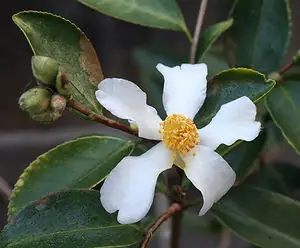
Third, and this is the part most people miss on hearing the words tea-oil camellia, the plant is beautiful. Smooth, peeling, cinnamon-to-tan bark clothes mature trunks; the glossy, finely toothed, willow-textured leaves are evergreen; and single white flowers two to three inches across, sometimes flushed pink at the edge, open around a generous boss of golden stamens from October into January, carrying a soft sweet fragrance unusual among fall-blooming camellias. Spent petals drop individually, the trait growers call self-grooming, so the plant never slumps into the brown decay that troubles many older japonicas. Slow-growing and eventually ten to twenty feet over decades, the tea-oil camellia builds into a multi-trunked large shrub or a small tree, depending on the pruning.
A plant for the gardener building a tea garden beside a Camellia sinensis, for the collector after the species behind every modern cold-hardy hybrid, or for anyone in zone 6 or 7 wanting a fragrant, fall-flowering evergreen with documented winter survival to fifteen below zero. A genuinely useful plant masquerading as a beautiful one, or the reverse, depending on which side you come at it from.
您可能也感兴趣



问题与讨论