
How to Propagate Hellebores
Hellebore, Helleborus spp., is a genus of plants in the Ranunculaceae, or buttercup family, that includes clematis and delphinium. It is best known for being one of the earliest to flower, blooming in late winter, often right through a layer of snow. In this concise article, you will learn about.
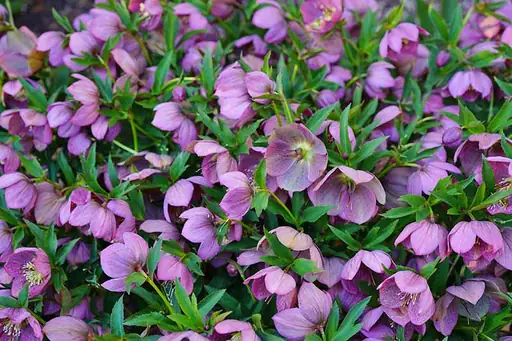
Hellebore, Helleborus spp., is a genus of plants in the Ranunculaceae, or buttercup family, that includes clematis and delphinium.
It is best known for being one of the earliest to flower, blooming in late winter, often right through a layer of snow.
In this concise article, you will learn about three methods of hellebore propagation, and what each means to the home gardener.
What You’ll Learn
- Introducing Three Methods
- From Seed
- By Division
- Micropropagation
- Takeaway for the Home Gardener
Introducing Three Methods
The most common varieties of hellebore available to home gardeners are hybrids of the species Helleborus orientalis.
These hybrids are generally referred to collectively as H. orientalis x hybridus. They are acaulescent, meaning that new shoots rise individually from a thick main root called a rhizome.
There are three ways to propagate hellebores:
- From Seed
- By Division
- Micropropagation
Let’s look at all three. And if you’re new to growing hellebores, see our full growing guide.
From Seed
Hellebores are self-sowing plants that drop their seed after flowering.
Most of the varieties grown in home gardens are hybrids. As such, their seed does not produce “true.” This means that it does not grow into a clone of the parent plant.
Instead, it is capable of producing a variety of traits, in terms of color, number of petals, and foliage markings. In addition, there may be variations within one plant, such as both white and pink flowers originating from the same rhizome.
This is true of seed that you harvest yourself, as well as seed that you purchase. The results are potluck.
However, this can be a wonderful way of adding more of these showy winter bloomers to your garden – you can look forward to a surprise next season!
Learn how to collect hellebore seeds and how to plant them with our full guides.
By Division
If you want to be sure of what you’re planting, then sowing seeds might not be right for you.
One way to reproduce the exact characteristics of a particular plant is through division.
With this method, an entire plant is dug up. Cuts are made down through the thick rhizome, separating the plant into individual “divisions” that may then be planted elsewhere in your garden.
This method is especially desirable if you have purchased a pricey cultivar, as opposed to a generic hybrid, and wish to replicate it in your landscape or share it with friends.
Learn how to divide and transplant your hellebore plants in our full guide.
Micropropagation
The final way to reproduce hellebore plants is by a method called micropropagation.
This is the realm of plant scientists who breed the Helleborus genus in sanitary conditions without risk of disease-causing contaminants.
The gist of the process is this:
A tissue sample is taken from a parent plant. It is placed in a test tube and treated with hormones that generate cell growth.
As the cells grow they differentiate into roots and shoots, and are nourished in a soilless medium to the seedling stage, when they may be planted.
The result is multiple healthy little clones of the parent plant. However, even under these extremely controlled circumstances, mutations can sometimes occur.
Thanks to laboratory propagation, many attractive and healthy cultivars are available to the home gardener.
In a laboratory setting, this process is faster than division, and has more predictable results than seed.
Takeaway for the Home Gardener
To recap, hellebore plants can be propagated by seed, division, or micropropagation.
Two of the three methods are useful to the home gardener:
- Seed
- Division
Seed does not produce true and may contain traits different from a parent. This is the case both with seeds you collect from your own plant, and those that you buy.
With these methods, you can take your gardening to a whole new level, and fill the beds with late-winter blooming hellebores that you propagate yourself!
For more information on growing hellebore flowers, you may enjoy reading these guides next:
- The Best Hellebore Planting Companions
- How to Identify and Control Hellebore Pests
- How to Identify and Treat Hellebore Diseases
- X




問題與討論